Your 1st for Philippine Defense

Austal leads Philippine Navy's OPV Acquisition Project!

SecDef Lorenzana confirms Austal is still the preferred OPV supplier for the PN

The Philippine Navy commissions its 2nd Jose Rizal-class frigate!

The Philippine Navy welcomes BRP Antonio Luna (FF-151), its newest frigate!

The Philippine Navy selects Shaldag Mk. V for Fast Attack Interdiction Craft!

The DND has awarded the FAIC-M Acquisition Project to Israel Shipyards

The Philippine Air Force wants more Black Hawk helicopters!

The Philippine Air Force asks for more Black Hawks to allow the retirement of their Bell UH-1 Huey fleet

The Philippine Army orders the Sabrah Light Tank System from Israel!

Israel's Elbit Systems was declared the winner to supply light tanks to the PA

The Philippine Air Force receives full order of Hermes 900 and Hermes 450 UAVs!

All 9 Hermes 900 and 4 Hermes 450 MALE UAVs have been received by the PAF!


Showing posts with label 15th strike wing. Show all posts

Saturday, April 4, 2020

As Philippine Air Force moves away from the OV-10 Bronco as CAS Aircraft, What's Next?


The recent news posted by American civilian defense contractor Blue Air Training early this week of their acquisition of several surplus Rockwell OV-10D+ and OV-10G Broncos to beef up their fleet was the proof MaxDefense Philippines has been waiting to come out. 

This further supported our report last January 2020 that the Philippine Air Force's plan to acquire the OV-10G Broncos from the US National Aerospace and Space Administration (NASA) appears to have been cancelled.

Two of the newly acquired OV-10D+ Bronco of Blue Air Training. Photo taken from Blue Air Training's Facebook page.

Cancellation of OV-10A/G Procurement:

It would be remembered that the US government, through NASA was looking for ways to dispose its fleet of OV-10A and OV-10G Broncos, together with several million dollars worth of spare parts. And it was proposed for the aircraft and parts to be transferred to the only US ally still operating the aircraft type - the Philippines.

The OV-10G+ Combat Dragon II Broncos when in service with the US Air Force. Credits to original source of photo.
Part of the agreement is for the aircraft and spare parts to be given for free as a donation under the US Military Assistance Program. But like any other donation, part of the deal is for the Philippines to shoulder the rehabilitation of the aircraft, sending personnel to the US for training and other purposes, and to pay for the logistics and transport of the items from NASA's storeyard to the Philippines.

The amount payable after donation was said to be less than Php200 million, which means that the Philippine Air Force can actually take care of the deal without requiring the Department of National Defense (DND) to act on it and provide funding. The PAF was to instead use its own annual funding to pay for the costs.

A PAF OV-10 Bronco being prepared for an air operation. Credits to original source of the photo.

But for some reason, MaxDefense sources mentioned that the PAF appears to have failed to meet the financial obligations on time, considering NASA was in a hurry to dispose the aircraft and parts. As usual, the slow action by the Philippine side may have costed the deal from becoming successful.

Up until December 2019, MaxDefense was told that the chances of it proceeding as planned has become very low based on the Philippine Air Force's lack of action to send people to the US for anything related to the deal, and on lack of signs that a transfer is taking place.This was why MaxDefense posted about the impending cancellation after the New Year.

Now with Blue Air Training confirming that they acquired not just the OV-10Gs (only 2 of which are available globally), it means this project of PAF acquiring them is indeed dead.

Blue Air Training also confirmed to have acquire several OV-10D+ from other sources, aside from the OV-10G from NASA. Photo of OV-10D+ Bronco taken from Blue Air Training's Facebook page.

Current situation of the PAF's OV-10 Bronco fleet:

The Philippine Air Force's OV-10 Bronco fleet is currently grounded. None are flying for several months now. although the PAF is using the time to keep the fleet in the best condition possible as it plans to make them fly again by mid 2020.

Originally when acquisition of the OV-10A/G Broncos and spare parts from NASA was pushed, the plan was for the Philippine Air Force to continue flying the Broncos until 2024, together with the new Embraer A-29B Super Tucano aircraft that it is receiving soon. The Super Tucanos will replace the SF-260TP armed trainers of the 17th Attack Squadron, which will receive the A-29B Super Tucanos, which will be transferred to other units as combat trainers. While the PAF orders for more Super Tucanos, the Broncos will continue performing close air support and ground attack missions.

A PAF OV-10 Bronco with an Enhanced Paveway II precision guided munition. Photo taken from Military Porn @ Reddit.

But the failure of the Philippine Air Force to secure the needed spare parts to keep the fleet means that these plans won't proceed.

Instead of the above plans, the PAF will fly the OV-10A/C Broncos together with the A-29B Super Tucanos in a single squadron, while the SF-260TP armed trainers will remain in service as a combat asset.

And due to the lack of spare parts needed to fly the Bronco fleets for several more years, it is anticipated by MaxDefense that the aircraft will be flown as long as the PAF can sustain them, most likely by either late 2021 or early 2022.

A PAF OV-10 Bronco dropping a bomb during the Battle of Marawi in 2017. Photo taken from Reuters.

New Plan Ahead:

With the OV-10 Bronco expected to retire from service earlier than planned, the Philippine Air Force appears to be looking ahead with a new plan.

The Philippine Air Force has started pushing for the acquisition of additional Embraer A-29B Super Tucano light attack aircraft to fill the numbers gap, adding to the 6 units already in service by then.

One of the Philippine Air Force's A-29B Super Tucano undergoing flight tests in Brazil last year. Photo taken from and credited to Leonardo Santana.

The goal is to have the National government approve an acquisition program for new A-29B Super Tucanos, numbering between 6 to 12 additional units under the 2nd List of Horizon 2 phase, which comprises projects outside the original Horizon 2 priority phase that are lined up in case the government can spare the AFP Modernization with more funding aside from the Php300 billion worth already approved in 2018.

The additional orders will increase the fleet size to between 12 to 18 aircraft, which is the optimum range for number of aircraft in a combat squadron.

One of the A-29B Super Tucano attack aircraft of the Afghan Air Force. Photo taken from National Interest.

This could cost between Php6 to Php12 billion, which is a hefty sum considering the Philippine government may have difficulty making this possible due to the devastation on the Philippine economy as an aftereffect of the ongoing Covid-19 pandemic.

MaxDefense believes that the crisis would affect the Philippine economy until 2022, which means that the chances of having the 2nd List of Horizon 2 phase program to happen has significantly become less likely.

A-29B Super Tucano aircraft of the Lebanese Air Force. Photo taken from Lebanese Air Force.

Now What?

Whether or not the request for funding for additional Super Tucanos pushes through, it still remains to be seen if the government will approve such request.

MaxDefense now believes that the PAF leadership may have made a judgement error, considering the Covid-19 pandemic was something nobody would have probably expected. MaxDefense believes that if the pandemic was foreseen by the PAF leadership, it is highly possible that it could have pushed hard to have the OV-10A/G Bronco and spare parts acquisition happen.

But this all moot now. All we can look forward is that the PAF has a serious plan to beef up its light attack aircraft assets when the opportunity comes. And since the PAF is already a future operator of the A-29B Super Tucano, acquiring additional units in the future won't be an issue in terms of the ability of the service to accept and transition to the aircraft.

An A-29B Super Tucano demonstrator dropping a Paveway laser guided bomb during tests. Photo taken from US Air Force.

Project Summary:

OV-10 Bronco Aircraft and Spare Parts Transfer Project


Note: Edited as of 04 April 2020.


* End User: Philippine Air Force (15th Strike Wing)

* Quantity: 4 used OV-10 aircraft, millions of dollars worth of OV-10 spare parts


* Modernization Phase: Special Project within Horizon 2 phase timeline


* Project ABC:
 ~US$2 million ++

     
* Acquisition Mode: US Foreign Military Sales (FMS) program

* Source of Funding: PAF 2018-2019 GAA


* SARO Release: N/A


* Winning Proponent: TBA


* Product for Delivery:
      - 2 units used OV-10G+ Combat Dragon Bronco aircraft

      - 2 units used OV-10A Bronco aircraft
      - 1 lot OV-10 spare parts worth millions of USD.


* Contract Price: 
TBA


* First post by MaxDefense: 
24 February 2018


* MaxDefense Searching Hashtag: #PAFOV10TransferProject


* Status: Procurement CANCELLED. Aircraft instead acquired by American civilian defense contractor Blue Air Training.


===============

Close Air Support Aircraft (Phase 2) Acquisition Project


Note: Edited as of 04 April 2020.


* End User: Philippine Air Force (15th Strike Wing)


* Quantity: unconfirmed, estimated to be between 6 to 12 units


* Modernization Phase: Proposed under the 2nd List oHorizon 2 Phase Projects of RAFPMP


* Project ABC: unconfirmed, MaxDefense estimates to be between Php6 billion to Php12 billion.

* Contract Price: TBC


* Difference between ABC and Contract Price: TBC

* Expected Delivery: TBC


* Acquisition Mode: TBC, expected to be Government-to-Government between Philippine and Brazilian governments.


* Source of Funding: TBC


* SARO Release: TBC


* First post by MaxDefense: 04 April 2020

* MaxDefense Searching Hashtag: #PAFCASAPhase2Acquisition


* Status: Proposed to be included as part of 2nd List of Horizon 2 phase, still for approval to start procurement process.


===============
===============
First posted and released on 04 April 2020
Copyright MaxDefense Philippines


Monday, September 23, 2019

Philippine Air Force to receive test-buy of Guided Advance Tactical Rockets soon.


The Philippine Air Force (PAF) has been aspiring to have air-launched guided rockets as part of its arsenal ever since the development maturity of such type of munitions in the past 5 years.

Several options from different countries and manufacturers were considered by the PAF, although it appears that they have already selected a specific model for their requirements.

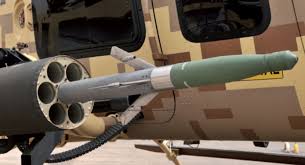
This is the Guided Advance Tactical Rockets (GATR) developed by American company Orbital ATK (now part of Northrop Grumman), and Israel’s Elbit Systems.

Last November 2018, MaxDefense posted in its Facebook page about this impending acquisition project, which is intended for the PAF's 15th Strike Wing. This is important as the delivery of the GATR is historical for the 15th Strike Wing as it will become the unit's first air-to-ground guided munition.


The ATK-Elbit GATR guided rocket munition. The PAF intends to acquire them through Israel's Elbit Systems. Photos taken from ATK Orbital and Elbit's websites.

The Guided Advance Tactical Rocket (GATR):

The GATR was developed as a low-cost solution to conventional guided missiles, allowing the same capability at a fraction of a cost using the 2.75” air-launched rocket systems available to most global air armed services like the Philippine Air Force.

It was designed with minimal smoke signature, and benefits from existing technologies on 2.75” rocket production including the motor and body. It was also developed with several types of warheads including armor-penetrating, blast fragmentation, and high explosive.

Its small warhead size also allows low-yield precision damage, which reduces or eliminates collateral damage especially against targets in an urban setting.

More on the GATR, photo taken from Elbit's website.

It has a maximum effective range exceeding 8 kilometres, compatible to existing 2.75” rocket launchers, and can be used by both slow-moving fixed wing or rotary-win aircraft.

Due to its size and limited range as well as the minimal development cost, reduced production and purchase cost was possible and would be viable alternatives to missiles especially for cash-strapped countries.

Application of GATR, which are also good in counter insurgency or counter terrorism missions. Photo taken from Elbit's website.

Successful tests were conducted in the US as early as 2009 using US Army OH-58 Kiowa Warrior scout helicopters, and were fired via “lock-on before launch” similar to most helicopter-launched guided missiles. It can also be supported using remote laser designation, or lock-on after launch methods.

PAF’s Seleciton of GATR:

An evaluation has been ongoing on the selection of GATR since 2017, wherein it was being evaluated vis a vis other similar munitions including the BAE Systems Advanced Precision Kill Weapon System (APKWS), among others.

An initial buy involving a few launchers and munitions to equip the PAF’s AgustaWestland AW109E Power armed helicopters was planned, which will allow the PAF to conduct its own evaluations of the system prior to deciding on purchasing in larger numbers.

The PAF's AW109E Power armed helicopters can use their existing FN Herstal RMP pods, which can carry up to 3 GATR rockets for each pod. Credits to original source of photo.

Aside from the AW109E fleet, the PAF also plans to have this capability with other assets including existing assets like the MD-520MG Defender armed helicopters (with assistance to forward air controllers equipped with laser designators), and upcoming aircraft like the Bell AH-1S  Cobra attack helicopter, and Rockwell OV-10G+ Combat Dragon Broncos and Embraer A-29B Super Tucano light attack aircraft, all of which are equipped with EO/IR cameras.


Both the OV-10G+ Combat Dragon and Bell AH-1S Cobra can be armed with the GATR. Photos credited to original sources.

The PAF selected the GATR through a Government-to-Government Negotiated Procurement process with the Israeli government, with the PAF Bids and Awards Committee confirming this with a notice released in late 2018.


MaxDefense received confirmation that a contract was signed in early 2019 worth around Php156.785 million (around US$3 million), with deliveries expected to happen in around a year’s time or less.


The 15th Strike Wing has its own inforgraphic display which it uses during ceremonies. The GATR shown is just a mock-up, considering the PAF usually keeps mock-ups of its upcoming munitions like the Python and Derby missiles it showed before. Photos shared exclusively to MaxDefense by a source.

Other Guided Rocket Plans:

Aside from the GATR, the Philippine Air Force is also looking at the possibility of acquiring Turkey’s Cirit air-launched guided rocket madeq by Roketsan, should the PAF’s procurement of Turkish-made TAI T129 ATAK attack helicopter pushes through. This is among the issues being negotiated as part of the Attack Helicopter acquisition project, although they would be acquired separately using a different funding.


The Roketsan Cirit guided rocket is also being considered should the acquisition of the T129 ATAK attack helicopter pushes through. Credits to original sources of photos.

Meanwhile, the Philippine Navy’s Naval Air Wing (PN NAW) has also been looking at the GATR as well as the APKWS, which is aimed to arm their own fleet of AgustaWestland AW109E Power armed helicopters, as well as their AgustaWestland AW159 Wildcat naval combat helicopters. So far no decision has been made by the PN-NAW on which guided rocket they would procure.

MaxDefense received word that the PN NAW was more in favour of the BAE Systems APKWS although that remains to be seen in the final decision.

Project Summary:

Rocket, 2.75" with Guided Advance Tactical Rocket (GATR) Guidance System Acquisition Project


Note: Edited as of 23 September 2019.


* End User: Philippine Air Force (15th Strike Wing)

* Quantity: undisclosed due to OPSEC reasons


* Modernization Phase: outside Horizon 2 phase (standard munitions acquisition using PAF operational funds)


* Project ABC:
 Php156,785,590.00


* 
Acquisition Mode: Negotiated Procurement (Government-to-Government) deal with the Israel Ministry of Defense

* Source of Funding: GAA Funded


* SARO Release: TBC


* Winning Proponent: Elbit Systems (Israel)


* Product for Delivery:  

   - unspecified number of ATK Orbital 2.75" rockets
   - unspecified number of ATK Orbital-Elbit Systems GATR guidance systems
   - unspecified number of rocket launchers

* Contract Price: 
Php156,785,590.00


* First post by MaxDefense: 30 November 2018


* MaxDefense Searching Hashtag: #PAFGATRAcquisition


* Status: Project awarded in early 2019. Delivery expected soon.


===============
===============
First posted 23 September 2019
Copyright MaxDefense Philippines

Wednesday, November 28, 2018

Philippine Air Force Technical Group Picks TAI's T129 ATAK as its Future Attack Helicopter

After keeping the information for sometime now, MaxDefense can finally discuss this publicly after it made public by the Philippine Air Force (PAF) itself during a major event this week.

During the founding anniversary of the PAF's 15th Strike Wing last 26 November 2018, no other than the Commanding General of the Philippine Air Force, Lt. Gen. Galileo Kintanar, confirmed in his speech that the Technical Working Group (TWG) handling the PAF's Attack Helicopter Acquisition Project has selected their choice in the form of the Turkish-made T129 ATAK attack helicopter, manufactured by Turkish Aerospace Industries (TAI).

Although there was no further mention of the status of the acquisition, MaxDefense believes that the choice by the TWG was already approved by the Senior Leaders of the Philippine Air Force, including the CGPAF himself, and was already submitted to the Department of National Defense (DND) to prepare for the negotiations and actual acquisition process with TAI and the Turkish Ministry of Defensce. It is expected that the project will be a Government-to-Government (G2G) deal between the Philippines and Turkey.

While the PAF TWG and the Senior Leaders selected TAI's T129 ATAK, may we remind our readers that selection of the helicopter only means that this would be pushed to the DND for implementation and preparation for negotiation and acquisition. THE PROJECT IS NOT YET AWARDED, NOR CONTRACT SIGNED WITH TURKISH AEROSPACE INDUSTRIES AS OF YET. Like all other acquisition projects, this would undergo several processes that would determine not only the product's compliance to specs, but also the capability of the manufacturer to deliver the project smoothly and within schedule.


The Technical Working Group for the PAF's Attack Helicopter acquisition project selected the TAI T129 ATAK attack helicopter, and was submitted to DND for implementation.
Credits to original source of the photo.


The PAF's Attack Helicopter Acquisition Project:

Originally the PAF's Attack Helicopter Acquisition Project calls for the acquisition of 24 armed light helicopters that will ultimately replace the existing fleet of ageing McDonnell Douglas (now MD Helicopters) MD-520MG Defender single-engine light armed helicopters that have been in service with the 15th Strike Wing since 1990. The allocated budget for the project was originally at Php11.8 billion in 2016, before it was adjusted at least 2 times, and approved for implementation with a budget of Php13.8 billion in 2017.

The plan was to select a dual-engine armed light helicopter model, similar to the Leonardo AW109E Power armed helicopters that are already in service since 2015. Dual engine was preferred due to its safety features in case one of the engine fails while in flight, an important feature when flying especially over bodies of water. Among those considered were the following dual engine light helicopters:

1. An up-engined variant of the Leonardo AW109 helicopter from Italy, 
2. France's Airbus Helicopters H145M with the HForce weapon system,
3. An armed variant of MD Helicopters MD902 Explorer;
4. Hindustan Aerospace Limited (HAL) Rudra from India,
5. Armed variant of the Bell 429 GlobalRanger


Initially the PAF was looking at acquiring armed light helicopters, with the strongest contenders being a more powerful and armed variant of the Leonardo AW109 helicopter (top) and the Airbus Helicopters H145M (above).
Credits to original sources of the photos used.


Based on information gathered by MaxDefense from sources, in addition to its own research, the leading contenders based on the light helicopter platform were the Leonardo AW109, which benefits from being already in service with the PAF, and the Airbus Helicopters H145M, which is actually the leading choice of the PAF due to its superior performance over the AW109. 

But sometime in 2018, the PAF started to also consider purpose-built attack helicopter models, which are more capable in terms of performance and combat capability, but are also more expensive to acquire than armed light helicopters. 

It is believed that the proposal to acquire real attack helicopters started when the Kingdom of Jordan confirmed its donation of at least 2 used Bell AH-1F Cobra attack helicopters to the Philippines, which MaxDefense was first to report back in August 2017. The mere idea of having attack helicopters, despite old, opened up the PAF's mindset of considering purpose-built attack helicopters aside from just limiting itself to armed light helicopters.

Among those purpose-built attack helicopter models considered by the PAF, based on the press releases, information from MaxDefense source, and interviews during ADAS 2018 and other defense exhibitions include the following:

1. Bell's AH-1Z Viper attack helicopter, apparently the PAF's favourite choice;
2. Boeing AH-64E Apache Guardian attack helicopter;
3. Russian Helicopters Mil Mi-28N Night Hunter, as marketed by Rosoboronexport;
4. Russian Helicopters Mil Mi-35 Hind, as marketed by Rosobornexport;
5. TAI T-129 ATAK attack helicopter;
6. Airbus Helicopters Tiger attack helicopter


The Mil Mi-28N Night Hunter (top) and the Bell AH-1Z Viper (above) were among those considered by the PAF when they decided to also look at purpose-built attack helicopters as options for the project. The AH-1Z was even said to be the favourite of PAF pilots.
Credits to original sources of photos.


In a previous poll started by MaxDefense in its Facebook page, majority of voters believed that the PAF would be better off acquiring purpose-built attack helicopters rather than armed light helicopters. Various reasons were made to support their choices, but MaxDefense believes that the main reason for the PAF to forego acquisition of light helicopters was for them to introduce new and additional capabilities that are not possible with armed light helicopters like the AW109 or H145M.

It was reported that the US offered attack helicopters and F-16 fighter aircraft to the Philippines, as admitted by Pres. Duterte himself. Upon checking with MaxDefense sources from Malacanang and the defense department, it turns out that the US offered the Bell AH-1Z Viper and Boeing AH-64E Apache Guardian, and was packaged with US Foreign Military Financing (FMF) and Foreign Military Sales (FMS) programs. But despite this, the DND and PAF was said to be concerned by the steep price, and the long delivery lead time common with US FMS-implemented projects. 

Apparently it is not Pres. Duterte's rejection of American hardware that made the PAF decide against these helicopters, as the DND and PAF didn't take the president's words seriously, according to a cabinet member that MaxDefense talked to a few months ago.


Defense Sec. Delfin Lorenzana views the Mil Mi-28N Night Hunter attack helicopter during the Russian Army 2018 defense expo in Russia last August 2018 (top), and visited the booth of TAI during IndoDefence 2018 in November 2018 (above).
Top photo credited to Philippine Ambassador to Russia Carlos King Sorreta's FB page, and above photo to TAI's Twitter account.


The DND and PAF did look at Russia's Mil Mi-28N Night Hunter and Mil Mi-35 Hind attack and assault helicopters, but did not take them seriously due to issues on inter-operability, compatibility, pricing, and requirements. Apparently the Mil Mi-35 Hind is too big and too expensive to operate, while the Mil Mi-28N is also expensive, although cheaper than its American counterparts.Several trips were made by the DND, including Defense Sec. Delfin Lorenzana himself, and the PAF to Russia to check on the Russian offers.

While the PAF also considered the Airbus Helicopters Tiger, it did not give too much attention due to its reputation of not meeting expectations of users. Apparently the Australian Army did provide feedbacks on the Tiger attack helicopter several years back, and the PAF seems to have remembered them well.

The T129 ATAK is currently Turkey's main attack helicopter operated by the Turkish Army, and is also being actively offered for export by TAI, with Pakistan signing up as its first export market.
Credits to original surce of the photo.


The T129 ATAK Attack Helicopter:

The TAI T-129 ATAK attack helicopter is apparently the second cheapest purpose-built attack helicopter in the PAF's list (the Mil Mi-35 Hind said to be the cheapest to acquire), and appears to be the smallest as well. Even compared to the AH-1Z Viper, it is smaller and lighter by a huge percentage. It was said to be first offered by AgustaWestland to the PAF in 2012, as reported by IHS Jane's, although serious consideration for the type only happened in 2018. While its small size may have reduced its operational range and carrying capacity compared to other attack helicopters, it is also an advantage for the T129 as it allows for a smaller radar cross section, as well as being more difficult to see and target especially by unguided weapons.

It is based on AgustaWestland's A129 Mangusta attack helicopter, which was first in service with the Italian Army in 1990. AgustaWestland provided the technology transfer to Turkish Aerospace Industries using the A129 Mangusta International variant as part of the deal for the Turkish Army to acquire the T129 version as its future attack helicopter. TAI then used locally-made or developed parts, increasing the Turkish content of the T129 compared to the Italian A129 Mangusta.

The Agusta (later on AgustaWestland) A129 Mangusta was the basis for the TAI T129 ATAK, as part of a deal between AgustaWestland and the Turkish government for the selection of the helicopter for acquisition as the future attack helicopter of the Turkish Army.
Credits to original source of the photo.


TAI also improved the design by using upgraded engines, and improved transmission system and rotor. It was also redesigned to allow operations in hot, humid weather as well as cool weather, which is the general Turkish environment in both the European and Middle Eastern side of the country. This would be beneficial for the Philippine Air Force as the local weather is mostly warm and humid. It is yet to be confirmed if the PAF will require its attack helicopters to have saline treatment to protect from the local naval environment of the country.

It can carry a wide variety of weapons, including an M197 triple-barrel 20mm gatling cannon and 2.75" rocket pods and BGM-71 TOW missile, similar to those installed on the AH-1F Cobra helicopters that the PAF is slated to receive. In addition, it can also carry and fire several other types of anti-tank missiles including the American AGM-114 Hellfire, Israeli Spike-ER missile (which the Philippine Navy already uses),  and the Turkish UMTAS missile. It can also fire the Rocketsan Cirit laser-guided rockets, as well as AIM-92 Stinger, MBDA Mistral, and even the AIM-9 Sidewinder air-to-air missiles for protection against enemy aircraft or helicopters.

The T129 attack helicopter is fully aerobatic, as demonstrated during several air shows where the T129 was being marketed for export.
Credits to original source of the photo.


This is already an advantage compared to the weapons that armed light helicopters carry, considering the budget won't be sufficient enough for the units to arrive with upgrades to fire air-to-surface missiles and other weapons.

Currently only the Turkish Army uses the T129A and T129B variants of the ATAK, although Pakistan was already confirmed as an export market and would be receiving 30 units as part of the deal between the two countries. The T129 has also been used in combat over Syria against Kurdish forces, although at least 1 of Turkey's T129 has confirmed to have been shot down only last February 2018 after being hit by an RPG round.


Project Expectations:

MaxDefense was informed by sources that previous statements made by the DND and PAF, as well as by the president himself that the Attack Helicopter (as well as the Combat Utility Helicopter) acquisition projects are the highest priority projects of the Philippine Air Force under the Horizon 2 phase of the Revised AFP Modernization Program (RAFPMP). This is in line with the national government's campaign to be prepared for any future terrorist attack, as well as to increase its combat capability against the terrorist New People's Army (NPA) and various Islamic terrorist groups.

If all goes well, MaxDefense believes that an award can be made, as well as  a contract can be signed between the DND and TAI (or the Turkish government) by 2019, after passing all requirements. Based on similar projects, it is expected that TAI may be able to deliver the first aircraft only after 2 years from contract signing. MaxDefense also believes that a maximum of only 6 units can be acquired based on the budget allocated by the government for this project, although more units can be lined up for acquisition as part of the Horizon 3 phase between 2023-2028.

Another side of the T129 ATAK attack helicopter during an airshow in France.
Credits to original source of the photo.


While 6 units won't be enough to form a decently sized squadron, it is expected that the 2 AH-1F Cobra helicopters will be used as a training platform for PAF pilots to transition from armed light helicopters to purpose-built attack helicopters, and will join the T129 squadron as well, in case no more used AH-1Fs are acquired from Jordan or any other sources. Apparently the PAF desires to raise at least 2 squadrons of 12 aircraft each, while the ageing MD-520MG Defender would be de-armed and used as a training helicopter.

MaxDefense also expects that the PAF may not initially acquire anti-tank missiles for the helicopters, and may rely more on standard 2.75" rocket pods and gun pods, although the PAF may consider acquiring laser-guided rockets, since they are already determining its viability for use on the AW109E armed light helicopter already in service.

Why MaxDefense Released This Information?

To be honest, MaxDefense believes that releasing this information is quite premature considering the status of the project being in the pre-procurement phase despite the TWG's selection of the T129 attack helicopter. But I believe it is the best time to put this out considering the CGPAF himself made the confirmation in public (although within the PAF and visitors) in addition to the information MaxDefense received from other sources.

Our reason is based on information we got that there is someone with influence and close relations to Pres. Duterte that is undermining the project, by pushing the PAF's TWG as well as the Senior Leaders themselves to cancel the recommendation on the acquisition of TAI's T129 ATAK. And instead, recommend the acquisition of another armed light armed helicopter  being offered by the foreign company represented by this influential official's close friend and associate. MaxDefense would refrain from naming people and the company represented for now. Apparently the local representative if an election contributor to this influential official, who is running for public office next year.

Publishing this blog this early allows the general public to know that there is already a decision made by the PAF's TWG and Senior Leadership, and that any changes in it, or even in the PAF's table of organization, could be because of the illicit practices of these corrupt officials close to the president of using their power and influence to make changes, despite being unqualified or inexperienced to make the decision.

What we saw in the Philippine Navy's Frigate Acquisition Project has become a prime example of what could happen if those in power intervene in the AFP's decision making - even military leaders can fall and projects affected for the sake of personal interests by a few. And it is not impossible for it to happen again, this time with the Philippine Air Force.

We hope that the PAF's TWG and Senior Leadership would be strong enough to resist any interference from government officials, or stand for what they believe is the right product to go for.


So What's Next:

At the moment, all we can do is wait until the PAF and DND iron out things, and start the negotiations and acquisition process with their Turkish counterparts and with TAI. Until a contract is signed, there are still many things that could happen that may result to changes in the acquisition plan, or even to the cancellation of the project. Until then, all information in this blog entry are still subject to changes although are all based on the latest information from our sources, as well as from the Philippine Air Force itself as explained earlier in the blog entry.

MaxDefense would monitor developments in this project, whatever happens to the TWG's decision.


Summary:

1. Attack Helicopter acquisition project


End User: Philippine Air Force (15th Strike Wing)
Modernization Phase: RAFPMP Horizon 2
ABC: Php13,800,000,000.00
SARO Release: to be updated
Status as of this writing: proposed to DND for negotiation and procurement
Winning Proponent: None yet, still in pre-procurement phase
Contract Price: not yet awarded.

Tuesday, July 24, 2018

OV-10G+ Combat Dragon II Broncos & Spare Parts for Transfer to the Philippine Air Force

As early as 04 February 2018, MaxDefense made a photo post that left many of our readers puzzled. It was of a black horse-like illustration with several stars underneath it. Many were able to guess what it was although majority were not able to identify it, even until now. For those who are long time MaxDefense readers or followers, it is known that we usually leave clues, meanings, or ideas in almost if not all the posts that we made. And many back then speculated that the PAF was to acquire something very soon there is no reason for MaxDefense to post the illustration considering they are not something from the Philippine military.

To answer the question what the illustration was, it was simply a "bronco",  a type of feral horse that habitually bucks, according to dictionary. The bronco is also the name of Rockwell International's OV-10 aircraft, which is in service with the Philippine Air Force (PAF). Aside from the PAF, there are a few flying units that remain in the United States. And the illustration of the bronco came from the OV-10G+ Bronco, which were made as part of the Combat Dragon II program of the US Special Operations Command (US SOCOM).


One of the OV-10G+ Combat Dragon II Bronco operated by the US Special Operations Command. Two of the aircraft plus two unmodified OV-10As will be transferred to the Philippine Air Force.
Photo taken from Defense Media Network's website.


Come July 2018, and the website "The Drive" posted an article by Joseph Trevithick discussing the possible transfer of  these OV-10G+ Combat Dragon II Broncos to an unspecified US partner, which the author believes is the Philippines, being the only remaining user of the type.

It turns out, the author's guess is right if MaxDefense is to say it. Here's why:

To those following our page regularly, you may have remembered when we changed our Facebook page's profile picture to this one last February 2018. Now its out.
Credits to Defense Media Network for the cropped photo.
By the way, yes, it came from this picture.
Photo taken from Defense Media Network's website.


OV-10s in the Philippine Air Force:
The Philippine Air Force is said to be the last and only operator of the Rockwell International OV-10 Bronco, which it has been operating since the early 1990s when it replaced the T-28B/D Trojans used by the 15th Strike Wing. Depending on sources, the PAF currently has around 8 to 10 operational OV-10s, composed of OV-10As acquired from the US in the 1990s, an OV-10M upgraded from OV-10A, and OV-10Cs provided by the Thai government under a PAF-RTAF swap agreement for F-5A/B spare parts and previously operated by the Royal Thai Air Force.

Some, if not all of the remaining OV-10s in PAF service are upgraded with the capability to deliver Paveway II laser guided bombs via the Wireless Paveway Avionics Kit (WiPAK).

More information on PAF OV-10s can be found on our old blog entry, which can be found on the link below:

"The PAF OV-10 Bronco: A Short Story (1st of 2 parts)" - first posted in June 2013.


OV-10G+ for the Philippine Air Force:

MaxDefense was informed about the negotiations to acquire the OV-10G+ Combat Dragon II Broncos as early as February 2018. The acquisition was really focused not on the aircraft itself, but for the transfer of OV-10 Bronco spare parts in possession of the US government.

The Philippine Air Force was originally after the OV-10 spare parts pool, which is said to be worth several millions of dollars. With nothing to use them for, the US government offered them to the PAF for far less, by just paying the transfer and shipping costs, which MaxDefense believes to be at just over US$2 million for everything. And as part of the deal, the US government is gracefully including 4 air-worthy airframes with it, plus some new equipment to replace some of those they removed. The spare parts are said to be enough for the Philippine Air Force to allow them to operate whatever flying OV-10s they have in their fleet up to year 2024, and might even be enough to revive at least 2 more cannibalised units that can also continue operating for several years more.

The Philippine Air Force currently has a rapidly ageing and depleting fleet of OV-10A/C/M Broncos, which are expected to continue service until the Super Tucano which will replace them becomes fully operational and in sufficient numbers. The spare parts included in the deal with the US government will allow the PAF to extend the life of these OV-10s until 2024, and might be even able to resurrect a couple of cannibalised aircraft in its yard. Here it is seen dropping Mk.82 dumb bombs on hard targets during the Battle of Marawi last year.
Credits to owner of photo.


Due to the urgency of the deal, the Philippine Air Force was said to have been forced to use its own annual operating funds to pay for the package, instead requesting for funding from the national government, which would take several months. Case in point: the Jordanian AH-1Fs which are unpaid until now despite the transfer funds requested almost a year ago, and the Pohang-class corvette transfer which took almost 2 years to fund.

As for the airworthy airframes, it was mentioned to MaxDefense that it would be two of the OV-10G+ Combat Dragon II Broncos, and 2 unmodified OV-10A Broncos. All four aircraft are currently with the US National Aeronautics and Space Administration (NASA), are will be disposed off if by scrapping if nobody is interested in taking it from them. Naturally being the only user of the type in the world, the Philippines was informed of such plan, and the PAF immediately started negotiations for the transfer.

A few months ago, some Philippine Air Force officers went to the US to inspect the aircraft and the spare parts. They found that all are in acceptable condition, in correct content and are indeed what the PAF needed. MaxDefense got confirmation that inspection was not only made once but at least twice.


OV-10A and G+ Details:

According to our sources, the OV-10A Broncos included will be standard models, no modifications made, and have acceptable airframe life left in them compared to the OV-10s still in service with the Philippine Air Force. The PAF's 15th Strike Wing won't have any problem accepting them into service, as they are very similar to the standard OV-10A they have been using since for almost 30 years.

But the OV-10G+ would be something else. These aircraft were heavily upgraded and modified by the US military for use with the US Special Operations Command. They were equipped with a L3 Wescam MX-15D Electro-Optical Infra-Red (EO/IR) turret and cameras with full motion Vortex and ROVER capability and connected to a helmet-mounted targeting system, chaff/flare dispensers for defensive purposes, a partially glass cockpit, a Line of Sight / Satellite Communications (SATCOM) system, a Link 16 tactical data link, and Harris Falcon III tactical radios.

The OV-10G+ Combat Dragon II Bronco are equipped with an L3 Wescam MX-15D electro-optical infra-red (EO/IR) turret. Although removed by the US military prior to transfer to NASA, the PAF intends to acquire them immediately and install the turrets once the aircraft are assembled in the Philippines.
Photo taken from L3 Wescam's website. 


The OV-10G+ are also capable of carrying and firing the Advanced Precision Kill Weapon System (APKWS) which is essentially a guided rocket that is linked with the aircraft's EO/IR turret. This is in addition to the smart bombs (Paveway) that it could deliver.

Aside from that, the OV-10G+ also uses a four-bladed propeller from Hartzell, similar to those used by OV-10Ms of the PAF.

With the US SOCOM, the OV-10G+ was used as a test bed for capabilities while also used as  a terrorist hunter. It was flown as a test platform for the US Air Force's Light Air Support Aircraft program.

The OV-10G+'s purpose is seen in this illustration from the US SOCOM. It was an observation aircraft capable of directing forces to terrorist targets, and have its own capability to attack targets if necessary.
Photo taken from US SOCOM c/o The Drive.


Transfer Package to the Philippines:

As already mentioned by The Drive's article, the OV-10s were previously with the US military and were transferred back to NASA in demilitarized mode, meaning all its military capabilities were removed prior to the transfer. The photos from NASA already show that the EO/IR turret is missing.

MaxDefense was also told that the TDL Link 16, the Helmet Mounted Targeting System, and chaff/flare dispensers were all removed too. So essentially, the OV-10G+ only has its 4-bladed propeller and the partial glass cockpit as the most obvious upgrade at the moment.

But based on the US Air Force's own solicitation as seen below, the US will retain the wirings installed during the upgrade, once it's transferred. The contractor was asked to reinstall the wirings once its assembled upon delivery, which is good news for the PAF.

The solicitation made by the USAF for the disassembly, crating, shipment and reassembly of OV-10A and OV-10G+ aircraft. Take note the special requirement on the wirings for the OV-10G+.
Photo cropped from FedBizOps (FBO) website of the US Government.


Now that the aircraft were demilitarized, then what?

The Philippine Air Force actually plans to reinstall some of the upgrades made by the US military, but it would be paid for by them. Among the items to be immediately acquired by the PAF for installation upon delivery is the L3 Wescam MX-15D EO/IR turret. It also appears that the PAF is negotiating if the US can provide some of its used helmet mounted targeting system, although the possibility is slim. The PAF could acquire brand news ones separately later on though.

All other upgrades will be made later on after the acquisition, as this deal is being rushed by the US government before the end of the year. Since the PAF paid for the deal in cash using its annual funds, it wull need to request for a separate funding for them to be able to upgrade the OV-10G+ with its desired capabilities.

The Philippine Air Force may already have some of the Harris Falcon III tactical radios available considering this is the standard tactical radio of the Armed Forces of the Philippines. Equipping the aircraft with this allows it to communicate with ground and other forces seamlessly, as PAF Forward Air Controllers also use Harris Falcon III radios.

The PAF is also seeking for the acquisition of the APKWS, which is long in their plans and might also be acquired for the upcoming fleet of Embraer A-29B Super Tucanos which will start delivery by 2019. MaxDefense has yet to confirm if the TDL Link 16 will also be included in the re-upgrade plan. Plans to install chaff/flare dispensers and ROVER capabilities are highly likely to happen later on as well.

Like the upgraded OV-10Ms and OV-10A/C in the PAF, the OV-10G+ is expected also to be able to use the GBU-12 Paveway II and the GBU-49 Enhanced Paveway II, both of which are in PAF's inventory.

These additions will make the OV-10G+ Combat Dragon II Broncos still the most modern Bronco in PAF service once they join the fleet, and would be a good stop-gap measure and training platform for the upcoming Super Tucanos which will have the same capabilities as the Combat Dragon II Bronco.

Unlike its useage with the US SOCOM which is to observe targets at a safe distance, the PAF may not use this primarily as an observation aircraft, but will likely be used  primarily for day/night attack aircraft, capable of carrying out precision strike against hard or mobile targets, and as a close air support aircraft for ground troops. It could made to be linked to data from surveillance unmanned and manned aerieal vehicles like the Cessna 208 Grand Cavaran ISR aircraft, Scaneagle UAVs, C-130T ISR aircraft, future Long Range Patrol Aircraft, or other future UAVs of the Philippine Air Force.

Having the MX-15D EO/IR turret also allows the Combat Dragon II Bronco to use laser-guided bombs without the support of ground-based forward air controllers (FAC) which are usually PAF ground combatants embedded with other AFP ground troops to provide target acquisition or lacing to attack aircraft like the OV-10. Current PAF OV-10s and other attack aircraft were dependent on FACs during the Battle of Marawi, and the new capability to use the EO/IR turret for target lacing allows the aircraft to conduct its own precision bombing run without the need for eyes on the ground even or targets where collateral damage is highly likely to happen. This is something new for the PAF and the AFP in general.


Like the OV-10 Bronco fleet used by the PAF, the OV-10G+ is expected to be able to carry and fire the GBU-12 Paveway II and GBU-49 Enhanced Paveway II smart bombs which are in PAF's inventory. The 2 upcoming OV-10A Broncos may also be upgraded to be capable of firing them by installing the WiPAK system found on PAF OV-10s.
Photo taken from PAF's website years ago.


The newest capability the OV-10G+ can provide the PAF is the ability to launch the APKWS guided rocket system, which is currently unavailable with the PAF. The PAF is also interested in arming its AW109E armed helicopter fleet with this weapon system, as well as the upcoming A-29B Super Tucano which will start to arrive in 2019.
Credits to owner of the photo.


Delivery Date:

Now the big question, when is the aircraft expected to be delivered?

MaxDefense was informed while we were writing this blog entry that it is expected to arrive on or before December 2018, since the US government wanted the aircraft and parts to be shipped ASAP, as they need the space it currently occupies in NASA's storeyard, If these aircraft and parts are not removed, the US government will be forced to scrap them all.

Therefore, it is also expected that the 2 OV-10G+ and 2 OV-10As will be operational with the PAF's 15th Strike Wing by early 2019, and will be operated by the 16th Attack Squadron.


More updates will be provided by MaxDefense later on, as the deal is still being ironed out as of the moment. But one thing is certain according to our sources - this deal will push through urgently and the PAF does not have any plans of not pursuing this acquisition.


Summary:

1. Acquisition and Shipment of OV-10 Bronco Aircraft and Spare Parts

End User: Philippine Air Force (15th Strike Wing)
Modernization Phase: PAF General Appropriations Fund (not under any Horizon phase)
ABC: ~US$2,000,000.00
SARO Release: N/A
Proponent: US Government, Still Unknown contractor for shipping and assembly
Bid Price: Negotiated Procurement, unknown value
First post by MaxDefense: 24 February 2018

Philippine Navy Modernization Projects

Philippine Air Force Modernization Projects