Your 1st for Philippine Defense

Austal leads Philippine Navy's OPV Acquisition Project!

SecDef Lorenzana confirms Austal is still the preferred OPV supplier for the PN

The Philippine Navy commissions its 2nd Jose Rizal-class frigate!

The Philippine Navy welcomes BRP Antonio Luna (FF-151), its newest frigate!

The Philippine Navy selects Shaldag Mk. V for Fast Attack Interdiction Craft!

The DND has awarded the FAIC-M Acquisition Project to Israel Shipyards

The Philippine Air Force wants more Black Hawk helicopters!

The Philippine Air Force asks for more Black Hawks to allow the retirement of their Bell UH-1 Huey fleet

The Philippine Army orders the Sabrah Light Tank System from Israel!

Israel's Elbit Systems was declared the winner to supply light tanks to the PA

The Philippine Air Force receives full order of Hermes 900 and Hermes 450 UAVs!

All 9 Hermes 900 and 4 Hermes 450 MALE UAVs have been received by the PAF!


Showing posts with label Horizon 2 2nd List. Show all posts

Sunday, May 31, 2020

Philippine Navy Plans to Acquire Shore-Based Anti-Ship Missile System from India


Several news reports from both the Philippines and India have been made on the planned acquisition of BrahMos land-based anti-ship cruise missiles for the Philippine Army, as the Philippine Army also confirmed their plans based on the press releases and infographics they have shown to the public during internal occasions since late 2019.

In the last report from an Indian news outlet, Indian Ambassador to the Philippines Jaideep Mazumdar confirmed that the Philippine and Indian sides will continue discussion and finalize the deal for the export of Brahmos land-based missiles systems to the Philippines once the Covid-19 pandemic restrictions are eased, with the hope of closing the deal within 2020.

But it appears that the Philippine Army is not the only interested party in acquiring the Brahmos missile system. In fact, another branch of service has moved far closer to making that happen than the Philippine Navy, based on information MaxDefense received from Indian and Philippine sources.

As our headline says, yes, the Philippine Navy, on behalf of the Philippine Marine Corps (PMC), is also set to acquire Shore-Based Anti-Ship Missile Systems from India. And they might get it first before the Philippine Army.


This has been in our draft section for more than 6 months now, and it looks like now is the best time to report this development.


The 2nd List of Horizon 2 Phase Requests for Land Based Missiles:

The 2nd List of Horizon 2 phase of the Revised AFP Modernization Program (RAFPMP) actually included 2 similar projects requested by 2 different branch of services of the Armed Forces of the Philippines (AFP).

One is the Land-Based Missile System (LBMS) Acquisition Project of the Philippine Army with a requested budget of Php10 billion, and the Shore-Based Anti-Ship Missile System (SBASMS) Acquisition Project of the Philippine Navy with a requested budget of Php18.9 billion.

After separate evaluations made by the 2 service branches, it appears that both got into a conclusion that India's BrahMos land-based missile system is the best option they have.

While the Philippine Army is looking at having a missile system that can be used to attack naval targets and possibly land targets, the Philippine Navy appears to be looking more on hitting enemy ships from great distances.

According to MaxDefense's sources from defense and industry sources, the Philippine Navy was able to make the request for such system earlier than the Philippine Army. But after the Frigate Acquisition Project fiasco, the Philippine Navy's previous leadership under former Flag Officer in Command (FOIC) Vice Adm. Robert Empedrad decided to keep the project under wraps to avoid attention. 


So far, MaxDefense has not heard or observe anything irregular on the project.


The Philippine Army previously disclosed its interest on the Brahmos missile system for its Land Based Missile System (LBMS) Project. Photo shared exclusively to MaxDefense.


The Philippine Navy's Shore-Based Anti-Ship Missile System Project - A Background:


The Shore-Based Anti-Ship Missile System (SBASMS) Acquisition Project of the Philippine Navy was actually raised due to the Philippine Navy's disappointment on the decision by the Philippine Army to shelve an old project, the Shore-Based Missile System(SBMS) which was cancelled back in 2015 by the Philippine Army leadership led by then Philippine Army Command General Lt. Gen. Hernando Iriberri, who decided that the Philippine Army would rather spend the Php6.5 billion budget of the project for other essential projects.

One of the main purposes of the SBMS project was to assist the Philippine Navy in providing limited Anti-Access/Area Denial (A2/AD) capabilities in the West Philippine Sea including the Kalayaan Island Group, despite its limited range if deployed in Palawan.

The idea was to help give the Marines (which are under the Philippine Navy) a better chance to fight off a potential naval invasion of the KIG by Chinese or any other potential enemy force.

Back then, the Philippine Army has selected the IMI Systems Coast & Island Defense System (CIDS) which is essentially 2 batteries of land-based rocket launcher systems based on the IMI Lynx rocket-missile launching system, and the IMI Extended Range Artillery (EXTRA) guided rocket munition.

The IMI EXTRA is capable of delivering a 120 kilogram warhead with a maximum range of around 150 kilometers. MaxDefense sources from IMI Systems later on confirmed that it can actually go beyond 150 kilometers. The system was also capable of launching other munitions including the Delilah cruise missile which was among the future capabilities offered to the Philippine Arm should it have proceeded with the SBMS project.


The IMI CIDS based on IMI Lynx launcher and IMI EXTRA guided munitions. Photo credits to original source.

Fast forward to 2016, the Armed Forces of the Philippines, specifically then AFP Deputy Chief of Staff for Operations (J3) BGen. Noel Clement submitted a "wish list" to the AFP leadership that includes "a singular shore-based capability (eg. Brahmos) to provide strategic-level firepower to defend the country".

From the statement made by J3, who eventually became AFP Chief of Staff from September 2019 to January 2020, it already appears that there was already sentiments from the military leadership on acquiring a more capable missile system than what the IMI CIDS can offer, with the Brahmos even cited as an example.

With the Philippine Navy left out by the cancellation of the Philippine Army's SBMS Project, the service then made a commitment to make sure that they will have their own shore based missile system, and won't be reliant on the Philippine Army.


This time, instead of a guided rocket system, both services are after an actual surface-to-surface missile system, which can do sea-skimming flight and course changes while flying to its target - something the guided rockets like the IMI EXTRA cannot do.


The Brahmos, like most anti-ship cruise missiles, fly at low levels of less than 15 meters from sea level. Photo taken from Pakistan Defence forum.

Advantages on Selecting the Brahmos Missile System:


According to our sources, several models were considered by the Philippine Navy and Philippine Army, including Russian, Indian, Korean, and European solutions. In the end, both services agreed on acquiring India's Brahmos land-based missile system for the following reasons:

1. The Philippine government has been actively promoting an "Independent Foreign Policy" that is "Friends with all, Enemies of none". This includes expanding its sources of weapon systems, which includes considering products from India in which the Philippines has a growing relationship with. So far, India has failed to supply a more relevant weapon system to the Philippines aside from Force Protection Equipment (body armor, helmets) from MKU Ltd., and Thermal Imagers from Tonbo Imaging. Awarding this project to India gives the Philippines a good opportunity to expand relations with India.

2. Both services agreed to have a supersonic missile for consideration, rather than the usual subsonic missile used by most Western countries. A supersonic missile would be more difficult to intercept by hard kill solutions like gun and missile-based Close-In Weapon Systems (CIWS) due to its speed and ability to close the gap faster.


The missile also does an S-manoeuvre just before reaching its target, which makes interception even more difficult considering it is doing so while flying at supersonic speeds.


Gun-based CIWS like the Chinese Type 818 as shown above could be useless against supersonic sea-skimming anti-ship cruise missiles like the Brahmos. Credits to original source of photo.

3. Having a supersonic missile means having a bigger kinetic energy upon impact. It means that a single missile could have devastating effects even to ships as large as a destroyer or cruiser, not just because of the warhead it carries, but also the force it bring at such speed.

4. Supersonic missiles also cover distances at a shorter time than subsonic missiles, which gives the target a smaller reaction time. 


5. The Brahmos missile carries a 300-kilogram semi-armor piercing warhead, which can penetrate and damage even the toughest ship hull armor plating.


6. While Russia can also offer supersonic missiles, CAATSA issues remain a problem. Going with India means buying something comparable without the CAATSA issues with it.


7. Pricing is very competitive for the Brahmos missile system. Apparently comparable Western products are far more expensive and more difficult to obtain due to the system's tactical and strategic value. 


A subsonic anti-ship missile like the Kongsberg Naval Strike Missile can do this damage on a frigate-sized warship. The Brahmos carries a larger warhead, and approaches its target at a faster speed, enabling more damage due to its warhead and kinetic energy. Credits to original source of photo.

Disadvantages:

While the Brahmos missile is a potent weapon, it also has disadvantages.

1. One cannot just fire anti-ship missiles at anyone anytime, unless fired upon. Should the Philippines be the first to fire in anger using this weapon without using other means to push away a naval threat, it could be a reason for a war to happen, and for world opinion to be against the Philippines.

2. The SBASMS has no other use other than to fire against enemy ships, or if the land attack missile is used, it can fire against enemy land targets. But that may not even happen during the entire serviceable life of the weapon system unless a real conflict between the Philippines and other countries happen. Thus, the weapon is more of a deterrent against other countries, which is exactly one of the main purpose of the Area Access / Area Denial (A2/AD) strategy.


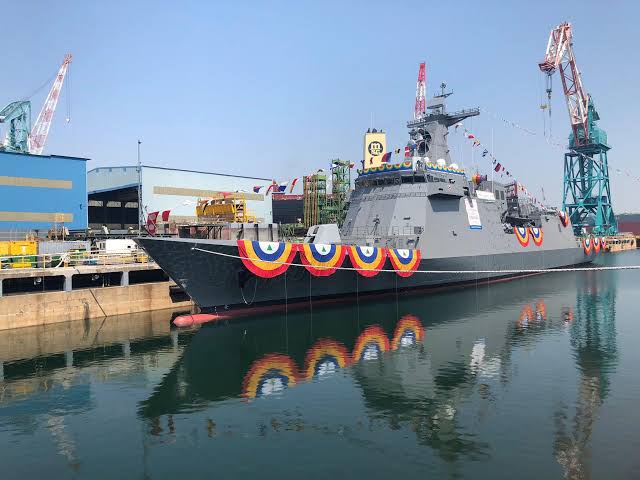
Unlike ships and aircraft, like the Jose Rizal-class frigate above and the F-16 Fighting Falcon fighter on top, truck based systems cannot really move in a huge area, and has no other use rather than to launch missiles. Ships and aircraft on the other hand can move and be made available at certain areas of the country, while can also be used for other missions aside from being a missile launch platform. Credits to original source for the top photo, while above photo originally from Bemil Korean defense page.

3. Being land based means it is only bound within the land areas of the Philippine mainland. It is unsafe to send the system in the Kalayaan Island Group due to it being easy to be targeted by ship, land or submarine launched missiles, or by missiles launched by combat aircraft. Truck based means its mobility is also limited unlike ships or aircraft that carry anti-ship missiles which can move around a wider area and the platforms can be used for other purposes.

4. Related to the third reason, the Philippines being an archipelago means that it would not be easy to move around the truck-based weapon system without using ships or aircraft. For example, if it is deployed in Palawan, it would be dependent on the availability of roads to move around. Without transport ships or aircraft, it would be stuck within Palawan Island only.


5. It remains to be seen if India could export the newer version of the Brahmos land-based surface-to-surface missile variant, which increased the range from 290-300 kilometers to 500 kilometers. If the Philippines still get the older, shorter-ranged variant, the missile might not be able to cover the entire Kalayaan Island Group and West Philippine Sea/Philippine Exclusive Economic Zone even from the fringes of the Philippine Mainland.


Infographic above shows an example of how the coverage of a standard Brahmos shore-based missile system would be like, if deployed in Batanes, Zambales, Palawan, and Tawi Tawi. Panatag (Scarborough) Shoal would be covered but will be very limited, while not the entire KIG will be covered too. This is based on the original 290-300km range of the Brahmos missile. Infographic by MaxDefense Philippines.

MaxDefense is still trying to get confirmation from sources if the Philippine Navy, as well as the Philippine Army's Brahmos missile systems would be the newer variant which now has a 500 kilometer maximum range.

Despite the range, it might not be covered by Missile Technology Control Regime (MTCR) restrictions since the warhead is less than 500 kilograms, which is within the MTCR allowances.


To compare with the earlier infographic, this time we considered that the maximum range of the Brahmos missile system that both the PA and PN will be acquiring is 500 kilometers. Notice the huge difference in terms of coverage. Not only can they cover a huge portion of the country's EEZ with less deployments, it can also cover the entire Kalayaan Island Group, Panatag (Scarborough) Shoal, and could even reach friendly neighbours in case relations become sour in the future for some unexpected reasons. Infographic by MaxDefense Philippines.

While the Philippine Army is only after 2 batteries, the Philippine Navy is after 3 batteries of Brahmos anti-ship missile systems. Combined, this will give the entire Armed Forces of the Philippines with a total of 5 Brahmos anti-ship missile batteries which it could deploy in several locations, mostly facing the West Philippine Sea and to the northern end of Luzon facing the Luzon Strait and Babuyan Channel.

===============

With the COVID-19 crisis still hitting the Philippine economy hard, it remains to be seen though if this project will be given priority once everything goes back to normal. 

But MaxDefense already received confirmation that, despite the COVID-19 restrictions, online training has began for select Philippine Navy, or more specifically, Philippine Marine Corps personnel. This includes theories and basic knowledge on missile systems, and on operating and maintaining the Brahmos missile system specifically.

This could be a good sign that the project would most likely be pushing thorough, despite the hefty price tag.

Stay tuned to MaxDefense Philippines for more updates regarding the Philippine Navy's Shore-Based Anti-Ship Missile System (SBASMS) Acquisition Project, as well as the Philippine Army's Land-Based Missile System (LBMS) Acquisition Project.


Typical connectivity of Brahmos missile system in coastal defense, this example as employed by the Indian armed forces. Credits to original source of photo.

Project Summary:

Shore-Based Anti-Ship Missile System Project


Note: Edited as of 31 May 2020.


* End User: Philippine Navy (unspecified unit, most likely the Philippine Marine Corps)

* Quantity: 3 batteries on Shore-Based Anti-Ship Missile Systems


* Modernization Phase: 2nd List of Horizon 2 phase


* Project ABC:
 Php18 billion

     
* Acquisition Mode: Government-to-Government deal with India

* Source of Funding: AFP Modernization Trust Fund


* SARO Release: TBA


* Winning Proponent: TBA


* Product for Delivery:
      - 3 batteries of BrahMos land-based supersonic anti-ship missile systems, including supporting vehicles and subsystems, spare parts and ammunition, and ILS. 


* Contract Price: 
TBA


* First post by MaxDefense:
TBA 


* MaxDefense Searching Hashtag: #PNSBASMSAcquisition


* Status: Senior Defense and Military Leaders approval done, approval from DBM and Office of the President still pending. Final negotiations on hold due to Covid-19 travel and business restrictions, as well as potential funding issues due to funding diversion.

===============
===============
First post and edit: 31 May 2020
Copyright MaxDefense Philippines


Saturday, April 4, 2020

As Philippine Air Force moves away from the OV-10 Bronco as CAS Aircraft, What's Next?


The recent news posted by American civilian defense contractor Blue Air Training early this week of their acquisition of several surplus Rockwell OV-10D+ and OV-10G Broncos to beef up their fleet was the proof MaxDefense Philippines has been waiting to come out. 

This further supported our report last January 2020 that the Philippine Air Force's plan to acquire the OV-10G Broncos from the US National Aerospace and Space Administration (NASA) appears to have been cancelled.

Two of the newly acquired OV-10D+ Bronco of Blue Air Training. Photo taken from Blue Air Training's Facebook page.

Cancellation of OV-10A/G Procurement:

It would be remembered that the US government, through NASA was looking for ways to dispose its fleet of OV-10A and OV-10G Broncos, together with several million dollars worth of spare parts. And it was proposed for the aircraft and parts to be transferred to the only US ally still operating the aircraft type - the Philippines.

The OV-10G+ Combat Dragon II Broncos when in service with the US Air Force. Credits to original source of photo.
Part of the agreement is for the aircraft and spare parts to be given for free as a donation under the US Military Assistance Program. But like any other donation, part of the deal is for the Philippines to shoulder the rehabilitation of the aircraft, sending personnel to the US for training and other purposes, and to pay for the logistics and transport of the items from NASA's storeyard to the Philippines.

The amount payable after donation was said to be less than Php200 million, which means that the Philippine Air Force can actually take care of the deal without requiring the Department of National Defense (DND) to act on it and provide funding. The PAF was to instead use its own annual funding to pay for the costs.

A PAF OV-10 Bronco being prepared for an air operation. Credits to original source of the photo.

But for some reason, MaxDefense sources mentioned that the PAF appears to have failed to meet the financial obligations on time, considering NASA was in a hurry to dispose the aircraft and parts. As usual, the slow action by the Philippine side may have costed the deal from becoming successful.

Up until December 2019, MaxDefense was told that the chances of it proceeding as planned has become very low based on the Philippine Air Force's lack of action to send people to the US for anything related to the deal, and on lack of signs that a transfer is taking place.This was why MaxDefense posted about the impending cancellation after the New Year.

Now with Blue Air Training confirming that they acquired not just the OV-10Gs (only 2 of which are available globally), it means this project of PAF acquiring them is indeed dead.

Blue Air Training also confirmed to have acquire several OV-10D+ from other sources, aside from the OV-10G from NASA. Photo of OV-10D+ Bronco taken from Blue Air Training's Facebook page.

Current situation of the PAF's OV-10 Bronco fleet:

The Philippine Air Force's OV-10 Bronco fleet is currently grounded. None are flying for several months now. although the PAF is using the time to keep the fleet in the best condition possible as it plans to make them fly again by mid 2020.

Originally when acquisition of the OV-10A/G Broncos and spare parts from NASA was pushed, the plan was for the Philippine Air Force to continue flying the Broncos until 2024, together with the new Embraer A-29B Super Tucano aircraft that it is receiving soon. The Super Tucanos will replace the SF-260TP armed trainers of the 17th Attack Squadron, which will receive the A-29B Super Tucanos, which will be transferred to other units as combat trainers. While the PAF orders for more Super Tucanos, the Broncos will continue performing close air support and ground attack missions.

A PAF OV-10 Bronco with an Enhanced Paveway II precision guided munition. Photo taken from Military Porn @ Reddit.

But the failure of the Philippine Air Force to secure the needed spare parts to keep the fleet means that these plans won't proceed.

Instead of the above plans, the PAF will fly the OV-10A/C Broncos together with the A-29B Super Tucanos in a single squadron, while the SF-260TP armed trainers will remain in service as a combat asset.

And due to the lack of spare parts needed to fly the Bronco fleets for several more years, it is anticipated by MaxDefense that the aircraft will be flown as long as the PAF can sustain them, most likely by either late 2021 or early 2022.

A PAF OV-10 Bronco dropping a bomb during the Battle of Marawi in 2017. Photo taken from Reuters.

New Plan Ahead:

With the OV-10 Bronco expected to retire from service earlier than planned, the Philippine Air Force appears to be looking ahead with a new plan.

The Philippine Air Force has started pushing for the acquisition of additional Embraer A-29B Super Tucano light attack aircraft to fill the numbers gap, adding to the 6 units already in service by then.

One of the Philippine Air Force's A-29B Super Tucano undergoing flight tests in Brazil last year. Photo taken from and credited to Leonardo Santana.

The goal is to have the National government approve an acquisition program for new A-29B Super Tucanos, numbering between 6 to 12 additional units under the 2nd List of Horizon 2 phase, which comprises projects outside the original Horizon 2 priority phase that are lined up in case the government can spare the AFP Modernization with more funding aside from the Php300 billion worth already approved in 2018.

The additional orders will increase the fleet size to between 12 to 18 aircraft, which is the optimum range for number of aircraft in a combat squadron.

One of the A-29B Super Tucano attack aircraft of the Afghan Air Force. Photo taken from National Interest.

This could cost between Php6 to Php12 billion, which is a hefty sum considering the Philippine government may have difficulty making this possible due to the devastation on the Philippine economy as an aftereffect of the ongoing Covid-19 pandemic.

MaxDefense believes that the crisis would affect the Philippine economy until 2022, which means that the chances of having the 2nd List of Horizon 2 phase program to happen has significantly become less likely.

A-29B Super Tucano aircraft of the Lebanese Air Force. Photo taken from Lebanese Air Force.

Now What?

Whether or not the request for funding for additional Super Tucanos pushes through, it still remains to be seen if the government will approve such request.

MaxDefense now believes that the PAF leadership may have made a judgement error, considering the Covid-19 pandemic was something nobody would have probably expected. MaxDefense believes that if the pandemic was foreseen by the PAF leadership, it is highly possible that it could have pushed hard to have the OV-10A/G Bronco and spare parts acquisition happen.

But this all moot now. All we can look forward is that the PAF has a serious plan to beef up its light attack aircraft assets when the opportunity comes. And since the PAF is already a future operator of the A-29B Super Tucano, acquiring additional units in the future won't be an issue in terms of the ability of the service to accept and transition to the aircraft.

An A-29B Super Tucano demonstrator dropping a Paveway laser guided bomb during tests. Photo taken from US Air Force.

Project Summary:

OV-10 Bronco Aircraft and Spare Parts Transfer Project


Note: Edited as of 04 April 2020.


* End User: Philippine Air Force (15th Strike Wing)

* Quantity: 4 used OV-10 aircraft, millions of dollars worth of OV-10 spare parts


* Modernization Phase: Special Project within Horizon 2 phase timeline


* Project ABC:
 ~US$2 million ++

     
* Acquisition Mode: US Foreign Military Sales (FMS) program

* Source of Funding: PAF 2018-2019 GAA


* SARO Release: N/A


* Winning Proponent: TBA


* Product for Delivery:
      - 2 units used OV-10G+ Combat Dragon Bronco aircraft

      - 2 units used OV-10A Bronco aircraft
      - 1 lot OV-10 spare parts worth millions of USD.


* Contract Price: 
TBA


* First post by MaxDefense: 
24 February 2018


* MaxDefense Searching Hashtag: #PAFOV10TransferProject


* Status: Procurement CANCELLED. Aircraft instead acquired by American civilian defense contractor Blue Air Training.


===============

Close Air Support Aircraft (Phase 2) Acquisition Project


Note: Edited as of 04 April 2020.


* End User: Philippine Air Force (15th Strike Wing)


* Quantity: unconfirmed, estimated to be between 6 to 12 units


* Modernization Phase: Proposed under the 2nd List oHorizon 2 Phase Projects of RAFPMP


* Project ABC: unconfirmed, MaxDefense estimates to be between Php6 billion to Php12 billion.

* Contract Price: TBC


* Difference between ABC and Contract Price: TBC

* Expected Delivery: TBC


* Acquisition Mode: TBC, expected to be Government-to-Government between Philippine and Brazilian governments.


* Source of Funding: TBC


* SARO Release: TBC


* First post by MaxDefense: 04 April 2020

* MaxDefense Searching Hashtag: #PAFCASAPhase2Acquisition


* Status: Proposed to be included as part of 2nd List of Horizon 2 phase, still for approval to start procurement process.


===============
===============
First posted and released on 04 April 2020
Copyright MaxDefense Philippines


Monday, December 2, 2019

Philippine Navy plans to acquire Shore Based Air Defense Missile System


The Philippine Navy (PN) continues to expand its capabilities as part of the AFP Modernization Program, being the naval warfare component of the Armed Forces of the Philippines (AFP).

With naval warfare and naval defense becoming multi-dimensional, the PN is trying to obtain new capabilities to keep up with the added responsibilities and coverage that has started to overlap with those of the other AFP branch services.

MaxDefense will be discussing one of the most discreet asset acquisition projects of the Philippine Navy, which is actually not part of the Php300 billion Horizon 2 phase Priority Projects that was approved in-principle by President Rodrigo Duterte last June 2018.

As promised to its readers, this is actually one of the 7 projects that reached milestone last October 2019 when the Department of National Defense (DND) Senior Leaders had their roundtable discussions.

Exclusive @ MaxDefense Philippines: may we present the Philippine Navy’s Shore-Based Air Defense Missile System (SBADMS) Acquisition Project.

The Philippine Navy is currently undertaking the acquisition of a Shore Based Air Defense Missile System as part of its 2nd List of Horizon 2 acquisition plans. Photo taken from Kongsberg's website.

The Shore-Based Air Defense Missile System (SBADMS) Project:

Little is actually known on this project if you only rely from printed sources, since this is one of the Philippine Navy’s most secretive project. Since their debacle on the Frigate Acquisition Project, the Philippine Navy leadership has become more secretive on their current acquisition projects to avoid being exposed if another debacle happens, or if scandals arise again during the procurement phase.

The Shore-Based Air Defense Missile System (SBADMS) acquisition project was intended to provide the Philippine Navy with an air defense capability to protect its assets on shore or on port. This includes naval or marine bases, and naval or marine shore-based assets like anti-ship missile batteries and Marine units.

A typical air defense system would include a mobile firing unit, a radar system, and other support systems like command and control, logistics and others. Photo taken from Army Technology website.

The preferred system is a Medium-Range Surface-to-Air Missile system, mobile/self-propelled preferably on a wheeled platform rather than tracked. The choice on mobility requirements would allow the system to move faster and more efficiently over road networks, with partial off-road capability, without the need for tank transporters.

Range is said to be at least 40 kilometers, although a longer range is expected to have stronger preference.

New comer on the offerings to the AFP in general is the Roketsan HISAR-O which is the medium range version of the HISAR system from Turkey.

Being medium-ranged, the Air Defense Missile System would enable to defend high value assets and units under a larger umbrella, with future short range missile systems possibly added later on to provide better coverage in all range brackets.

An air defense system protecting the Philippine Navy's main base at Sangley Point, Cavite also means partial protection of the southern part of Metro Manila and Manila Bay due to proximity.

MaxDefense’s initial information suggests that the budget allocated for the SBADMS acquisition project is around Php9.8 billion, which is more than the PAF’s own GBADS acquisition project. But this is still subject to changes considering the Philippine Navy is now having problems on getting enough funding for other projects like the Submarine Acquisition Project which is expected to be the most expensive naval project in Philippine history to date.

The PN SBADMS would also be protecting future shore based anti-ship missile systems. Photo above "for reference only", if you know what I mean.

In comparison, the PAF GBADS only has a budget worth Php6.846 billion, or 30% less than that of the

It is highly possible that the PN SBADMS project would involve either more firing units, or more ammunition compared to the PAF's GBADS project to justify the Php3 billion difference in budget.

India's Akash medium range SAM system was also offered by officials from Bharat Dynamics and the Indian government. Photo taken from Economic Times India.


Options for Medium-Range Air Defense Missile System:

The Philippine Navy actually received the same offers made as the Philippine Air Force for their Ground-Based Air Defense System (GBADS) acquisition project, considering the requirements are almost similar for both the PAF GBADS and the PN’s SBADMS projects.

Among those that made their pitch or were included in the evaluations made by the Philippine Navy were:

* Rafael Advance Defense Systems with the SPyDer Air Defense System from Israel;
* Diehl Defence with the IRIS-T Surface Launched (SL) from Germany;
* LIGNex1 KM-SAM Cheolmae-II from South Korea;
* OKB TSP Buk-MB3K from Belarus;
* Almaz-Antey Buk M3 from Russia;
* Kongsberg Defense – Raytheon NASAMS from Norway;
* Roketsan HISAR-O from Turkey;
* Bharat Dynamics Akash Mk.1 or Mk.2 from India


Apparently both the Buk M3 (top) fron Russia and the Buk MB3K (above) from Belarus were offered for the project. While the Buk M3 is said to be the more advanced system, the Buk MB3K has the advantage of avoiding CAATSA sanctions due to it being from Belarus. Photos credited to original sources.

Rafael SPYDER:

MaxDefense’s sources have mentioned that among the selections, Rafael’s SPYDER ADS was said to be potentially leading due to commonality with the selection made by the Philippine Air Force for its GBADS requirement. The SPYDER-MR, similar to what the PAF was after for their GBADS requirements, is the expected variant to be offered due to range requirements.


(Top): The SPYDER MR uses a larger launcher than the other shorter-ranged variants, which means a larger truck platform.
(Above): the missiles used by the SPYDER ADS including the Python V and I-Derby missiles with boosters (3rd and 4th from left).
Credits to original sources of photos.

The SPYDER-MR is the medium range version of the SPYDER Air Defense System. It has a longer launcher due to the installation of boosters on the standard I-Derby and Python V missiles which makes them longer. Coupled with a longer-ranged IAI Elta ELM-2084 MMR 3D AESA radar that can detect even beyond the range of the missile system, full potential of the missiles can be realized.

A typical set-up of a Spyder ADS battalion with 3 batteries. Photo taken from Rafael's website.

Kongsberg Defense-Raytheon NASAMS:

While Kongsberg Defense’s NASAMS appear to be a favorite, it was said to be the most expensive system in the list above which would be detrimental in the selection process. The current push to acquire US-made weapon systems has made this system more attractive to the Philippine Air Force due to recent increased support from the US for allies to purchase their weapon systems. The larger budget allocated for the project compared to the PAF’s GBADS also is a factor that may allow the acquisition of more expensive systems like NASAMS.

While the NASAMS can be mobile and installed on a truck-based mobile unit, it can also be placed in a semi-permanent position like the unit shown above. Photo taken from Second Line of Defense website.

The NASAMS, or National/Norwegian Advance Surface-to-Air Missile System, uses a ground-launched version of the Raytheon AIM-120 Advance Medium Range Air-to-Air Missile (AMRAAM) which is more known as the medium range air-to-air missile of US forces and its allies.

Depending on the version of AMRAAM missile used, range of the system can either be below or exceed 40 kilometers. It will also be dependent on the radar supporting the system, which usually is the AN/MPQ-64 Sentinel F1 Improved 3D radar that has a maximum effective range of around 80 kilometers. An older version of the Sentinel radar has a short effective range of a little over 40 kilometers.

Finland's NASAMS are mounted on SISU heavy duty offroad trucks as shown above. Credits to original source of photo.

LIGNex1 KM-SAM Cheolmae-II:

Another strong competitor is the LIGNex1 KM-SAM Cheolmae-II (Iron Hawk) from South Korea, which is said to be affordable, and is something being considered in the long term as the Philippine Navy is also looking at the naval version of KM-SAM for deployment to future warships. Despite not being used by other countries, it still meets government procurement law on having the country of origin (South Korea) using the system.


The KM-SAM is to replace the ageing Raytheon Hawk and I-Hawk missile systems. Credits to original sources of photos.

The KM-SAM was developed by South Korea in cooperation with Russia’s Almaz Design Bureau, is said to carry technology derived from Russia’s S-350E and S-400 air defense missile systems. The KM-SAM missile is said to have a maximum range of around 40 kilometers, although proposals were made to further extend the missile’s range.


Despite evaluation said to be still ongoing, these three air defense missile systems are said to be the expected air defense systems that might find its way to the shortlist for different reasons.

Of the three, the Rafael SPYDER-MR has the longest maximum range at 60 kilometers by installing auxiliary boosters on the Python V and I-Derby missiles to extend their flight range.

MaxDefense’s Opinion:

All three air defense missile systems are said to be the best, and most easily interoperable to the Philippine Navy and the Armed Forces of the Philippines’ equipment system. Except for the LIGNex1 KM-SAM, all widely in use: the SPYDER is being used by Singapore, Vietnam, India, and Georgia; while the NASAMS by the US, Finland, Spain, Norway, Chile, and the Netherlands.

All three are mobile and are fitted unto multi-purpose trucks, including the mobile firing units, command posts, sensors and support vehicles. NASAMS is also able to be removed from the mobile unit and installed as a semi-fixed launching unit.

Based on the maximum range alone, the Rafael SPYDER-MR medium range air defense system appears to have the advantage being able to defeat air targets at up to 60 kilometers away using the boosted version of the I-Derby and Python V missiles.

The SPYDER-MR also benefits from being the selected system by the Philippine Air Force for its own air defense requirements, which means commonality and compatibility in terms of operations, interconnectivity to an integrated air defense system, maintenance and support, training and logistics.

Another advantage is that the Python V and I-Derby missiles used by the SPYDER ADS are also being considered by the PAF for use by fighter aircraft especially by the KAI FA-50PH Fighting Eagle fleet, although the NASAMS may also have a similar advantage once the Philippine Air Force finalizes its acquisition of Multi-Role Fighters since the selected aircraft from an American manufacturer normally uses AMRAAM as its medium-range air-to-air missile.

Both SPYDER-MR and NASAMS are said to be easy to integrate with the PAF and AFP’s upcoming Air Defense Network system despite being a Philippine Navy asset. It remains to be seen though if the same can be said on the KM-SAM Cheolmae-II considering the South Korean military operates in a similar NATO-standard system as the US, Philippines, and other US allies.

MaxDefense believes that the SPYDER-MR, NASAMS and KM-SAM would be great addition to the Philippine Navy and the overall air defense system of the Philippines, although MaxDefense leans more on the SPYDER-MR and NASAMS due to reasons above.

The radat and mobile launching units of the SPYDER MR system. 

The Real Question Though:

It still puzzles MaxDefense though that the Philippine Navy was allocate a budget for a Shore Based Air Defense Missile System, when their Jose Rizal-class frigates are yet to have a proper vertical launch system (VLS) for a longer-range anti-aircraft missile system due to funding issues.


So how come there is priority on a Shore Based Air Defense Missile System, but none on the Vertical Launching System (VLS) and VLS-launched air defense missiles for the Jose Rizal-class frigates? Credits to original sources of photos.


Project Summary:

Shore-Based Air Defense Missile System Acquisition Project


Note: Edited as of 01 December 2019.


* End User: Philippine Navy (unspecified unit/s)

* Quantity: TBA


* Modernization Phase: 2nd List of Horizon 2 Phase of RAFPMP


* Project ABC:
 Php9,800,000,000.00

     
* Acquisition Mode: Most likely Government-to-Government deal.

* Source of Funding: TBA


* SARO Release: TBA


* Winning Proponent: TBA


* Product for Delivery: TBA


* Contract Price: 
TBA


* First post by MaxDefense:
TBA


* MaxDefense Searching Hashtag: #PNSBADMSAcquisition


* Status: Pre-procurement phase ongoing. Senior Defense Leaders provided approval to proceed. Technical Working Group evaluation and selection process ongoing. 


===============
===============
First post and edit: 01 December 2019
Copyright MaxDefense Philippines

Philippine Navy Modernization Projects

Philippine Air Force Modernization Projects