Your 1st for Philippine Defense

Austal leads Philippine Navy's OPV Acquisition Project!

SecDef Lorenzana confirms Austal is still the preferred OPV supplier for the PN

The Philippine Navy commissions its 2nd Jose Rizal-class frigate!

The Philippine Navy welcomes BRP Antonio Luna (FF-151), its newest frigate!

The Philippine Navy selects Shaldag Mk. V for Fast Attack Interdiction Craft!

The DND has awarded the FAIC-M Acquisition Project to Israel Shipyards

The Philippine Air Force wants more Black Hawk helicopters!

The Philippine Air Force asks for more Black Hawks to allow the retirement of their Bell UH-1 Huey fleet

The Philippine Army orders the Sabrah Light Tank System from Israel!

Israel's Elbit Systems was declared the winner to supply light tanks to the PA

The Philippine Air Force receives full order of Hermes 900 and Hermes 450 UAVs!

All 9 Hermes 900 and 4 Hermes 450 MALE UAVs have been received by the PAF!


Showing posts with label lockheed martin. Show all posts

Friday, March 22, 2019

Contract Signing for PAF's Combat Utility Helicopter Project to happen very soon

The Philippine Air Force (PAF), through its former Commanding General Lt. Gen. Galileo Gerard Kintanar Jr. announced in late 2018 that the Technical Working Group (TWG) for the Combat Utility Helicopter (CUH) acquisition project under the Horizon 2 phase of the Revised AFP Modernization Program (RAFPMP) has selected the Sikorsky S-70i Black Hawk as its top choice. This was after the project's TWG evaluated it against other competitors which include the Leonardo AW139M, Korea Aerospace Industries KUH-1 Surion, Russian Helicopters Mil Mi-171 Hip, among others.


The Sikorsky PZL Mielec S-70i Black Hawk International. Photo c/o Lockheed Martin.


The Combat Utility Helicopter acquisition project under the Horizon 2 phase calls for the supply and delivery of 16 units of new Combat Utility Helicopters, including the specified Integrated Logistics Support (ILS) package that includes the spares and logistics support, training and conversion requirements, and mission essential plus support tools and equipment. The Approved Budget for Contract (ABC) is worth Php12.1 billion, or around US$230 million. It remains to be seen if the budget will increase to allow the PAF to be able to pay for its selected product.

Sikorksy S-70 Black Hawk helicopters of the Austrian Air Force. The PAF has selected a newer version of the helicopter to be its next Combat Utility Helicopter.
Photo taken from Photo Nexus.


It did not take long for Defense Sec. Delfin Lorenzana to back Lt. Gen. Kintanar's announcements, that the Department of National Defense (DND) supports the PAF's selection of the American-designed helicopter for the CUH acquisition project. He even mentioned that the Black Hawk is a proven platform, in use by the US Army and many other militaries around the world.

So it is actually surprising that, its already 4 months and no announcement has been made by the DND on the formal awarding of the project to the Black Hawk's manufacturer Sikorsky, or its mother company Lockheed Martin.


Procurement Process:

After the PAF and DND confirmed the selection of Sikorsky's S-70i Black Hawk as its top selection, the TWG and the DND's Bids and Awards Committee (DND-BAC) proceeded with the Post Qualification Inspections (PQI) to determine if Sikorsky and its Polish subsidiary PZL Mielec both comply to their submitted documents and requirements, and if their product complies with the technical specifications.

As early as January 2019, MaxDefense was informed that Sikorsky & PZL Mielec did pass the PQI by the PAF TWG and DND-BAC, thus it is eligible to proceed with the project and receive a Notice of Award (NOA) from the Philippine parties.

The Sikorsky-PZL Mielec S-70i Black Hawk.
Photo taken from and credited to Rob Lovesey @ Flickr.


Finally a Good News:
After a long wait, finally there is good news on this project.

Based on information MaxDefense received from reliable sources, the Notice of Award (NOA) for the project was already released in favor of Sikorsky Aircraft Corp.- PZL Mielec last February 2019, and Contract Signing will be happening very soon, 

The event may happen anytime, and could even be as early as within today if the DND has made the entire process quicker than expected.

Drafting the contract may take time, as it involves both parties to agree on the contents of the contract, including the clauses and appendices on requirements, schedules and programs, inclusions and exclusions, items for clarification, any side-agreements, warranties and after sales support, modifications to suite the end user, and other necessary requirements.

Based on experience using the PAF's previous contracts, it may take from as short as one (1) month from NOA release, to as long as almost a year to complete. In this case, MaxDefense expects the contract to be ready for signing within 2 months from NOA release.

MaxDefense was informed that the deal will be a Direct Commercial Sale (DCS) mode of procurement instead of the lengthier Foreign Military Sales (FMS) with the US government, and will mostly involve PZL Mielec being the manufacturer of the helicopter.


Notes from Previous Announcements:

a. Training: 

It would also be remembered that the PAF and the DND confirmed during the Defense Budget 2019 hearing with the Senate that training of pilots will be conducted with Sikorsky in Florida, USA. This is despite the helicopters and aftersales support being provided by its Polish subsidiary PZL Mielec.

This allows for easier training of PAF air and ground personnel due to the use of English as medium of instruction, which was said to be a problem when the PAF previously awarded a similar CUH acquisition contract to PZL Swidnik for the W-3A Sokol utility helicopters under the old RA7898-supported AFP Modernization Program.


b. PAF being an Experienced Black Hawk operator:
Another benefit that is worth raising here is that the PAF is actually a long time user of the Sikorsky S-70 Black Hawk, as it has been one of the first Black Hawk operators outside the US when it acquired a couple of S-70A-5 Black Hawk from Sikorsky in the mid 1980s. At least one of the Black Hawks remain in service with the PAF as a Search and Rescue platform of the PAF's 505th Search and Rescue Group.

The PAF is a long time user of the Sikorsky S-70A Black Hawk. One unit remain in service with the 505th Search and Rescue Group.
Photo taken from Defense of the Republic of the Philippines Facebook page, credits to Patrick Joseph.


c. Early Delivery:

The PAF and DND also confirmed during the said hearing that Sikorsky-PZL Mielec has committed to deliver the first batch within 6 months. MaxDefense believes that this timeframe is based on the Opening of the Letter of Credit, which is usually the case for most AFP modernization projects.


MaxDefense will provide more updates regarding this project as more information comes in. Considering that the project is moving forward without any more expected roadblocks from people with influence from now on.

Tuesday, September 2, 2014

Philippine Navy Interested with US-made SWATH Vessel, and Proposal for Other Alternatives

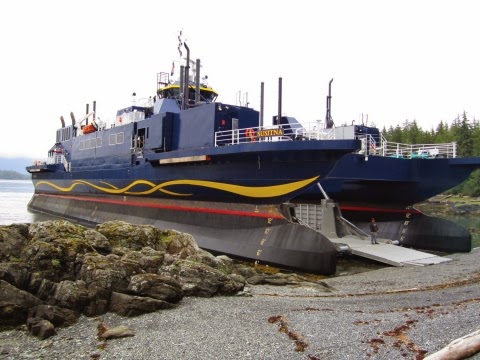
News of the Philippine Navy showing interest in an Alaskan borough-owned ferry has surfaced recently on several defense forums and groups after news reports from Alaska identified the Philippine Navy as one of the possible buyers. Currently the Matanuska-Susitna (Mat-Su) Borough owns the said vessel, M/V Susitna, and wanted to sell it off.


M/V Susitna during operational testing. Note the cargo hold is lifted during normal cruising.
Photo taken from Vigor Industrial website. 


The M/V Susitna:
M/V Susitna is actually a half-scale prototype for a proposed  Expeditionary Landing Craft (E-Craft) requirement for the US Navy, and was made by Alaska Ship & Drydock using a design from Guido Perla & Associates and concept from Lockheed Martin for the Office of Naval Research in 2010, and costed $78 million to build. It was reportedly planned as a "3-in-1" vessel, being a High Speed Catamaran that uses the SWATH (small waterplane area twin hull) design, with a variable draft system that allows the ship to shift from SWATH mode to barge mode by lowering or raising the center deck which carries the cargo, using an advanced hydraulic system. The ship was also designed with icebreaking capability (the first icebreaking SWATH ship in the world), and has the capability to beach and used on unprepared docks.


The MV Susitna is beachable, which is very important for use on damaged or unprepared docks.
Photo taken from gCaptain website.


Basic specifications of the ship are as follows:
Crew: 5 men
Range: 800nmi @ 16 knots, 1,600nmi @ 10 knots;
Length (overall): 59.54 meters;
Beam (overall): 18.29 meters;
Design Draft: 3.66 meters;
Design Displacement: 940 long tons (955 metric tons);
Maximum Speed: 20 knots;
Propulsion: 4 x MTU 12V4000 M70 (2,435hp each) Diesel Engines;
Radars: Kelvin Hughes Manta 30kw S-band, 10kw X-band;
Depth Sounders: Furuno FE700 echo sounder

The ship's payload details are as follows:
Center Barge (cargo hold): 160' x 35', approx. 5,400ft²  (around 501m²)
Capacity: 35 tons normal load
 * 129 passengers plus 20 standard vehicles or 1 tractor-trailer rig
 * No passenger, 1 M1A1 Abrams tank or multiple smaller combat vehicles


The lower and upper deck plans of the M/V Susitna.
Drawing taken from Mat-Su Borough Purchasing Division RFI document.


Most on the ship's basic specifications can be seen on the link HERE:

Although the ship was being evaluated by the US Navy, it was intended to be used as a civilian ferry for a local Alaskan government unit and service between the city of Anchorage to Port MacKenzie. But the ferry project failed and the ship was left with the Matanuska-Susitna Borough, who currently maintains it until a buyer can be found. It is reportedly being sold for only $6 million, just enough to help the borough pay for their bills and free them of maintenance costs.


The M/V Susitna before launching from Alaska Ship & Drydock's facility in 2010.
Photo taken from Valor Industrial website.


Enter the Philippine Navy:
MaxDefense has been monitoring this development for some time, and so far no confirmation was made by the Philippine Navy or the Philippines' Department of National Defense if they will acquire the vessel or not. So far PN sources confirmed that they have sent representatives to Alaska to inspect the vessel together with US Navy representatives last August 29, 2014. No word yet regarding their findings and evaluation. The presence of US Navy representatives might mean that the ship could be acquired with US Navy or government partcipation either through FMS, or will be possibly be shouldered by the US government under a US defense grant or part of its annual defense aid it gives to the country. No confirmation though on how the acquisition will be done should there be an agreement between the PN and the US government.

According to the PN sources, they are looking at the vessel due to its versatility and capability to deliver men and materiel directly to the beach, or on unprepared docks which are essential features of a capable transport ship during peacetime Humanitarian Assistance and Disaster Relief (HADR) operations and military and civilian supply missions, and in support of wartime amphibious operations. Aside from the ship's capabilities, the reported $6-8 million pricetag plus logistics support, training and other expenses, with regards to the technology it possess and its age (the ship is only 4 years old and was barely used), was a major factor of the PN's interest on the ship. Also, the PN sources confirmed to MaxDefense that the budget to acquire the ship, should it happen, will be from other sources and not from the AFP Modernization program. 

It should be remembered that the DND and AFP are looking to increase their HADR capability during the aftermath of the back-to-back disasters the Philippines faced in 2013 (Typhoon Haiyan and Bohol Earthquake), with calls for the AFP to have better capability to quickly respond to emergencies. The situation in the Kalayaan Group of Islands, with the absence of prepared docks and presence of Chinese Coast Guard patrol vessels, make the ship an effective platform for resupply missions. This vessel, if acquired, will be one of these dual-use equipment that can immediately be delivered to the PN should a confirmation be made soon. 


Parts of Samar were destroyed after Typhoon Haiyan hit the island. Unprepared or damaged docks, or beaches similar to that shown in the photo, can still be serviced by ships like the M/V Susitna.


Aside from the PN, there are many other interested buyers on the ship, mostly private corporations and oil companies, so a decision to acquire the ship or not will probably be made in a few months.


MaxDefense's Analysis:
The ship is actually cheap for the technology and capability it possess: a variable geometry, variable draft transport ship that is beachable, with ice breaking capability, and speeds of 20 knots, and almost new and barely used for $6 to 8 million (probably without transfer and other ancillary expenses). Findings during inspection of 3rd party valuation inspector found the ship in excellent condition. And best of all, it is readily available for transfer to whoever buys it. It would be best to compare the ship to its nearest equivalent to the Philippine Navy: the BRP Tagbanua (AT-296).


The BRP Tagbanua (AT-296) (above), the PN's newest transport asset, is the best platform to compare the M/V Susitna as they have almost comparable capabilities.


1. Price and Age:
The M/V Susitna originally costs $78 million in US taxpayer's money to construct, and they're selling it between $6 to $8 million ++ after 4 years of moored in cold Alaskan waters, barely used only for tests and trial runs, and for maintenance. The BRP Tagbanua was acquired by the Philippine Navy for a contract price of Php 178,900,000.00 (around $4.2 million in 2011). Both are almost the same age, with the M/V Susitna only more than a year older, still quite young for a used vessel. Based on this, the Alaskan ship is actually cheap considering that the price is not much different from the locally made and less technologically advanced BRP Tagbanua. It is also worth noting that Tagbanua is also actually cheap if compared to similarly but foreign built vessels of the same class.


Looking at the recent photo of the M/V Susitna above, it really does look immaculate.


2. Speed, Range, and Sea State Level:
The design of the M/V Susitna's hull was supposed to cut through the water more efficiently than standard transport ships, the Tagbanua included. The Susitna's maximum speed of 18 knots is barely higher than the Tagbanua's designed maximum speed of 15 knots, although it is expected that the twin-hull design of the US-made ship is more stable and less drag than the PN's LCU. The catamaran has a designed range of 1,600nmi @ 10 knots and is certified to operate to up to Sea State 3 although there were claims that the ship operated well in higher sea states. No range and sea state certification was found for the AT-296, although it is expected to be in the same range as the catamaran.

3. Payload:
This is where the M/V Susitna fails to beat the BRP Tagbanua. While the Susitna has a larger cargo deck of 501m² compared to the Tagbanua's 250m², the LCU beats in payload capacity as it can carry up to 110 tons of cargo versus the catamaran's measly 35 tons. With the catamaran having a higher displacement than the LCU, the design of heavy icebreaking hull is actually be a disadvantage since there's no use for this capability in tropical waters, while increasing the total weight of the ship and reducing its payload capacity as well.


The BRP Tagbanua's cargo deck is narrow and smaller than that of the M/V Susitna, yet it can carry heavier equipment unlike the catamaran. But the Susitna's capacity is good enough to carry lighter loads.
Photo taken from Rappler.


In this case, the Susitna may not be a good transport vessel for heavy equipment like tanks and bulldozers, although it could be a good asset to carry light vehicles and relief goods, or using the large deck to transport people for short distances. 

4. Fuel Efficiency, Maintenance:
The heavier M/V Susitna is powered by four 2,400hp MTU 12V4000 M70 engines, while the 40% lighter BRP Tagbanua is driven by a single Caterpillar CAT C32 ACERT 1,600hp diesel engine. You decide who drinks more fuel.

With more mechanical parts than a standard military or civilian transport ship, plus the vaunted advanced hydraulic lifting system for the cargo hold, it is also expected that the M/V Susitna may require more maintenance checks, spare parts, and a more complicated maintenance program that equates to more costs. 


Conclusion:
The M/V Susitna is a very nice ship to have, with technological features and extra capabilities that the PN might be happy to have. Technology-wise, having it means access for the PN to study for its self-reliance programs, and with the ship already awaiting a buyer, it is actually the best to have if the need is very immediate. In the case of the PN, they might be in a hurry to acquire an HADR-capable vessel very soon as the super typhoon season is fast approaching. 

Politically speaking, it is also worth looking at the US Navy's involvement in the acquisition. While we do not know how the PN intends to acquire the ship should they be interested, the US Navy might be instrumental to the acquisition, and it might be possible that they would grant the ship just to help the Mat-Su Borough get though with the pain of paying for its continuous upkeep without generating anything for the local government unit.

But it is also worth considering the PN's track record in terms of paying for acquisition and maintenance expenses. At the reported offer price, it is actually cheap, and the national government may already have the budget ready and only awaiting for the PN's approval. But the expected maintenance cost, coupled with the possible high operating cost might be a strong reason for the PN to decline the offer. MaxDefense's proposal is for the PN to only maximize the use of this ship in emergency situations, where money is not an issue when time is of the essence and lives are at stake.

MaxDefense believes that the PN should study this offer very well, although they must do it fast as there are many other possible candidates who might be willing to acquire the ship. 


The Australians have started taking out their Balikpapan-class heavy landing crafts. The PN could take them in if they are still in good condition.
Photo taken from Wikipedia.


Other proposals include the acquisition of other readily-available assets from other sources. The Australians have recently decommissioned their Balikpapan-class heavy landing crafts, which could be sold for cheap due to their age, while the Koreans have already started disposing some of their older landing crafts, with one example already reportedly recently donated to the PN. Also, it is expected that the Republic of Korea Navy (ROKN) is about to take-out some of their Go Jun Bong-class landing ship tanks to give way to newer ships that are coming in soon. The PN should take advantage of these assets not only to for HADR operations, but also to replace the already delapidated World War II US-made LSTs sisterships of the BRP Sierra Madre that the PN continues to operate. For long term, the PN must continue to acquire new LCUs similar to its BRP Tagbanua, which is said to have some identified flaws that could be rectified in newer derivatives of the ship class.


The PN is scheduled to receive a used Korean-made Landing Craft Utility from the ROKN. There are more of these in ROKN's stocks that are expected to be taken out of service very soon.
The PN should also take a closer look at the Korean Go Jun Bong-class LST to replace the PN's WW2-era LSTs. These are good long term solutions to replace old PN transport assets.
Photo taken from Wikipedia.


===============
UPDATES:
===============
September 7, 2014:
A recent news report from the Alaska Dispatch News indicated that the Mat-Su Borough is really in a hurry to dispose the M/V Susitna due to mounting upkeep expenses, and is hoping that the recent visit by Philippine Navy officials will bear fruit. Due to the ship being a previous project by the US Navy, it is expected that any acquisition of the ship by foreign governments may require it to be done through their supervision. 

It was also indicated that should the PN acquire the ship, it would be modified from a day-only vessel to an asset that has provisions for all-day operations, including enclosed passenger compartments for troops or civilian evacuees. This means that the costs of acquiring the ship may go up from the original $6 million, with the additional costs going to logistics support and spare parts, training of ship crew and maintenance teams, modifications based on Philippine Navy requirements, and shipping from Alaska to the Philippines. MaxDefense believes that this would probably double the total acquisition cost of the ship.

Saturday, November 30, 2013

Fulfilling the Immediate Needs for Additional C-130s for the Philippine Air Force

The Lockheed C-130 Hercules aircraft has shown its versatility to the general public recently after being the main aircraft in use to deliver humanitarian assistance and disaster relief (HADR) in the aftermath of Typhoon Haiyan (Yolanda)'s wrath in the Visayas. As discussed in an earlier blog, C-130 aircraft from the Philippine Air Force (PAF) and other military air units from other countries joined together to support the massive HADR operations. 


A PAF C-130H Hercules arriving in Tacloban City in the aftermath of Typhoon Haiyan.
Photo taken from the Armed Forces of the Philippines. c/o UN News Center.

Questions arose on why the PAF only had 3 C-130 transport aircraft, and with calls from the general public and government officials to acquire more of these aircraft, MaxDefense decided to look back and update the blog with the plans of the government and the military to acquire more of these useful behemoths.


Commissioned PAF C-130s:
Currently there are 3 C-130s in PAF service: 2 C-130H models and a single C-130B model under the care of the 220th Airlift Wing based in Benito Ebuen Air Base in Mactan, Cebu. The "B" model with tail no. 3633, was recently recommissioned with the PAF after refurbishing by the 410th Maintenance Wing under the assistance of Lockheed Martin technicians, while one of the "H" model with tail number 4704 was recently recommissioned after undergoing a Periodic Depot Maintenance by BAE Systems in the US. The other "H" model with tail number 


A PAF C-130H Hercules being prepared for to return to the Philippines after a Periodic Depot Maintenance was done by BAE Systems in Nevada, USA.
Photo taken from The Philippine Embassy in the USA.

There are also 3 more C-130s in Benito Ebuen Air Base that are parked on the apron for still unknown reasons: 2 C-130B models and a single L-100-30 civilian variant of the stretched Hercules.

Each of the C-130s can deliver almost 20 tons of goods and equipment that can fit its cargo hold of around 12.3 meters (length) x 3.1 meters (width) x 2.74 meters (height). Its versatility was shown as C-130s took in vehicles, relief goods, equipment, and evacuees to and from disaster areas. Not only are they good for HARD operations, but are also primarily design to transport high volume of military supplies, light vehicles, troops and paratroopers to and from the front lines. The PAF once had dozens of these assets but dwindled due to lack of financial support from the government and poor maintenance by the PAF in keeping them in good shape, or at least in proper storage when mothballed.


Mothballed C-130s in Cebu:
MaxDefense indicated in an early blog that these 3 mothballed C-130s in Cebu are said to be candidates for refurbishing and re-commissioning to the PAF's transport fleet. Although it is still unclear if all can indeed by refurbished and put back to service, MaxDefense's sources already indicated that at least 1 unit is being prepared for refurbishing by the 410th Maintenance Wing, and is already funded by the government. There are also some conflicts in information regarding the status of the 2 other C-130s, with some open sources and defense forums with PAF sources saying that they are not suitable for revival, while some information gathered by MaxDefense from other PAF sources say that all can be refurbished and revived but will require a varying degree of refurbishing that will also require varying budget allocations. The only thing certain is that they are all in poor condition as the PAF was unable to put the airframes in proper storage.


The 3 C-130 Hercules transport planes in Cebu, currently mothballed and awaiting for its fate.
Photo taken from Mr. Jake Nelson @ Pinoy Daily Journal. 

Recently Sen. Ralph Recto supported the plan to provide funding to refurbish the mothballed C-130s, although he did not give specifics if he was referring to the 3 units in Cebu. According to him, a PAF source provided an estimate that the cost to refurbish a C-130 run at around Php 500 million, thus refurbishing 3 mothballed C-130 could cost at around Php 1.5 billion which he supports to be added in the 2014 National Budget. MaxDefense believes that due to the poor condition of the 3 aircraft plus the varying level of refurbishment needed for the 3 aircraft, it may even run higher than the value Sen. Recto was pushing. Also, it would take more than a year toc complete refurbishing of a single C-130, and 1 unit may only be available by 2015.


The men of the 410th Maintenance Wing was able to refurbish a C-130B in house with the help of specialists from Lockheed Martin. It won't be impossible for them to do it again to further enhance their skills and to save on cost rather than sending a mothballed plane to a private aircraft company for revival.
Photo taken from Mr. Thomas Diez's Facebook page.


PAF to Buy 2 More C-130s:
With the questions raised on why the PAF only has 3 C-130s in its fleet, the Department of National Defense (DND) through Secretary Voltaire Gazmin, announced that they the PAF is in the process of procuring 2 more C-130 aircraft for Php 1.6 billion ($37 million) starting next year. This was also echoed by AFP Chief of Staff Lt. Gen. Emmanuel Bautista in a separate interview. 


Excess C-130s of the US military stocked in the "boneyard" at Davis-Monthan Air Force Base in Arizona. The Philippine government could negotiate with the US for sale and/or grant used C-130s and other military aircraft to fulfill its immediate requirements.
Photo taken from the Tucson Sentinel.

The budget would be Php 800 million or $18.5 million per aircraft, and will probably include and integrated logistics support (ILS) package, training and some spare parts. With that amount, the PAF could only afford to buy a refurbished legacy C-130 model, and not a brand new or even used new generation C-130J Super Hercules version. This would probably be sourced from a friendly country, and MaxDefense believes that if negotiations will be completed by 1st quarter of next year, the C-130s could only be commissioned with the PAF by either late 2014 or early 2015. This option is still faster to complete as compared to refurbishing the mothballed C-130s in Cebu.


Even More C-130s?:
There was also a report from a local news organization saying that according to their source from the AFP, there was a plan by the US government to grant 3 legacy C-130 Hercules aircraft to the Philippine government that was supposed to be announced during the scheduled visit of US President Barack Obama last October. Although the visit was cancelled, such program can be revisited by both governments, especially that US Secretary of State John Kerry is pushing through with his visit to the Philippines before the end of the year. But MaxDefense believes that finalizing such deal doesn't need Sec. Kerry's presence so it would be a matter of how the Philippine government presents its request.

This runs similar to an earlier MaxDefense blog on PAF C-130s wherein MaxDefense sources from DND indicated that at least 3 units are planned to be transferred from US Excess Defense Articles (EDA) stocks. Latest information from these sources confirm that there is a standing request from the PAF for additional C-130s, and may be sourced from friendly countries.


There are reports that the US was to grant 3 C-130 aircraft to the Philippines as part of the agenda of President Obama's cancelled visit to the Philippines. Although there's no confirmation yet, this can be a welcome addition should it happen.
Photo taken from Philippines Today.

Aside from this, the PAF still has plans to get additional C-130 planes in the next phase of the AFP Modernization Program after 2017. This may include the option of getting new birds, which may include the new generation C-130J Super Hercules to complement the legacy Hercules in PAF service and probably replace them in the long term. No numbers for now though.

C-130J Super Hercules in the future? Not impossible if the government is consistent in putting emphasis to a stronger and better responding Armed Forces of the Philippines even after the term of President Aquino.
Photo taken from Wikimedia.


If all these negotiations are indeed happening and becomes a reality, the PAF will end up with a minimum of 6 to a maximum of 9 working C-130 aircraft by the time President Aquino steps down, which is close to MaxDefense's earlier estimate in an earlier blog entry. According to CSAFP, the PAF is "happy" to obtain 9 more C-130s. While all this is not entirely impossible, it is up to the government's political will, backed by the DND, AFP and PAF's effective lobbying that will ultimately bring this to reality.

Philippine Navy Modernization Projects

Philippine Air Force Modernization Projects