Your 1st for Philippine Defense

Austal leads Philippine Navy's OPV Acquisition Project!

SecDef Lorenzana confirms Austal is still the preferred OPV supplier for the PN

The Philippine Navy commissions its 2nd Jose Rizal-class frigate!

The Philippine Navy welcomes BRP Antonio Luna (FF-151), its newest frigate!

The Philippine Navy selects Shaldag Mk. V for Fast Attack Interdiction Craft!

The DND has awarded the FAIC-M Acquisition Project to Israel Shipyards

The Philippine Air Force wants more Black Hawk helicopters!

The Philippine Air Force asks for more Black Hawks to allow the retirement of their Bell UH-1 Huey fleet

The Philippine Army orders the Sabrah Light Tank System from Israel!

Israel's Elbit Systems was declared the winner to supply light tanks to the PA

The Philippine Air Force receives full order of Hermes 900 and Hermes 450 UAVs!

All 9 Hermes 900 and 4 Hermes 450 MALE UAVs have been received by the PAF!


Showing posts with label AFP Modernization Program. Show all posts

Sunday, June 6, 2021

Philippine Air Force makes final push for Multi-Role Fighters with Saab JAS-39C/D Gripen


The Philippine Air Force (PAF) has started to make its final chance to push for the acquisition of new Multi-Role Fighter (MRF) aircraft, as securing funding for modernization projects has reached the final few months.

And based on information MaxDefense PH has gathered from sources from the Philippine Air Force and from the defense industry, the Technical Working Group (TWG0 for the Multi-Role Fighter Acquisition Project has revised its recommendation and go with the Saab JAS-39C/D Gripen fighter aircraft from Sweden.

This was approved by Philippine Air Force leadership led by PAF Commanding General Lt. Gen. Allen Paredes, as well as the Armed Forces of the Philippines (AFP) led by AFP Chief of Staff Gen. Cirilito Sobejana.

If information provided to MaxDefense PH are correct, this has been already passed to the Department of National Defense (DND), which now has the ball in securing final approval from Malacanang to secure funding requirements.

The Saab JAS-39C/D Gripen. Photo credits to CZDefence.

From F-16 Viper to JAS-39 Gripen:

2019 - 2020: Selecting the F-16 Block 70 Viper:

MaxDefense PH reported previously that the Philippine Air Force Technical Working Group has selected the Lockheed Martin F-16C/D Block 70 Viper in 2019, and was already submitted to the Department of National Defense for approval by the National Government.

The PAF was said to stick to the original plan, as negotiations continued with the US Government and Lockheed Martin with the F-16 Viper deal. In the process, the offer made by Lockheed Martin was for 12 new F-16C/D Block 70 Viper fighters, as well as 2 to 4 used F-16D Block 30 or 40 Fighting Falcon fighters hot-transferred from the US Air National Guard.

A CGI of the F-16C Block 70 Viper. Credits to original source of photo.

If the contract was signed and Notice to Proceed (NTP) were released by early 2020, deliveries were said to be made starting 2024 for the F-16 Block 70 Vipers, although hot-transfer of used F-16 Block 30 or 40 Fighting Falcons will be made within 1 to 2 years from release of  NTP, which is somewhere around 2021 or 2022.

Training would be conducted in the mainland United States with US Air Force or US Air National Guard units, while succeeding training would also be conducted in the Philippines as part of regular deployment of US military personnel under the PH-US Visiting Forces Agreement.

The US will also provide an option to the Philippine Air Force for grants of additional F-16C/D Block 30 or 40 Fighting Falcons, although upgrades to Block 70 Viper standards would be paid for by the Philippine government.

Based on information we received back in 2019, the offer made by the US government was to be transacted through US Foreign Military Sales (US FMS) program, and would cost higher than the Php61.2 billion budget proposed by the PAF. Figures MaxDefense PH received back in 2019 was close to US$1.4 billion (Php70 billion), which is almost Php9 billion off the PAF's budget. This excludes munitions.

The Lockheed Martin F-16 Viper (above) was among those showcased re-opening of Basa Air Base and the Balik Basa 2018 reunion. Photos shared by a MaxDefense community member who wish to remain anonymous.

While the PAF selected the US offer for F-16 Vipers, funding has become a problem. The DND was asked to find ways to add more funding to the MRF Acquisition Project on top of the Php61.2 billion approval in-principle back in 2018.

But also by 2nd quarter of, 2020 COVID-19 global pandemic has affected the Philippine government spending and economic output, and the government was pressed to divert funds to pandemic-related expenses. This has not just affected the Multi-Role Fighter Acquisition Project, but several other projects of the Revised AFP Modernization Program that were even in more advanced stages than the Multi-Role Fighter project.

This also made it impossible for the national government to allocate more funding to the MRF Acquisition Project based on the F-16 proposal, and it has become apparent that the project will stall.

One of the flyers from Lockheed Martin marketing the F-16 Block 70 to the Philippines. Photo shared by one of our contributor who was present during one of LM's marketing sessions with the Philippine defense and military officials.


Also, by 3rd quarter of 2020, Lockheed Martin came back with a revised proposal. Since the issuance of contract has been pushed back by a year, their previous pricing and delivery commitments cannot be honored and have to be adjusted. The new proposal from Lockheed Martin for 12 new F-16C/D Block 70 Vipers has went up, and is now closer to US$1.6 billion (Php78 billion) excluding munitions.

Delivery was also pushed back. From 2024 for the 1st batch, it has been moved to 2025 to 2026 if the contract and NTP has been signed and released by early 2021. No changes were made on the hot transfer delivery of used F-16 Fighting Falcons, which still remains at 1 to 2 years from NTP release.

Dilemma:

With these new developments, it has become apparent that the allocated funding for the MRF Acquisition Project is not enough, and is short by almost Php17 billion following Lockheed Martin's latest offer.

The PAF was asked to return to the drawing board if it still wishes to continue with the project, as it has become apparent that getting additional funding would not be possible in the next 2 to 3 years due to poor economic activity of the country, funding issues with the government, and the Visiting Forces Agreement cancellation adding in the list of issues that affect any offer from the US Government.

A few options has been looked at by the DND and PAF. This includes:
1. Revising its selection and re-open negotiations with Saab and see if their previous offer with the Saab JAS-39C/D Gripen could hold ground or could even be made better,

2. Looking at diverting funds from the MRF Acquisition Project and instead look at the possibility of acquiring additional FA-50PH Fighting Eagle light combat aircraft from Korea Aerospace Industries (KAI) which costs less than half of the MRF Project. This is considering the acquisition of more FA-50 light combat aircraft is actually planned under the Revised AFP Modernization Program's original Horizon 2 proposal before funding was reduced to Php300 billion and PAF needed to revise its program.

As shown on the original Horizon 1-3 program submitted by the DND in 2017, PAF actually requested for 24 Multi-Role Fighters and 12 Fighter/Surface Attack Aircraft/Lead-in Fighter Trainer Aircraft under the Horizon 2 phase. This was reduced to 24 MRFs and 0 F/SAA/LIFTA, until the final Horizon 2 plan was reduced to 12 MRFs and 0 F/SAA/LIFTA. Photo screengrabed from DND document shared to MaxDefense PH.

3. Another option was to move the project to Horizon 3 phase and wait for the next administration to continue this program.

Obviously pushing the project back to Horizon 3 was not an acceptable option, considering the PAF is expected to request to procure more Multi-Role Fighters in that phase, as shown on the table above.  Pushing the Horizon 2 MRF project to Horizon 3 would affect their ability to procure more MRFs and meet their targets by end of Horizon 3.

While acquiring more FA-50PH is among the options, it was not a popular decision among PAF leaders and Air Defense Command leaders and officers. The point of acquiring the FA-50PH back in Horizon 1 phase was to prepare the PAF for MRFs under Horizon 2. Getting more FA-50s without making a significant jump to more capable aircraft does not make sense.

A scale model of the JAS-39C Gripen was displayed in Basa Air Base during the "Balik Basa 2018" reunion. Photo shared by a MaxDefense PH community member.

Best option among the three options is to re-negotiate with Saab, and try to push down Saab's proposed cost to make it acceptable to the national government.

2020-2021: Shift to Saab JAS-39C/D Gripen:

While MaxDefense PH does not have much more details on how negotiations between the PAF/DND and Saab/Swedish government pushed through, an agreement was reached by 2nd quarter of 2021.

According to PAF and industry sources, the PAF TWG for the MRF Acquisition Project has re-submitted its recommendation selecting Saab's offer, and was approved by PAF and the GHQ AFP for submission to the DND.

JAS-39C/D Gripen of the Czech Air Force. Photo credits to Saab.

12 new Saab JAS-39C/D Gripen fighters will be supplied by Saab, plus an addition 2 units would be provided by Saab free of charge. All fighters would be upgraded to the latest MS20 standard with improved combat systems and avionics including the use of the latest PS-05 Mk.4 fire control radar.

Although MaxDefense PH does not have an actual figure to the agreed price, sources confirmed that it is slightly less than the Php61.2 billion budget allocated for the project.

Contrary to what was believed back in 2018, Saab will not include any Airborne Early Warning & Control (AEW&C) aircraft similar to its deal with Thailand in the past.

Apparently the proposal was already submitted to the Department of National Defense (DND) as of early June 2021, and Defense Sec. Delfin Lorenzana himself was said to be very supportive of the project.

This is currently the most expensive defense project ever to be undertaken by the Philippine Government.


Saab brought in a full-size mock-up of the JAS-39C Gripen during ADAS 2018 defense exhibition in Manila last September 2018. Interesting note on the 2nd photo showing its features. Photos shared by MaxDefense community members who attended the expo.


Potential Problems that Needs Settling Soon:

While the project is believed to be only needing Malacanang approval for the funding to be made available and the contract to be signed, there are still issues that needs to be settled soon.

1. Time Issues:

The administration of Pres. Rodrigo Duterte has almost reached the final 1 year, as he will be ending his 6-year term by 30 June 2022. 

But in terms of approving projects and releasing funds and approving projects, the Duterte administration actually only has a few months to go for projects to become cleared from potentially being classified as "Midnight Deal" projects.

The Multi-Role Fighter Acquisition Project should be able to have its contract signed and NTP (including initial funding) released by 1st quarter of 2022 at latest. That means around 9 months from now.

If not, the DND would be in a better position to postpone and contract signing and funding release until a new administration and DND leadership comes in by July 2022. This is similar to what happened to the Frigate Acquisition Project.

But this means threatening the project's continuity and legacy, as shown also on the Frigate Acquisition Project. While the succeeding administration did not cancel the Frigate project, it was altered to their benefit. And despite contract signing made during the Duterte administration, it does not solidify Duterte's claim that the project is his legacy, especially when the previous administration have made press releases prior to change in leadership that they were halting the contract signing out of respect of the next administration.

2. Need for Philippine - Sweden Defense Cooperation Agreement: 

A mechanism to allow Government-to-Government (G2G) deals between the Philippines and Sweden needs to be settled immediately, before a contract can be signed between the DND and Saab. This could either be a Defense Cooperation Agreement, of Defense Cooperation Memorandum of Understanding (MOU).

Both the Philippine and Swedish governments should start working out the agreement as soon as possible, as this is needed even before a contract could be signed between the DND and Saab. 

The JAS-39C/D Gripen:

While MaxDefense PH has mentioned many times that the F-16 Block 70 Viper was the more superior aircraft than the JAS-39C/D Gripen, that does not make the Gripen a poor aircraft.

It only means that the Viper edges the Gripen in several features and capabilities due to its improvements compared to previous generation F-16 variants, which also made it more expensive than the Gripen C/D variant.

Our previous analysis of the Gripen did not touch on performance values as these information can be obtained from other websites that are more familiar with fighter aircraft. Instead we just listed features where it outshines the F-16 Block 70 Viper.

The Saab JAS-39C Gripen. Photo credits to original source.

Positive Notes:


1. The current JAS-39C/D Gripen being offered to the PAF is said to be in the latest MS20 standard, and includes the PS-05 Mk. 4 pulse doppler radar, which is considered among the best non-AESA fire control radar for fighter aircraft in the world.

The Mk.4 variant has made significant improvements over older variants of the PS-05 radar, including improved range, ability to detect low Radar Cross Section targets, enhanced jammer suppression, and improved missile-lock performance.


Some info on PS-05 Mk. 4 capability compared to older variants of the radar. Photo credits to Gripen News' Twitter account.

2. The JAS-39C/D Gripen is cheaper to procure than the F-16 Block 70 Viper, at least in the Philippine competition as explained earlier in this blog. This allows savings in initial procurement cost.

3. There's the still debatable but widely accepted concept of Gripen's low operating cost, quick turn-around time, less requirements for infrastructure and manpower, and simplicity of overall operation.


Fast turnaround and reduced crew requirements are among the key features Saab was said to win against the F-16 Viper. Photo credits to Saab and Flight Global.

This means savings in sustainment compared to the F-16 Block 70 Viper in every flight hour, reduced and simplified crew requirements, and most likely cheaper maintenance.

Saab claims that a team led by 1 technician and 5 semi-skilled personnel can re-arm, refuel, and turnaround a single Gripen fighter configured for air-to-air mission in 10 minutes, which is not expected to be possible with the F-16 Viper.

4. The Gripen uses the same engine design as the PAF's FA-50PH fleet, the Volvo RM12 turbofan engine which is essentially a version of the GE F404 engine that is already familiar with the PAF's maintenance and logistics team.

The JAS-39C/D Gripen uses the Volvo RM12 afterburning turbofan engines, essentially a GE F404 engine in the same family as those used by PAF FA-50PH light combat aircraft. Photo credits to Saab.


5. The JAS-39C/D Gripen uses the Meteor BVRAAM, which is said to be the best in its class. This is on top of the compatibility with several other munitions including the AIM-120 AMRAAM, MBDA MICA, and the IRIS-T missiles.

The MBDA Meteor medium-range air-to-air missile, said to be the best in the world, is compatible with the JAS-39 Gripen. Photo credits to AIN Online.

6. MaxDefense sources from the PAF confirmed that Saab guaranteed the delivery of the first 4 to 6 aircraft within 18 months (1.5 years) after Contract Signing and and release of Notice to Proceed. If PAF signs up for an MRF by 2021, it means the PAF could get their Gripens starting 2023, far earlier than the F-16 Viper standard delivery time which is around 4 years or 2025.

One of the JAS-39 Gripen in Saab's production line, and is almost complete. Photos taken from SvD Naringsliv.

7. Despite the variant already superceded by a new one in the form of the JAS-39E/F Gripen NG, Saab has made a commitment to fully support the continued development and improvement of the Saab JAS-39C/D Gripen through the next 30 years.

Roadmap for JAS-39C?D Gripen as committed by Saab to its international customers. Photo credits to Richard Smith's Twitter page.

================

With the DND and PAF determined to get this project ahead before it becomes too late, MaxDefense PH hopes that their request to make the Multi-Role Fighter Project funded by the National Government would be given priority, considering the limited time available.

Saab, which has an office in Manila, should also work hard to make sure it uses all its available resources including getting support from the Swedish government to push the Duterte administration to make the project happen within the year.

Summary:

Multi-Role Fighter Acquisition Project (Horizon 2)

Note: Edited as of 06 June 2021.

* End User: Philippine Air Force (5th Fighter Wing)

Quantity: 12 aircraft or more


* Modernization Phase:
 Horizon 2 Phase of RAFPMP


* Project ABC:
 Php61,200,000,000.00 (approx. US$1.25 billion)


Acquisition Mode: Negotiated Procurement (Government-to-Government)

* SARO Release:
 TBA


* Winning Proponent:
 TBA, expected to be SAAB AB.

Product for Delivery: TBA, expected to be Saab JAS-39C/D Gripen


* Contract Price:
 TBA


Status: PAF TWG selected F-16C/D Block 70 Viper on August 2019. PAF approved selected on September 2019, and DND approved selection on 30 October 2019. Despite approval, pricing issues and lack of funding has stalled negotiation with Lockheed Martin and re-opened the line of communications with Saab as of 3rd quarter 2020. MaxDefense PH received multiple information confirming PAF TWG releasing new recommendation to proceed with Saab's offer, which was selected due to affordability/pricing issues, and delivery schedule. Recommendation was approved by CGPAF Lt. Gen. Paredes. As of June 2021, DND is said to prepare submitting proposal to Malacanang based on Saab's offer.

The Saab JAS-39 Gripen C and Lockheed Martin F-16 Viper remain as the only shortlisted contenders for the PAF's MRF Acquisition Project, with the Viper selected in 2019, but was retracted due to several issues. By 2021, Gripen was selected for procurement. Photo taken from Aviatia.net.

===============
===============
First release: 06 June 2021
Copyright MaxDefense Philippines


Wednesday, May 5, 2021

Philippine Navy starts acquisition of 1st batch of new Harbor and Oceangoing Tugboats

 The Philippine Navy has embarked on the acquisition of a harbor tugboat as well as an ocean-capable tugboat to assist larger naval vessels during entering to and leaving from their designated berthing and anchoring stations, aid vessels in manoeuvring in restricted waterways, and other harbor and towing duties.

With the Horizon 2 Priority Projects already approved in 2018, the Philippine Navy has decided to make use of the 2nd List of Horizon 2 phase to include this project.

The Harbor and Ocean-Going Tugboats Acquisition Project of the Philippine Navy was born out of need for new tugboats, with an initial 2 units eyed for acquisition through public bidding starting 2021.

A new naval harbor tugboat built in Thailand for the Royal Thai Navy.Photo credits to Marine Link.

Overview:

The Philippine Navy has started modernizing its surface assets as most of its current assets are already beyond their expected lifespan. This includes the tugboats being operated by the service to service ships at port.

Not only are most of the PN's tugboats too old, but also lacking in numbers and are small in size. These tugboats are only capable of operating within port areas and in littoral areas.

Most, if not all of the PN's tugboats are not ocean-going and are old, hand-me-downs from the US, like the BRP YT-273 (above). Photo credits to UNTV Radio.

The accidental grounding of the patrol frigate BRP Gregorio del Pilar (PS-15) in the Hasa-Hasa Shoal in August 2018, and the lack of sufficient tugboats to pull the ship out of the shoal and tow it to safety was an eye-opener for Philippine Navy officials.

The Philippine Navy have to get the services of commercial tugboat operators to do the job as the service does not have any tugboats capable of such job. On top of that, the cost of the tugboat service from Hasa-Hasa Shoal to Subic Bay apparently costed the Philippine Navy a huge sum, which could have been enough for the service to buy a slightly-used tugboat in the international market.

The BRP Gregorio del Pilar (PS-15) stranded at Hasa-Hasa Shoal. Photo credits to Philippine Navy.

It was also reported then that China offered to help pull out the stranded BRP Gregorio del Pilar (PS-15) out as they know the Philippine Navy did not have the capacity to do it on its own, and out of fear that the Philippines might let the ship remain in the shoal as a temporary base.

Credits to original source.

Tugboat Procurement Plans:

In 2020, MaxDefense Philippines received information from sources that the Philippine Navy has started the pre-procurement process to acquire 2 tugboats with a budget of Php600 million. These tugboats would also have firefighting capability to assist other ships or shore facilities on fire.

2 commercial tugboats assisted BRP Ramon Alcaraz (PS-16) as it leaves the Sri Lanka's East Container Terminal in early 2020. Photo credits to Philippine Navy.

The ships are not expected to be armed by external-mounted weapons, but its crew can be equipped with small arms, as the boats will have its own armory.

The Invitation to Bid (ITB) for the project was released on 03 May 2021, with the Submission of Bids deadline and Bid Opening Date set on 25 May 2021, although this could change depending on outcome of the Pre-Bid Meeting on 11 May 2021.

Aside from these 2 boats being acquired in this project, MaxDefense Philippines expects that additional tugboats would be acquired in the following years, as the Philippine Navy is hoping to have at least 6 new tugboats to be assigned in major Philippine Navy facilities in Cavite, Subic, and Cebu.

An ocean-going tugboat, in which the PN wants to have 1 in this project. Photo credits to Kotug.

It remains to be seen if the PN could get the funds needed for another batch of tugboats, which is said to be for acquisition starting 2022, and another batch of 2 tugboats funded by 2023.

No information has been provided though if the Philippine Navy would retire its older tugboats, although it appears that they will remain for several years more.

Basic Requirements:

Delivery date is expected in 540 calendar days from release of Notice to Proceed (NTP). It is expected that should the tender be successful in its first attempt, the NTP could potentially be released before yearend. And 540 calendar days would be around 2023.

The Harbor Tugboat is expected to be at least 26 meters long, displaces at least 400 tons, a crew of 10 personnel, a maximum range of 900 nautical miles, a Bollard Pull capacity of at least 40 tons, and be able to operate up to Sea State 6.

Meanwhile, the Ocean-going Tugboat will be at least 30 meters long, displaces at least 600 tons, a crew of 10 personnel, 
a maximum range of 1,500 nautical miles, a Bollard Pull capacity of at least 60 tons, and be able to operate up to Sea State 6.

Project Summary:

Harbor and Ocean-Going Tugboats Acquisition Project:

Note: Edited as of 04 May 2021.

* End User: Philippine Navy 

Quantity: 1 Harbor Tugboat, and 1 Oceangoing Tugboat, including Integrated Logistics Support


* Modernization Phase:
 2nd List of Horizon 2 Phase of RAFPMP


* Project ABC:
 Php600,000,000.00


Acquisition Mode: Public Bidding

* Source of Funding: GAA Funds through AFP Modernization Program Trust Fund


* SARO Release/s: 
TBA


* Winning Proponent: TBA


Product for Delivery: TBA


* Contract Price: TBA


* First post by MaxDefense: 04 May 2021


* MaxDefense Searching Hashtag: #PNTugboatsAcquisition 


* Status: Invitation to Bid released by the DND on May 2021, for Public Bidding. Submission of bids scheduled on 25 May 2021.

Tugboats can also provide firefighting assistance to ships or shore facilities. Photo credits to Marine Link.

===============
===============
First edit and release: 04 May 2021
Copyright MaxDefense Philippines

Friday, April 30, 2021

Philippine Navy interested in acquiring another Hamilton-class cutter as stop gap measure

Back in March 2021, we mentioned in one of our social media posts  that the Philippine Navy is was offered by the US to transfer ships and boats as part of its Military Assistance to the Philippines. 

These offers were among those said to be listed in the US document sent to the Philippine Ambassador to the US Babes Romualdez, which in turn was sent to President Rodrigo Duterte as proof of US commitment to assist the improvement of the Philippines’ defense capabilities.

We previously said that we would not provide further details as requested by sources, but we confirmed in our blog entry released last 05 April 2021 that the Philippine Navy has been offered the Cyclone-class large patrol boats of the US Navy, some of which were already decommissioned by the US Navy recently.


But so far, we have not confirmed the “ships” portion of the offer. These Cyclone-class are covered by the “boats” offer.

Photo credits to Wikipedia.

Ship on offer to the Philippine Navy:

With the Philippine Navy announcing its intent to acquire the Cyclone-class patrol boats, it would be also worth noting that the service actually has an impending scheduled Joint Visual Inspection (JVI) of a larger ship in the US mainland, with the invitation released as early as 2020.

But the inspection was not conducted yet by the Philippine Navy Technical Working Group (TWG) due to the COVID-19 pandemic affecting both countries.

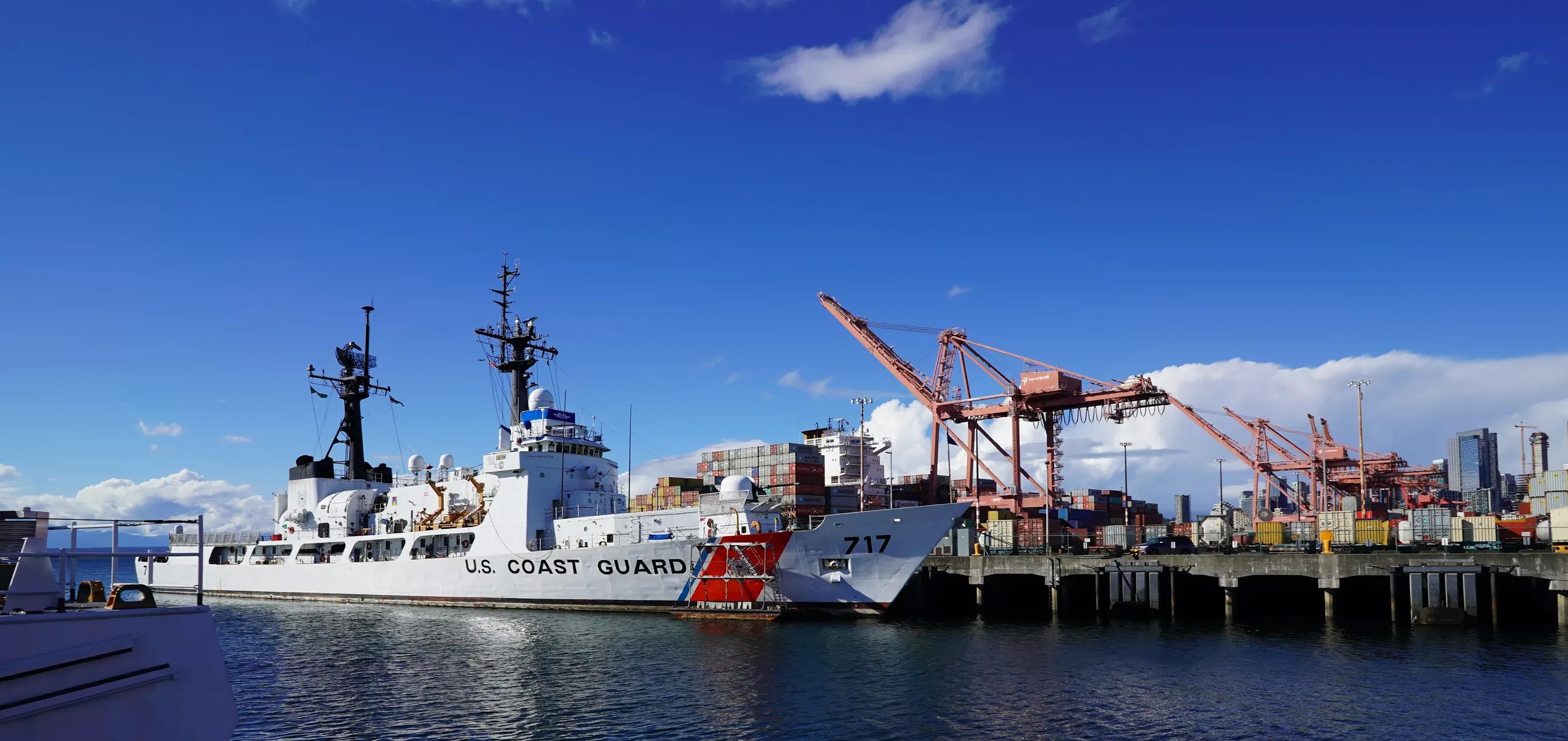
The offer was actually for another Hamilton-class high endurance cutter of the US Coast Guard, the former USCGC Mellon (WHEC-717)

The USCGC Mellon (WHEC-717). Photo credits to Wikipedia.

The former USCG Mellon is the sistership of the Philippine Navy’s three Del Pilar-class patrol frigates, and was decommissioned from the USCGC on 20 August 2020.

It remains the only Hamilton-class ship still with the US government that has not been taken by a new enduser. Previously, it was believed that the ship was offered to the Royal Bahrain Naval Force, but it appears that even as early as 2019, the Bahraini government has already shown less interest in the ship.

The USCGC Mellon (WHEC-717):

The USCGC Mellon is the 3rd Hamilton-class high endurance cutter of the US Coast Guard, completed in February 1967, and commissioned with the US Coast Guard on January 1968.

The USCGC Mellon (WHEC-717) firing a Harpoon anti-ship missile during exercises. Photo credits to Wikipedia.

While it is true that the ship is already old at more than 50 years old, the Philippine Navy itself can attest the capabilities of the ship, with the type remaining as one of the fleet’s most capable ships despite the arrival of new frigates lately.

The USCGC Mellon showing its high sea state capability as it overcomes a swell. Photo credits to original source.

The Philippine Navy requested for a 4th Hamilton-class ship as early as late 2018, after realizing that the BRP Gregorio del Pilar (PS-15) will only be ready for service by 2020 after damaging its propellers and propeller shaft assembly in an accident in the West Philippine Sea.

The US made an official offer to the Philippines by 2019, although an invitation was only made to inspect the ship in 2020.

Being an existing operator of the ship class since 2011, it was only logical for the Philippine Navy to take in another ship of the class, which could benefit from the service’s existing supply and maintenance chain for the ships.

Stop Gap Measure:
 
The Philippine Navy believes that the ship would still be good to use for another 10 years, long enough for the service to be able to obtain a replacement for it as part of its Capability Upgrade Program (CUP).

This means the former USCGC Mellon would only serve as a stop-gap measure while the Philippine Navy tries to build up its fleet after decommissioning World War 2-era ships and delays in its Horizon 2 acquisition plans.

It is also noted that the addition of the former USCGC Mellon would help the Philippine Navy sustain naval operations while its sisterships undergo the Del Pilar-class Upgrade Project which is slated to start later this year.

It should be noted that BRP Gregorio del Pilar (PS-15) and BRP Andres Bonifacio (PS-17) are both in dry dock for different reasons, thus affecting fleet availability.

In the longer term and if the Philippine Navy decides to retain the ship despite new ships already available, the platform becomes a force multiplier for the service, as it can still conduct patrol missions or even be used for training purposes similar to how other navies make use of older ships for training cadets and new seamen.

BRP Andres Bonifacio (L) and BRP Gregorio del Pilar (R) on drydock for repairs and maintenance works. Photo credits to community member sharing to MaxDefense PH.

Why Old Hamilton-class ships again?:

To those asking, so why not get something much younger, much modern warships like the Oliver Hazard Perry-class or the Littoral Combat Ships (LCS), rather than old Hamilton-class ships with not much firepower and combat capability?

First of, the US has been offering the Oliver Hazard Perry-class frigates to the Philippine Navy for more than 20 years now since the late 1990s, with MaxDefense PH even reporting that the US made its offer again during the RIMPAC 2020 exercises in Hawaii. 

USCGC Mellon (WHEC-717) with Oliver Hazard Perry-class frigate USS Robert G. Bradley (FFG-49) during an exercise in Indonesia in 2010. Photo credits to DVIDS.

But it appears that the Philippine Navy is uninterested in the ships due to its lack of a diesel engine and its utilization of gas turbine engines which are most costly to operate than diesel engine-powered ships.

In short, it was PN's decision to skip on Oliver Hazard Perry-class frigates.

A GE LM2500 marine gas turbine engine. Despite the PN having this type of engine, ships without diesel engines remain as the PN's "kryptonite" up to this day. Photo credits to original source.

Secondly, while the US Navy is planning to retire the first batches of the Freedom-class and Independence-class Littoral Combat Ships, it has not done so yet.

Also, there are fears from the Philippine Navy leaders and planners that they would cost a lot not just to acquire (despite expected to be offer for cheap), but could be expensive to sustain and maintain due to its complicated systems.

But based on previous information we received from sources, the Philippine Navy is indeed expected to receive an offer for either of the LCS classes under US Foreign Military Sales (FMS) of Excess Defense Articles.

The Freedom-class LCS. Photo credits to Wikipedia.

Cyclone-class littoral patrol vessels:

In the meantime, the Philippine Navy appears to be gunning to acquire several Cyclone-class littoral patrol vessels from the US Navy, with PN FOIC Vice Adm. Bacordo even confirming that there is an outstanding offer from the US government under its Excess Defense Article (EDA) program, and that they are waiting for the official approval from the State Department on the authority to transfer the ships to the Philippines.

Also being waited are the approval on the PN’s request for Price & Availability (P&A) which would allow the PN to prepare for the planning and programming of the acquisition, including preparing the costs for its transfer.

Cyclone-class littoral patrol vessels of the US Navy. Photo credits to Wikipedia.

The FOIC has mentioned at least twice that the PN wanted to get at least 5 units, which will allow them to have a total of 6 including the BRP Gen. Mariano Alvarez (PS-38) already with them since 2004. 

But there is also possibility that the PN may get more, but that would depend on the avaiaibility of ships for transfer from the US government, as well as results of inspections that make it acceptable for the PN to receive them, as well as financial capability of the Philippine government to pay for them.

The Philippine Navy's sole Cyclone-class patrol vessel BRP Gen. Mariano Alvarez. Photo credits to Peter @ Flickr.

The acquisition of these additional ships would also allow the Philippine Navy to bridge the gap left by retiring older littoral patrol ships like the Gen. Emilio Aguinaldo-class, and also allow them to retire old remaining ships like the Kagitingan-class.

=========================

In the end, while the Philippine Navy goes for old ships again, they are replacing much older ships that were retired or in need for immediate retirement. 

Also, these are only stop gap measures considering the PN already has a program to acquire new combat and patrol vessels as part of their modernization efforts.

These old ships may stay with the PN fleet beyond the arrival of new ships, but that is not something bad especially if the PN can afford their sustainment.

===============
===============
First release: 30 April 2021
Copyright MaxDefense Philippines


Tuesday, April 20, 2021

Japan sends Lifesaving Equipment Systems as Official Development Assistance for the Philippine Army

 
Japan is sending its goodwill to the Armed Forces of the Philippines (AFP), which is unprecedented considering the Japanese government only lifting the ban on transfer of defense equipment to foreign countries lately.

The Japanese government has sent over 4 sets of Japan Self Defense Force (JSDF) Lifesaving Systems through Official Development Assistance (ODA) to the Philippine government.

Apparently, this is the first time Japan is sending defense equipment to other countries through ODA, although the equipment being granted to the Philippines are more related to Search and Rescue (SAR) and Humanitarian Assistance and Disaster Relief (HADR) rather than warfighting.

According to Japanese sources, the Philippine Army (PA) will be the recipient of these grants of Self-Defense Forces equipment.

The JSDF Lifesaving System Type I container shown here with a JGSDF truck towing it. Photo credits to Objec1's Twitter account.


The JSDF Lifesaving System Type I:

According to Japanese reports, the equipment being transferred to the Philippine Army are called JSDF Lifesaving System Type I. 

These comprise several equipment used in disaster response including motorized cutters, floodlights, jacks, acoustic sensors, rock drillers, lifeboats, and other equipment.

A JSDF Lifesaving System shelter deployed. Photo credits to Wikipedia.

The system can be transported by trucks or helicopters as the system is containerized for easy transport.

These equipment could be used during search and rescue operations right after major disasters or catastrophes as it could help save lives and recover trapped victims, and transport them to safety.

Four sets of the JSDF Lifesaveing System Type I were said to have been shipped to the Philippines starting last February 2021, and have arrived in the Philippines as of March 2021.

MaxDefense Philippines is still trying to identify the totality of the system as it is difficult to find open-source information about JSDF equipment.

We expect the Lifesaving System Type I to include rescue equipment similar to those shown above. Photo of SAR equipment of Philippine Army from DRP Forum.


Japan's Growing Interests to Assist Security Partners:

It is expected that an official handover may happen during Japan's Golden Week holiday from 29 April to 05 May 2021, as Japanese Prime Minister Yoshihide Suga will visit the Philippines and meet President Rodrigo Duterte. It would be remembered that Prime Minister Suga replaced partymate and former Prime Minister Shinzo Abe, who is said to have close relations with Pres. Duterte, after he resigned due to illness.

It is also expected that the meeting between Pres. Duterte and Prime Minister Suga would discuss security issues in the region including China's aggressive behavior in Indo-Pacific Region, and probably discuss Japan's role in countering this.

The Official Development Assistance of JSDF to the Philippine government represents Japan's commitment to support for capacity building and contribution to improving the security capabilities of the Philippines. 

The value may not be huge, as it is said that the JSDF Lifesaving System Type I costs around JPY120 million, but these equipment are often overlooked by the AFP's acquisition programs that are focused more on kinetic and surveillance equipment.

This assistance is also very timely as Japan tries to help like-minded countries and gain influence against a growing Chinese threat in the region.

While unconfirmed, it is possible that this grant may also be related to the recent contract signed between the Philippines' Department of National Defense (DND) and Japan's Mitsubishi Electric Corp. (MELCO) with backing from the Japanese Ministry of Defense (MOD) for 4 air-defense radars for the Philippine Air Force (PAF).

PAF personnel in Japan to inspect the J/FPS-3ME fixed radar (top) and J/TPS-P14ME mobile radar (above) during technical inspections. Photo credits to DND.

More Japanese Grants to the AFP:

MaxDefense Philippines expects Japan to provide more grants and defense assistance to the AFP, although this would be done more discreetly compared to grants from other security partners of the Philippines like the US, South Korea and Australia.

We are expecting the Japan Air Self Defense Force (JASDF) to also provide communications equipment, electronic warfare training and information, and air defense training and doctrine development for the Philippine Air Force although we would not provide more information on this for security reasons.

As part of the Air Surveillance Radar Phase 2 Acquisition Project of the PAF, we are also expecting Japan to have an arrangement for information sharing with the PAF for air defense radar tracking especially in the shared boundaries between Japan and the Philippines were Chinese aircraft operate and use as access to the Western Pacific region.

Some of the new Japanese-made radars are expected to be deployed in the Northern Philippines, right smack where Japan's blind spots are covered.

Map above shows shared border between Japan, the Philippines and Taiwan, as Japanese islands as part of Okinawa Archipelago stretches close to the Batanes and Babuyan Islands of the Philippines. Japan is negotiating for air defense radar info sharing in this region to track Chinese aircraft movement. Credits to original source of map.


These are welcoming developments and signs of strengthening defense cooperation and relations between Japan and the Philippines to support common interests. Despite its past atrocities against the Philippines and other Asian countries, Japan has showed in the past 75 years that it can change for the better.

The grant for HADR equipment is something that would be very helpful especially for a disaster-riddled country like the Philippines. These are equally important items, and are expected to be even  used more often compared to warfighting equipment.

JSDF personnel conducting HADR training with the US military in Japan. Photo credits to DVIDS.

===============
===============
First release: 20 April 2021
Copyright MaxDefense Philippines


Monday, April 5, 2021

Additional Cyclone-class littoral patrol vessels to bridge the gap with the Philippine Navy's Littoral Combat Force

 The Philippine Navy (PN) has been moving away from older, less capable naval assets and has planned to acquire newer, more capable and better performing naval assets for the service to improve its overall capability, make use of new technology to improve its overall performance, while also trying to move away from obsolescence of equipment, technology, and doctrine.

Lately, there is a reason for the Philippine Navy to start acquiring additional assets, especially when they can acquired for cheap and would actually be beneficial in maintaining and sustaining one of its most capable asset.

Cyclone-class patrol vessels of the US Navy, 5 ships of the class seen here during maneuvers. Photo credits to US Navy through Naval Analyses website.


Reduction of Fleet Numbers due to Retirement:

In the past few months, the Philippine Navy's Littoral Combat Force (LCF) has eradicated several older classes of patrol crafts and patrol boats from its inventory in a bid to make way for newer equipment, while retraining its personnel in preparation of these upcoming assets.

Among those recently removed from service were the Swift Mk. 3 and De Havilland 9209 patrol boats, both of which have been in service with the Philippine Navy since the 1970s. Also retired were the larger Tomas Batilo-class fast attack crafts, which were donated to the Philippine Navy from the early to late 1990s, but has been in service with the Republic of Korea Navy (ROKN) as the Chamsuri-class since the 1970s.

Decommissioning ceremonies of the Philippine Navy's last two Tomas Batilo-class fast attack crafts (two rightmost boats) last 01 March 2021. Photo credits to the Philippine Navy.

Prior to that, the Philippine Navy decommissioned its two Gen. Emilio Aguinaldo-class large patrol crafts, which performed poorly throughout its service despite only coming into service in the 1990s.

MaxDefense PH previously questioned the move of the Philippine Navy to retire several of its assets without getting any immediate replacement for them. It would be remembered that no replacements have been made for the Gen. Emilio Aguinaldo-class, while replacements for the Tomas Batilo-class are still in the process of procurement and would only start arriving by late 2022.

But recently, MaxDefense PH received confirmation from sources that a plan has been hatched for the acquisition of large patrol crafts to finally fill in for the loss of the two Gen. Emilio Aguinaldo-class patrol crafts.

The Plan - Acquire More Ships:

As part of the Philippine Navy's Capability Upgrade Program under the Horizon 1 to 3 Modernization Phases, a requirement for at least 14 Littoral Patrol Interdiction Craft has been raised. Not much information has been made available, but curiously, a photo of a Cyclone-class inshore patrol vessel has been used to identify such requirement.

PN CUP shows 14 Littoral Patrol Interdiction Craft (LPIC) under the Littoral Combat Force's future needs. Photo credits to the Philippine Navy.

Currently, the Philippine Navy operates a single Cyclone-class patrol vessel, named BRP Gen. Mariano Alvarez (PS-38), which has been with the Philippine Navy since 2004. It is currently the largest asset of the Littoral Combat Force, and has performed well during its service.

This becomes even more apparent if compared to the Philippine Navy's other larger patrol crafts like the retired Gen. Emilio Aguinaldo-class, and the Kagitingan-class which are still in service.

The BRP Gen. Emilio Aguinaldo (PG-140), the lead ship of the class. The design was unsuccessful and the ships were retired earlier than planned. Photo credits to James Gabriel Verallo.

But despite this, the Philippine Navy has failed to bring in additional units from the United States, because the US Navy and US Coast Guard has found the ships very useful for littoral operations especially in the Persian Gulf and the Caribbean.

In late 2019, then Philippine Navy Flag Officer in Command (FOIC) Vice Adm. Robert Empedrad announced plans for the potential retirement of the BRP Gen. Mariano Alvarez (PS-38), due to it being costly to maintain and operate. This is in part that its supply chain has been inefficient being the only ship of its class in service, and uses different parts from other PN assets.

In fairness to Vice Adm. Empedrad (ret), he did say that this plan applies only if no additional ships of the class would be acquired by the Philippine Navy. Meaning, he is open to getting additional units if the chance is there.

The BRP Gen. Mariano Alvarez (PS-38) seen here during exercises. Photo credits to Philippine Navy.

MaxDefense PH was among those who disagreed with such plan since we believe it is better to keep the ship, improve and modernize it, and ask the United States government to allow the transfer of additional Cyclone-class ships to make the logistics train more logical and reasonable. This is considering the Philippine Navy is depleted of naval assets and has shrunk to its smallest ever size since its founding in the late 1940s.

Now this appears to become a reality, as the US Navy has started to retire some of its Cyclone-class ships, starting with USS Zephyr (PC-8), USS Shamal (PC-13), and USS Tornado (PC-14) last February 2021.

The USS Shamal (PC-13) seen during decommissioning ceremonies last February 2021. Photo credits to US Navy.

The Pentagon announced that it will offer the former USS Tornado (PC-14) for sale or transfer to allies or friendly countries. While the US earlier announced that it intends to scrap the former USS Zephyr and USS Shamal, this can change anytime depending on the situation.

Additional Cyclone-class littoral patrol vessels:

The retirement of Cyclone-class littoral patrol vessels from the US Navy is a good sign for the Philippine Navy, as this opens a door for the service to acquire more units to join the BRP Gen. Mariano Alvarez (PS-38).

And according to our Philippine and American sources, it appears that the former USS Tornado (PC-14) is eyed by the US government for sale or transfer to the Philippine Navy, being the most logical recipient due to its experience with operating the type. But that would be dependent on the agreement that would be reached by the Philippine and American governments.

This is actually a complete turn-around from the 2019 plan of retiring the BRP Gen. Mariano Alvarez, and the Philippine Navy under the new leadership of its current FOIC Vice Adm. Giovanni Bacordo, is actually in line with what we believe is a better solution.

Also, Philippine Navy sources confirmed that they are actually eyeing the potential acquisition of more Cyclone-class vessels, as a replacement for the retired Gen. Emilio Aguinaldo-class, and to also replace the Kagitingan-class which they intend to retire by 2021-2022 timeframe.

The Littoral Combat Force's cover photo does not show the Kagitingan-class anymore, which confirms its planned retirement soon. Meanwhile, the Cyclone-class remains in the photo, despite previous plans to retire the ship. Photo credits to the Philippine Navy.

If following a 1:1 replacement, that means the PN may need at least 3 Cyclone-class vessels.

But it appears that there are even plans within the Littoral Combat Force pushing for the acquisition of not just 3, but for more Cyclone-class patrol vessels, especially if these could be acquired from the US government as grants. This means the vessels are free, and the Philippine Navy would only need to spend for repair and refurbishing, training, delivery, and logistics support.

It remains to been though if the former USS Zephyr and USS Shamal will be among those the Philippine Navy would be requesting for transfer. 

Several other Cyclone-class patrol vessels are scheduled for retirement from the US Navy soon, and this is where the Philippine Navy is expected to take a look at what can be possibly acquired based on the ship's overall condition.

Why the Cyclone-class Patrol Vessel?:

So why are we suggesting the acquisition of additional Cyclone-class littoral patrol vessels?

1. Readily Available - the US Navy has started retiring these ships from service, and these can be acquired faster by the Philippine Navy, compared to ordering new ships. One has to consider the slow pace of starting an acquisition program, obtaining funds, procurement process, and construction - all of which may take at least 4-5 years.

2. Experience in Operating - the Philippine Navy already has one, with the Littoral Combat Force has been operating a Cyclone-class patrol vessel for more than 15 years, and it is practical for the Philippine Navy to have additional units to continue operating the type.

3. Cheap Acquisition Cost - since the US government already has plans to assist the Philippines in its military upgrade program, the Cyclone-class appears to be available for transfer as military aid or grant, The PN will only need to pay for repairs and refurbishing, delivery and logistics support, which isn't too expensive.

4. Design - despite being 20 years old, the Cyclone-class has design features that is futureproof. This includes the use of Mk. 38 25mm gun which can be upgraded to 30mm using remote weapon stations like the Mk. 38 Mod. 2 or Mod. 3 that are installed on the Del Pilar-class frigates, the quick entry/exit ramp for Rigid Hull Inflatable Boats without requiring cranes, and compatibility to short-range surface-to-surface and surface-to-air missiles.

The Cyclone-class' rear ramp for quick entry/exit of RHIB. Photo credits to US Navy through Wikipedia.


5. Size and Endurance - the ship is large enough for long endurance patrols, without needing to return to port immediately. Sources confirmed that it can stay offshore for more than a week, with a range of more than 2,000 nautical miles at cruising speed.

Bright Future for BRP Gen. Mariano Alvarez (PS-38):

With these developments, it looks like the future of BRP Gen. Mariano Alvarez (PS-38) with the Philippine Navy looks positive, and the Littoral Combat Force might be able to start to beef up its force according to its requirements could be done without breaking the bank.

The BRP Gen. Mariano Alvarez (PS-38). Photo credits to Peter.

Take note, this is just a short to medium term solution, while the Philippine Navy tries to get more funding to allow it to acquire newer ships. But until then, additional Cyclone-class patrol vessels would be helpful to allow the Philippine Navy conduct its mandated task of securing our waters.

Further problems may arise in the near future, as the ships become older and will eventually need replacement in the next 10-15 years. Among the issues MaxDefense PH sees will be on the engines, as its Paxman Valenta diesel engines are said to be getting more difficult to maintain. A re-engining program may be needed in the coming years if the PN fails to secure support for the engine model.

===============
===============
First release: 05 April 2021
Copyright MaxDefense Philippines

Philippine Navy Modernization Projects

Philippine Air Force Modernization Projects