Your 1st for Philippine Defense

Austal leads Philippine Navy's OPV Acquisition Project!

SecDef Lorenzana confirms Austal is still the preferred OPV supplier for the PN

The Philippine Navy commissions its 2nd Jose Rizal-class frigate!

The Philippine Navy welcomes BRP Antonio Luna (FF-151), its newest frigate!

The Philippine Navy selects Shaldag Mk. V for Fast Attack Interdiction Craft!

The DND has awarded the FAIC-M Acquisition Project to Israel Shipyards

The Philippine Air Force wants more Black Hawk helicopters!

The Philippine Air Force asks for more Black Hawks to allow the retirement of their Bell UH-1 Huey fleet

The Philippine Army orders the Sabrah Light Tank System from Israel!

Israel's Elbit Systems was declared the winner to supply light tanks to the PA

The Philippine Air Force receives full order of Hermes 900 and Hermes 450 UAVs!

All 9 Hermes 900 and 4 Hermes 450 MALE UAVs have been received by the PAF!


Showing posts with label us navy. Show all posts

Friday, April 30, 2021

Philippine Navy interested in acquiring another Hamilton-class cutter as stop gap measure

Back in March 2021, we mentioned in one of our social media posts  that the Philippine Navy is was offered by the US to transfer ships and boats as part of its Military Assistance to the Philippines. 

These offers were among those said to be listed in the US document sent to the Philippine Ambassador to the US Babes Romualdez, which in turn was sent to President Rodrigo Duterte as proof of US commitment to assist the improvement of the Philippines’ defense capabilities.

We previously said that we would not provide further details as requested by sources, but we confirmed in our blog entry released last 05 April 2021 that the Philippine Navy has been offered the Cyclone-class large patrol boats of the US Navy, some of which were already decommissioned by the US Navy recently.


But so far, we have not confirmed the “ships” portion of the offer. These Cyclone-class are covered by the “boats” offer.

Photo credits to Wikipedia.

Ship on offer to the Philippine Navy:

With the Philippine Navy announcing its intent to acquire the Cyclone-class patrol boats, it would be also worth noting that the service actually has an impending scheduled Joint Visual Inspection (JVI) of a larger ship in the US mainland, with the invitation released as early as 2020.

But the inspection was not conducted yet by the Philippine Navy Technical Working Group (TWG) due to the COVID-19 pandemic affecting both countries.

The offer was actually for another Hamilton-class high endurance cutter of the US Coast Guard, the former USCGC Mellon (WHEC-717)
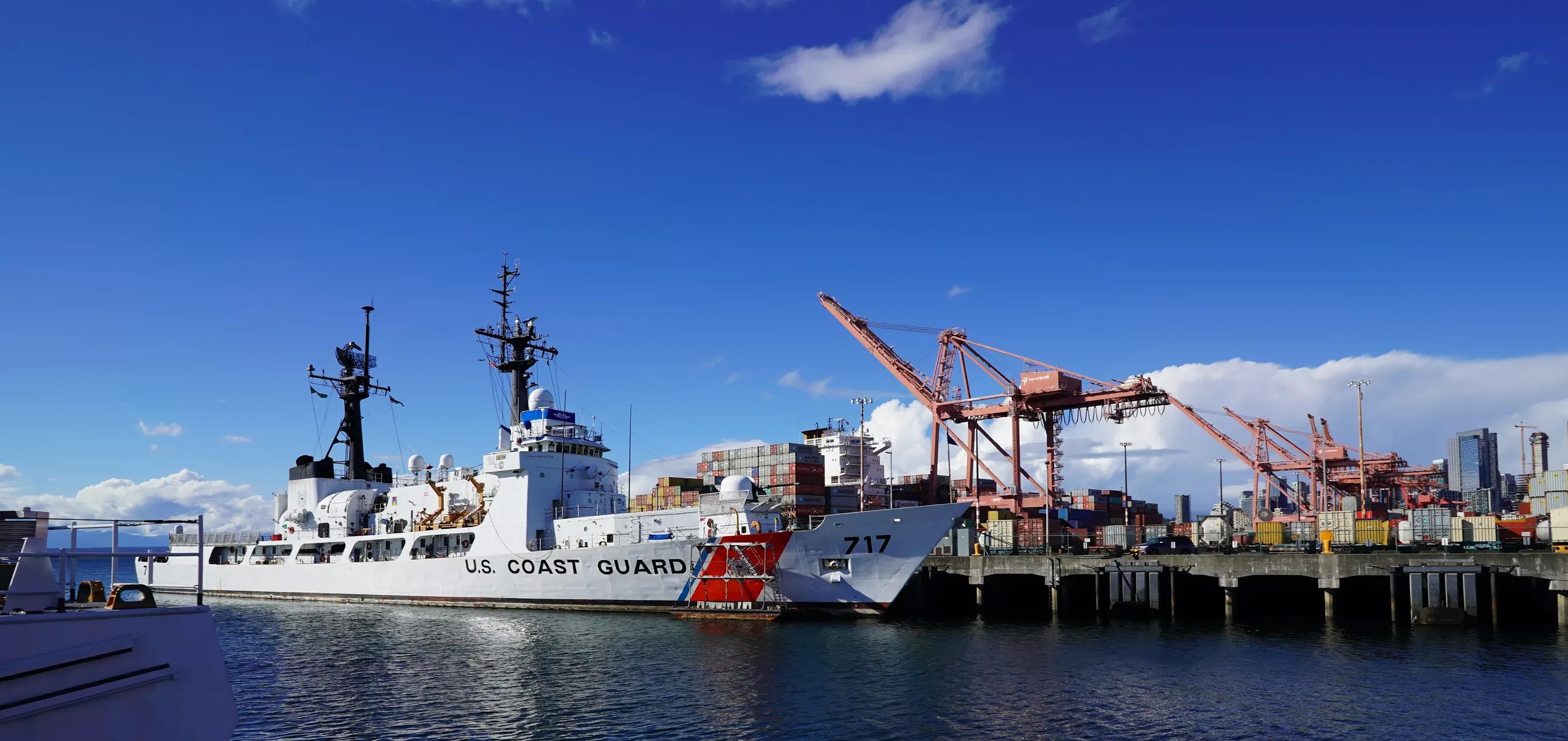
The USCGC Mellon (WHEC-717). Photo credits to Wikipedia.

The former USCG Mellon is the sistership of the Philippine Navy’s three Del Pilar-class patrol frigates, and was decommissioned from the USCGC on 20 August 2020.

It remains the only Hamilton-class ship still with the US government that has not been taken by a new enduser. Previously, it was believed that the ship was offered to the Royal Bahrain Naval Force, but it appears that even as early as 2019, the Bahraini government has already shown less interest in the ship.

The USCGC Mellon (WHEC-717):

The USCGC Mellon is the 3rd Hamilton-class high endurance cutter of the US Coast Guard, completed in February 1967, and commissioned with the US Coast Guard on January 1968.

The USCGC Mellon (WHEC-717) firing a Harpoon anti-ship missile during exercises. Photo credits to Wikipedia.

While it is true that the ship is already old at more than 50 years old, the Philippine Navy itself can attest the capabilities of the ship, with the type remaining as one of the fleet’s most capable ships despite the arrival of new frigates lately.

The USCGC Mellon showing its high sea state capability as it overcomes a swell. Photo credits to original source.

The Philippine Navy requested for a 4th Hamilton-class ship as early as late 2018, after realizing that the BRP Gregorio del Pilar (PS-15) will only be ready for service by 2020 after damaging its propellers and propeller shaft assembly in an accident in the West Philippine Sea.

The US made an official offer to the Philippines by 2019, although an invitation was only made to inspect the ship in 2020.

Being an existing operator of the ship class since 2011, it was only logical for the Philippine Navy to take in another ship of the class, which could benefit from the service’s existing supply and maintenance chain for the ships.

Stop Gap Measure:
 
The Philippine Navy believes that the ship would still be good to use for another 10 years, long enough for the service to be able to obtain a replacement for it as part of its Capability Upgrade Program (CUP).

This means the former USCGC Mellon would only serve as a stop-gap measure while the Philippine Navy tries to build up its fleet after decommissioning World War 2-era ships and delays in its Horizon 2 acquisition plans.

It is also noted that the addition of the former USCGC Mellon would help the Philippine Navy sustain naval operations while its sisterships undergo the Del Pilar-class Upgrade Project which is slated to start later this year.

It should be noted that BRP Gregorio del Pilar (PS-15) and BRP Andres Bonifacio (PS-17) are both in dry dock for different reasons, thus affecting fleet availability.

In the longer term and if the Philippine Navy decides to retain the ship despite new ships already available, the platform becomes a force multiplier for the service, as it can still conduct patrol missions or even be used for training purposes similar to how other navies make use of older ships for training cadets and new seamen.

BRP Andres Bonifacio (L) and BRP Gregorio del Pilar (R) on drydock for repairs and maintenance works. Photo credits to community member sharing to MaxDefense PH.

Why Old Hamilton-class ships again?:

To those asking, so why not get something much younger, much modern warships like the Oliver Hazard Perry-class or the Littoral Combat Ships (LCS), rather than old Hamilton-class ships with not much firepower and combat capability?

First of, the US has been offering the Oliver Hazard Perry-class frigates to the Philippine Navy for more than 20 years now since the late 1990s, with MaxDefense PH even reporting that the US made its offer again during the RIMPAC 2020 exercises in Hawaii. 

USCGC Mellon (WHEC-717) with Oliver Hazard Perry-class frigate USS Robert G. Bradley (FFG-49) during an exercise in Indonesia in 2010. Photo credits to DVIDS.

But it appears that the Philippine Navy is uninterested in the ships due to its lack of a diesel engine and its utilization of gas turbine engines which are most costly to operate than diesel engine-powered ships.

In short, it was PN's decision to skip on Oliver Hazard Perry-class frigates.

A GE LM2500 marine gas turbine engine. Despite the PN having this type of engine, ships without diesel engines remain as the PN's "kryptonite" up to this day. Photo credits to original source.

Secondly, while the US Navy is planning to retire the first batches of the Freedom-class and Independence-class Littoral Combat Ships, it has not done so yet.

Also, there are fears from the Philippine Navy leaders and planners that they would cost a lot not just to acquire (despite expected to be offer for cheap), but could be expensive to sustain and maintain due to its complicated systems.

But based on previous information we received from sources, the Philippine Navy is indeed expected to receive an offer for either of the LCS classes under US Foreign Military Sales (FMS) of Excess Defense Articles.

The Freedom-class LCS. Photo credits to Wikipedia.

Cyclone-class littoral patrol vessels:

In the meantime, the Philippine Navy appears to be gunning to acquire several Cyclone-class littoral patrol vessels from the US Navy, with PN FOIC Vice Adm. Bacordo even confirming that there is an outstanding offer from the US government under its Excess Defense Article (EDA) program, and that they are waiting for the official approval from the State Department on the authority to transfer the ships to the Philippines.

Also being waited are the approval on the PN’s request for Price & Availability (P&A) which would allow the PN to prepare for the planning and programming of the acquisition, including preparing the costs for its transfer.

Cyclone-class littoral patrol vessels of the US Navy. Photo credits to Wikipedia.

The FOIC has mentioned at least twice that the PN wanted to get at least 5 units, which will allow them to have a total of 6 including the BRP Gen. Mariano Alvarez (PS-38) already with them since 2004. 

But there is also possibility that the PN may get more, but that would depend on the avaiaibility of ships for transfer from the US government, as well as results of inspections that make it acceptable for the PN to receive them, as well as financial capability of the Philippine government to pay for them.

The Philippine Navy's sole Cyclone-class patrol vessel BRP Gen. Mariano Alvarez. Photo credits to Peter @ Flickr.

The acquisition of these additional ships would also allow the Philippine Navy to bridge the gap left by retiring older littoral patrol ships like the Gen. Emilio Aguinaldo-class, and also allow them to retire old remaining ships like the Kagitingan-class.

=========================

In the end, while the Philippine Navy goes for old ships again, they are replacing much older ships that were retired or in need for immediate retirement. 

Also, these are only stop gap measures considering the PN already has a program to acquire new combat and patrol vessels as part of their modernization efforts.

These old ships may stay with the PN fleet beyond the arrival of new ships, but that is not something bad especially if the PN can afford their sustainment.

===============
===============
First release: 30 April 2021
Copyright MaxDefense Philippines


Monday, April 5, 2021

Additional Cyclone-class littoral patrol vessels to bridge the gap with the Philippine Navy's Littoral Combat Force

 The Philippine Navy (PN) has been moving away from older, less capable naval assets and has planned to acquire newer, more capable and better performing naval assets for the service to improve its overall capability, make use of new technology to improve its overall performance, while also trying to move away from obsolescence of equipment, technology, and doctrine.

Lately, there is a reason for the Philippine Navy to start acquiring additional assets, especially when they can acquired for cheap and would actually be beneficial in maintaining and sustaining one of its most capable asset.

Cyclone-class patrol vessels of the US Navy, 5 ships of the class seen here during maneuvers. Photo credits to US Navy through Naval Analyses website.


Reduction of Fleet Numbers due to Retirement:

In the past few months, the Philippine Navy's Littoral Combat Force (LCF) has eradicated several older classes of patrol crafts and patrol boats from its inventory in a bid to make way for newer equipment, while retraining its personnel in preparation of these upcoming assets.

Among those recently removed from service were the Swift Mk. 3 and De Havilland 9209 patrol boats, both of which have been in service with the Philippine Navy since the 1970s. Also retired were the larger Tomas Batilo-class fast attack crafts, which were donated to the Philippine Navy from the early to late 1990s, but has been in service with the Republic of Korea Navy (ROKN) as the Chamsuri-class since the 1970s.

Decommissioning ceremonies of the Philippine Navy's last two Tomas Batilo-class fast attack crafts (two rightmost boats) last 01 March 2021. Photo credits to the Philippine Navy.

Prior to that, the Philippine Navy decommissioned its two Gen. Emilio Aguinaldo-class large patrol crafts, which performed poorly throughout its service despite only coming into service in the 1990s.

MaxDefense PH previously questioned the move of the Philippine Navy to retire several of its assets without getting any immediate replacement for them. It would be remembered that no replacements have been made for the Gen. Emilio Aguinaldo-class, while replacements for the Tomas Batilo-class are still in the process of procurement and would only start arriving by late 2022.

But recently, MaxDefense PH received confirmation from sources that a plan has been hatched for the acquisition of large patrol crafts to finally fill in for the loss of the two Gen. Emilio Aguinaldo-class patrol crafts.

The Plan - Acquire More Ships:

As part of the Philippine Navy's Capability Upgrade Program under the Horizon 1 to 3 Modernization Phases, a requirement for at least 14 Littoral Patrol Interdiction Craft has been raised. Not much information has been made available, but curiously, a photo of a Cyclone-class inshore patrol vessel has been used to identify such requirement.

PN CUP shows 14 Littoral Patrol Interdiction Craft (LPIC) under the Littoral Combat Force's future needs. Photo credits to the Philippine Navy.

Currently, the Philippine Navy operates a single Cyclone-class patrol vessel, named BRP Gen. Mariano Alvarez (PS-38), which has been with the Philippine Navy since 2004. It is currently the largest asset of the Littoral Combat Force, and has performed well during its service.

This becomes even more apparent if compared to the Philippine Navy's other larger patrol crafts like the retired Gen. Emilio Aguinaldo-class, and the Kagitingan-class which are still in service.

The BRP Gen. Emilio Aguinaldo (PG-140), the lead ship of the class. The design was unsuccessful and the ships were retired earlier than planned. Photo credits to James Gabriel Verallo.

But despite this, the Philippine Navy has failed to bring in additional units from the United States, because the US Navy and US Coast Guard has found the ships very useful for littoral operations especially in the Persian Gulf and the Caribbean.

In late 2019, then Philippine Navy Flag Officer in Command (FOIC) Vice Adm. Robert Empedrad announced plans for the potential retirement of the BRP Gen. Mariano Alvarez (PS-38), due to it being costly to maintain and operate. This is in part that its supply chain has been inefficient being the only ship of its class in service, and uses different parts from other PN assets.

In fairness to Vice Adm. Empedrad (ret), he did say that this plan applies only if no additional ships of the class would be acquired by the Philippine Navy. Meaning, he is open to getting additional units if the chance is there.

The BRP Gen. Mariano Alvarez (PS-38) seen here during exercises. Photo credits to Philippine Navy.

MaxDefense PH was among those who disagreed with such plan since we believe it is better to keep the ship, improve and modernize it, and ask the United States government to allow the transfer of additional Cyclone-class ships to make the logistics train more logical and reasonable. This is considering the Philippine Navy is depleted of naval assets and has shrunk to its smallest ever size since its founding in the late 1940s.

Now this appears to become a reality, as the US Navy has started to retire some of its Cyclone-class ships, starting with USS Zephyr (PC-8), USS Shamal (PC-13), and USS Tornado (PC-14) last February 2021.

The USS Shamal (PC-13) seen during decommissioning ceremonies last February 2021. Photo credits to US Navy.

The Pentagon announced that it will offer the former USS Tornado (PC-14) for sale or transfer to allies or friendly countries. While the US earlier announced that it intends to scrap the former USS Zephyr and USS Shamal, this can change anytime depending on the situation.

Additional Cyclone-class littoral patrol vessels:

The retirement of Cyclone-class littoral patrol vessels from the US Navy is a good sign for the Philippine Navy, as this opens a door for the service to acquire more units to join the BRP Gen. Mariano Alvarez (PS-38).

And according to our Philippine and American sources, it appears that the former USS Tornado (PC-14) is eyed by the US government for sale or transfer to the Philippine Navy, being the most logical recipient due to its experience with operating the type. But that would be dependent on the agreement that would be reached by the Philippine and American governments.

This is actually a complete turn-around from the 2019 plan of retiring the BRP Gen. Mariano Alvarez, and the Philippine Navy under the new leadership of its current FOIC Vice Adm. Giovanni Bacordo, is actually in line with what we believe is a better solution.

Also, Philippine Navy sources confirmed that they are actually eyeing the potential acquisition of more Cyclone-class vessels, as a replacement for the retired Gen. Emilio Aguinaldo-class, and to also replace the Kagitingan-class which they intend to retire by 2021-2022 timeframe.

The Littoral Combat Force's cover photo does not show the Kagitingan-class anymore, which confirms its planned retirement soon. Meanwhile, the Cyclone-class remains in the photo, despite previous plans to retire the ship. Photo credits to the Philippine Navy.

If following a 1:1 replacement, that means the PN may need at least 3 Cyclone-class vessels.

But it appears that there are even plans within the Littoral Combat Force pushing for the acquisition of not just 3, but for more Cyclone-class patrol vessels, especially if these could be acquired from the US government as grants. This means the vessels are free, and the Philippine Navy would only need to spend for repair and refurbishing, training, delivery, and logistics support.

It remains to been though if the former USS Zephyr and USS Shamal will be among those the Philippine Navy would be requesting for transfer. 

Several other Cyclone-class patrol vessels are scheduled for retirement from the US Navy soon, and this is where the Philippine Navy is expected to take a look at what can be possibly acquired based on the ship's overall condition.

Why the Cyclone-class Patrol Vessel?:

So why are we suggesting the acquisition of additional Cyclone-class littoral patrol vessels?

1. Readily Available - the US Navy has started retiring these ships from service, and these can be acquired faster by the Philippine Navy, compared to ordering new ships. One has to consider the slow pace of starting an acquisition program, obtaining funds, procurement process, and construction - all of which may take at least 4-5 years.

2. Experience in Operating - the Philippine Navy already has one, with the Littoral Combat Force has been operating a Cyclone-class patrol vessel for more than 15 years, and it is practical for the Philippine Navy to have additional units to continue operating the type.

3. Cheap Acquisition Cost - since the US government already has plans to assist the Philippines in its military upgrade program, the Cyclone-class appears to be available for transfer as military aid or grant, The PN will only need to pay for repairs and refurbishing, delivery and logistics support, which isn't too expensive.

4. Design - despite being 20 years old, the Cyclone-class has design features that is futureproof. This includes the use of Mk. 38 25mm gun which can be upgraded to 30mm using remote weapon stations like the Mk. 38 Mod. 2 or Mod. 3 that are installed on the Del Pilar-class frigates, the quick entry/exit ramp for Rigid Hull Inflatable Boats without requiring cranes, and compatibility to short-range surface-to-surface and surface-to-air missiles.

The Cyclone-class' rear ramp for quick entry/exit of RHIB. Photo credits to US Navy through Wikipedia.


5. Size and Endurance - the ship is large enough for long endurance patrols, without needing to return to port immediately. Sources confirmed that it can stay offshore for more than a week, with a range of more than 2,000 nautical miles at cruising speed.

Bright Future for BRP Gen. Mariano Alvarez (PS-38):

With these developments, it looks like the future of BRP Gen. Mariano Alvarez (PS-38) with the Philippine Navy looks positive, and the Littoral Combat Force might be able to start to beef up its force according to its requirements could be done without breaking the bank.

The BRP Gen. Mariano Alvarez (PS-38). Photo credits to Peter.

Take note, this is just a short to medium term solution, while the Philippine Navy tries to get more funding to allow it to acquire newer ships. But until then, additional Cyclone-class patrol vessels would be helpful to allow the Philippine Navy conduct its mandated task of securing our waters.

Further problems may arise in the near future, as the ships become older and will eventually need replacement in the next 10-15 years. Among the issues MaxDefense PH sees will be on the engines, as its Paxman Valenta diesel engines are said to be getting more difficult to maintain. A re-engining program may be needed in the coming years if the PN fails to secure support for the engine model.

===============
===============
First release: 05 April 2021
Copyright MaxDefense Philippines

Friday, May 29, 2015

Updates on the PAF's Long Range Patrol Aircraft Acquisition - It looks like the P-3C Orion afterall

Since the failure of the 1st bidding attempt for the Philippine Air Force's (PAF) Long Range Patrol Aircraft (LRPA) acquisition project, the Department of National Defense (DND) has not restarted the bidding for a second attempt, which is the most possible direction the DND would be going to. None of the possible bidders made it through the submission of bids, even after Elbit Systems and IAI Elta, both from Israel, submitted their Motion for Reconsideration for the DND to consider their bids.

The other contenders for the project were Saab Asia Pacific, L3 Mission Integration, Lockheed Martin, PT Dirgantara Indonesia, and CASA-Airbus Defense and Space. This project and bid failure was previously discussed in an older MaxDefense blog entry's update section dated August 11, 2014 (bottom part).

With China's aggressive expansion in the West Philippine Sea, including the Kalayaan Group of Islands and the Philippines' own Exclusive Economic Zone, the Armed Forces of the Philippines (AFP) has been dependent on the limited surveillance capbilities of the PAF's Fokker F-27 Friendships, C-130 Hercules, and N-22B Nomads, as well as the Philippine Navy's BN-2 Islander fixed wing aircraft. All of these are not designed for maritime patrol and surveillance and are actually tactical transport aircraft. Aside from these assets, the AFP has become dependent on the information provided by the US military through the US Navy's P-3C Orion and P-8A Poseidon maritime patrol aircrafts. Both types are rotationally stationed at Clark Air Base in Pampanga in support of maritime patrols at the West Philippine Sea and South China Sea area.


The Lockheed P-3C Orion is currently the most prolific MPA asset of the US Navy.


Without a truly capable maritime patrol surveillance capability, this type of aircraft has become one of the most sought-after equipment for the AFP Modernization Program. With the recent updates on the policies of the United States government, as well as other friendly countries like Japan and Australia, other options have been made available to the DND & AFP to fill-in this requirement. But one thing is certain: all options from these countries revolve around the Lockheed P-3C Orion MPA.


Previously the PAF operated F-27MPA Maritime Patrol Aircraft like the one shown above, but were retired only after a few years after losses and lack of maintenance.


The Lockheed P-3C Orion:
Ever since the PAF sought for a replacement for its Fokker F-27MPA Maritimes in the late 1980s, they have always been fixated at the possibility of acquiring the Lockheed P-3 Orion from the Americans. This was especially true they try to compare themselves with other American allies in the Western Pacific region like South Korea, Japan, Thailand, Australia and New Zealand, who all have this aircraft in their inventories. The aircraft's ruggedness and flight performance, proven surveillance capabilities, compatibility and interoperability with the Philippines' main ally and strategic partners made it a very logical choice.


Among other ASEAN militaries, only Thailand operates the P-3 as its primary MPA asset.
Photo copyright Analayo Korsakul c/o Airliners.net. 


Its surveillance systems are designed to detect and monitor surface activities, as well as detecting submarines underneath the sea. Aside from being a surveillance platform, it also has the capabilities to carry and launch US-standard anti-submarine torpedoes and anti-ship missiles, as well as depth charges which makes it an all-in-one platform for naval purposes.

Although bristling with all the bells and whistles that the PAF and PN dreams off, there are also downsides on the Orion, mainly on its airframe and design age, and operating costs. Being an aircraft model based on the 1950s Lockheed Electra turboprop airliner, the design has become out of date. And with the "Charlie" model built by Lockheed in the 1970s to 1980s, the airframes are now reaching almost 40 years old on the first batches. Its 4-engine configuration using the Allison T56, which is the same as those used by the Lockheed C-130H in PAF service, are also expected to consume more fuel than smaller, newer 2-engined aircraft like the CASA-Airbus C-295 already in service with the PAF. There were already previous reports wherein the PAF was having difficulty operating C-130s because of fuel consumption, so operating the P-3C won't be any different.

Spare parts will also be another issue, as it is only available from the US, and partly from Japan (being a licensed builder of the type), and new parts will surely be on a decline as the type is already out of production, and most major P-3 operators are already shifting to newer models like the USN and RAAF to the P-8A, and the JMSDF to the P-1. These were actually among the reasons why the DND decided to go for a public bidding process to acquire MPA for the PAF. But for some reason, the decision to reconsider the plan to acquire P-3C might mean some positive changes in the defense planning and budget allocations for the PAF recently that may not be available to the public.


An illustration of the Lockheed P-3C Orion showing its design features.


Recently, there were several news reports of the Philippine government's agreements with the US and Japanese government for military assistance including possible transfer of excess defense articles. And the most reported equipment being prioritized for transfer are P-3C Orion maritime patrol aircraft.


A JMSDF P-3C (left) and a USN P-3C (right) fly overhead a USN Los Angeles-class attack submarine USS Houston (center) during Exercise Keen Sword 2011.
Photo taken from Wikimedia Commons.


The Main Option: US Navy Lockheed P-3C:
With the US Navy being the main user of the P-3C, and is slowly shifting to the new Boeing P-8A Poseidon to replace the old workhorse, the US is the most possible source of excess P-3C for the PAF. It is believed that this request, among with other equipment, were discussed by Defense Secretary Voltaire Gazmin and his American counterpart Ashton Carter in Hawaii mid this week. Some DND and PAF sources told MaxDefense recently that there was a request for between 2 to 4 P-3C Orions to the Americans for use and deployment to WPS patrol missions, although it is also unconfirmed yet if it was the Americans who made the offer. They are expected to operate together with USN P-3C and P-8A aircraft based in Japan but are temporarily stationed at Clark Air Base.

The most possible option is for the Americans to transfer aircraft that are stored by the Aerospace Maintenance and Regeneration Center (AMARC) in the continental United States, and refurbish it as part of a Foreign Military Sales (FMS) deal. But there is a possibility, due to the urgency of the requirement, for the DND to push for a "hot transfer" of the aircraft, meaning a direct transfer of a servicable unit to the PAF with refurbishing to follow later on, to speed-up the process. 


USN P-3C Orions rotationally based at Clark Air Base. A hot transfer can be made by directly handing over a fully-serviceable aircraft to the Philippine Air Force while the aircraft is in the Philippines.
Photo taken from Wikimedia Commons.


The Secondary Option: Japan Maritime Self-Defense Force Kawasaki P-3C Orion:
Aside from the Americans, another possible option of sourcing P-3C are those from Japan. Built under license by Kawasaki starting in 1978 up to 1997, the P-3C used by the JMSDF are said to be among the most well maintained and newest airframes in the world. Japan currently operates the second largest fleet of P-3C Orions in the world, but will be slowly shifting to the longer ranged, newer, jet powered, and homegrown Kawasaki P-1 aircraft. 

Being among the most affected by the aggressiveness of China, Japan is a more willing partner in strengthening the capability of the Philippine armed forces, in the hope that a strong AFP can be an effective force in a common goal of containing China's expansion efforts, and to be a strong partner for stability in the region. Japan has always been open in providing the necessary aid to its friendly neighbors, and with its recent changes in policy of exporting weapons and arms, the Philippines are among those expected to be on the receiving end. Recent press releases already indicated the request by the Philippine government for excess P-3C Orions from the Japanese Ministry of Defense, an indication that such possibility is becoming reachable.

It should be of important note that Pres. Aquino is scheduled to meet with Japanese Prime Minister Shinzo Abe next week, and among those expected to be discussed is the framework on the transfer of defense equipment and technology to the Philippines.


The JMSDF is the second largest operator of the P-3C Orion. Theirs were built under license locally by Kawasaki Heavy Industries. The P-3C in the JMSDF are scheduled to be slowly replaced by the new Kawasaki P-1.
Photo taken from Wikimedia Commons.


MaxDefense sources also indicated a short term request for around 2 to 4 P-3C Orions are among those included in documents provided by the DND to Japan's Ministry of Defense of possible arms for transfer or sale to the Philippine government. But sourcing from Japan might not bear immediate fruit, due to the timing of replacing their fleet by the new home-grown Kawasaki P-1 which will not be made in a fast pace, and due to political reasons related to their recent shift of policy in defense and security. But Japanese sourced P-3C can be a very good option in the long run, as more units can be made available to the PAF, either as spares source or as additional aircraft to meet its longer term goal of having at least 6 long range MPA in the PAF's inventory.


A JMSDF P-3C Orion MPA.
Photo taken from Today's Atsugi blogsite.


The Dark Horse: Royal Australian Air Force AP-3C Orion:
A possible 3rd source of P-3 Orions can be those from Australia, another friendly country with an interest in the stability of the West Philippine Sea. The Royal Australian Air Force has already started reducing the Orion fleet and replacing it in the next few years. Their aircraft, called the AP-3C, is an upgraded version made by L-3 Communications with new mission systems, radar, and accoustic systems.

Previous reports indicated that the RAAF have retired at least 2 AP-3C aircraft at the end of 2014, and these might be available for transfer subject to approval by the Australian and US governments. Aside from the 2 retired aircraft, the RAAF is expected to retire another batch of aircraft starting December 2015 until 2016. The RAAF will start receiving their recently ordered Boeing P-8A Poseidon starting 2017, and the AP-3C are expected to be fully retired from RAAF service by 2019.

Should the 2 retired aircraft be made available for the Philippines, it would be possible to have the aircraft by next year, and could be among the fastest options available to the PAF. 


AP-3C Orion MPA of the Royal Australian Air Force.
Photo taken from Air Force Technology website.


PAF and PN Training in Modern MPA Operation:
The Philippine Air Force and Philippine Navy have been ramping up their chances in gaining experience with working on modern MPA from the US Navy, as well as the Royal Australian Air Force. The USN have been flying P-3C and P-8A from Clark Air Base for some time now, and has allowed PAF and PN personnel to go with them at several occassions. Their recent announcement to continue and even increase their sorties on maritime patrol in the WPS and SCS could also provide Philippine personnel some flight time aboard these aircraft. 

Recently, the RAAF also deployed their AP-3C to the Philippines during Balikatan Exercises 2014, and gave PAF and PN officers and men a chance to observe and learn from standard maritime and anti submarine patrols, and see the capabilities of the aircraft.


PAF personnel aboard a RAAF AP-3C Orion as observers during Balikatan Exercises 2014.
Photo taken from the Australian Defence Magazine.


Filipino officers with US Navy aircrew aboard a P-8A Poseidon aircraft during one of its patrols in the West Philippine Sea.
Photo taken from Rappler's website.


With Japan possibly trying to get access to temporarily and rotationally base some of their surveillance aircraft in the Philippines (which definitely includes the P-3C), it is not far fetched that the JMSDF would be giving PAF and PN personnel the training and experience they need in MPA operations, as part of the agreement. This is in addition to those already provided by the US Navy.


MaxDefense's Opinion:
The P-3C, although the platform is aged, is still a capable maritime patrol and anti-submarine warfare platform that is at par or even exceed the capabilities of newer models like those offered to the Philippine Air Force last year. Being the standard MPA of many of the country's security and strategic partners, having them in the short and medium term goals (2015-2022) could be beneficial to meet the immediate requirements sought after by the AFP and the Philippine government as a whole. They are also the fastest possible option right now to fill-up the gaps in the capability of the Philippine military.

Being at par with modern standards, the P-3C is also a suitable bridge to build up the knowledge, experience, and capability of the Philippines and catch-up with the rest of the world, while preparing for more capable platforms in the future.

#  #  #  #  #  #  #  #  #  #


The DND and AFP must not only look at the short and medium term goals. Ultimately, the P-3C will need a replacement by a newer and more capable model in the long term (starting 2022 and beyond), and while the P-3s are expected to serve for at least 15 more years with the PAF (as stipulated by the law), the Philippine government should not be complacent again as it did in the past when it forego a chance to replace the Fokker F-27MPA and lose the knowledge and capabilities the PAF once had.

MaxDefense would be closely monitoring the upcoming meeting between Pres. Aquino and PM Abe next week, as it might have some positive implications for this acquisition project.


==========
UPDATES:
==========
June 8, 2015:
With the visit of Pres. Aquino to Japan resulting to agreements that will help pave the way for Japan to transfer defense equipment to the Philippines, among those being touted as requested by the Philippines DND are for anti-submarine surveillance aircraft. Although unnamed, it would definitely imply to the P-3C Orion built by Kawasaki, wherein Japan has been retiring a number for quite some time now. Some press reports sourced from Japanese media also directly indicated the P-3C as offered by Japan. The reports also indicated that radar systems were also among those considered for transfer, although not much information was provided on what type.

According to MaxDefense sources, the Philippines and Japan are working for the transfer, either by grant (assistance) or heavily discounted sale, of somewhere between 2 to 4 P-3C aircraft, depending on the finalized discussions that are expected to proceed within the year. The aircraft could be sourced from earlier retired units stored in Japan, and/or from existing fleet aircraft that are scheduled to be retired either late this year or by next year through hot transfer. But be wary of erroneous posts being circulated online by some so-called defense groups that confirms the transfer of 4 P-3C from Japan. Be aware that all these are still being discussed and there is no finalized agreement yet on the proposed transfers. Until a final agreement is reached, everything discussed here can only be considered as plans and proposals.

There are worries that the US might restrict or block the transfer of the aircraft, or certain important parts or systems of the aircraft, but MaxDefense sources from the DND confirmed that the US government and Department of Defense are not expected to restirct or block the aircraft's transfer from Japan to the Philippines. In fact, the US government is also looking at providing US-built P-3C through Foreign Military Sales or Foreign Military Assistance aside from those offered by Japan. More worries are actually on the ability of the Philippine Air Force to absorb the P-3C, as the PAF (and Philippine Navy too) will need some time to train and master the operation and maintenance of the aircraft, which might be too advanced for the PAF and PN to immediately be proficient in.

Aside from P-3C, the DND is said to have included in their papers submitted to the Japanese MoD of what else could be transfered to the Philippines, which may include HADR capable equipment, which includes transport aircraft like JASDF C-130H Hercules, and JGSDF UH-1H and UH-1J Huey helicopters.


===============
June 25, 2015:
The Department of National Defense (DND) finally confirmed their intention to acquire used Lockheed P-3C Orion maritime patrol aircraft from Japan. These was made by the DND's spokesperson, Dr. Peter Paul Galvez, on June 25, 2015. He said that those being considered are from the excess defense article sources of the Japan Maritime Self-Defense Force (JMSDF), the operator of the P-3C in the Japan SDF.

Another news report came out within the day, sourced from an anonymous DND official, saying that the DND was interested to acquire around 4 to 6 units of ex-JMSDF P-3C Orions, a number that is far greater than what was earlier confirmed by MaxDefense sources of around 2 to 4 units. But the report's source was negative on the possible inclusion of US-made surveillance systems, particularly the anti-submarine warfare (ASW) suite which is the most important system of the aircraft, due to possible US government rejection of such transfer to the Philippine armed forces. It's absence from the aircraft system would reduce the aircraft to be only capable of surface warfare and surveillance which is a far cry from a modern maritime patrol aircraft's capability.  

MaxDefense believes that this would be a test to the Philippines' close relations with the United States, and to the meaning of being a Major Non-NATO Ally. The ASW suite is the cornerstone of the P-3C's capability, and it's absence from the aircraft system would reduce the aircraft to only be capable of surface warfare and surveillance, which is a far cry from a modern maritime patrol aircraft's capability. This would not enable the Philippines to use the aircraft to detect submarines entering its territorial, archipelagic, and EEZ waters. The only solution aside from pushing the US to allow the ASW suite's transfer is to acquire them from Japanese or other sources. This is possible, but this would definitely cost the Philippine government, and would delay the deployment of the aircraft despite the urgency because of the threat from China.

The ASW system's absence could also mean that the US does not entrust the Philippines with such capability. Considering that the P-3C is not the US military's premier maritime patrol aircraft anymore with the introduction of the newer and more capable Boeing P-8A Poseidon, this could definitely be damaging to the relationship between the allies, and could be used by those left-wing opposition groups who are against the AFP Modernization, the VFA & EDCA with the US to support their reasons to reject these agreements and push their own unhelpful cause.

Aside from pursuing the acquisition of P-3C Orions, the DND also confirmed that the Long Range Patrol Aircraft (LRPA) project for the Philippine Air Force is still a go, although the bidding could not proceed because it was among those pending due to Malacanang's decision not to abruptly sign the Revised AFP Modernization Act for reasons still not confirmed by both the DND and the Office of the President. This project is said to run astride with the P-3C Orion acquisition, alhough the concept of operating two types of MPA aircraft is still questionable.

Tuesday, November 19, 2013

Massive Combined International Aid Sent to Assist Typhoon Haiyan / Yolanda Victims in the Philippines

The Philippines experienced being hit by the largest storm to make landfall in recorded history, the Supertyphoon Haiyan, locally known as Yolanda, and suffered severe death and destruction of homes, livelihood and infrastructure. As of this writing, there are already confirmed deaths closing to 4,000 people. According to news reports, most of the death and destruction was from the storm surge that brought in up to 5 to 6 meter high water to coastal communities, with emphasis on those in Samar and Leyte provinces.


Destruction in Tacloban City (above) as well as many other cities and communities in the Visayas. The storm displaced millions of people in the entire region, and they are in need of immediate aid.
Photo taken from Reuters.

The Philippine government, although lacking in men and materiel to immediately assist the affected communities, used its air assets to reach these cities and municipalities but fell short to reach all these communities as fast as it can. Several military bases and units were also rendered out of action by the storm, including the destruction of Philippine Air Force's Tactical Operations Group - 8 (TOG-8) based in Daniel Z. Romualdez airport in Tacloban City when it was engulfed with storm surges. The first flights of PAF UH-1H and C-130 coming in to Tacloban's airport arrived in the morning of November 9, the day after the stom hit the city, but initial efforts were not enough due to overwhelming need of aid that the Philippine government and military cannot provide immediately.


The 1st batches of humanitarian aid came to the people of Tacloban City in the form of PAF C-130 Hercules, W-3A Sokol and UH-1H Huey helicopters bringing in food and water. It was not enough considering the extent of damage to the city and high number of affected citizens.
Within the next 48 hours, international support arrived, with the United States military being the first to arrive from US bases in Japan. Small teams of rescue and medical experts arrived via civilian flights to Cebu and Manila that were brought in to the affected communities by the PAF. Comprehensive international media exposure, as well as request for assistance by the Philippine government saw strong pledges of support from the international community, which provided aid of either financial and humanitarian relief goods, personnel, equipment, medicine and temporary shelters. 


What remains of the PAF's TOG-8 base in Tacloban airport after storm surges destroyed the base and killed many of the unit's personnel.
Photo taken from PAF Public Information Office c/o Col. Francis Neri's FB page.


Below are the countries that answered the call, that made the initiatives to send aid in form of medical and rescue teams, military vessels and aircraft, and engineering equipment, in addition to financial and humanitarian goods aid:

United States - was one of the first countries to send aid and aircraft to assist in the relief and transport operations. The US government initially pledged more than $20 million of humanitarian aid plus a massive military effort. Another $10 million was provided by USAID later on. Under Operation Damayan, the first to arrive are C-130J Super Hercules and MV-22 Osprey tilt-rotor aircraft from US military bases in Japan, which brought supplies from Manila and Cebu to Tacloban City. These aircraft also were the first to reach the airfield in Guiuan, Eastern Samar. The George Washington Carrier Strike Group was also immediately sent from Hong Kong, consisting of the Nimitz-class aircraft carrier USS George Washington (CVN-73), the Ticonderoga-class cruisers USS Antietam (CG-54) and USS Cowpens (CG-63), the Arleigh Burke-class destroyers USS Mustin (DDG-89) and USS Lassen (DDG-82), the Lewis and Clark-class dry cargo ship USNS Charles Drew (T-AKE-10), the Pathfinder-class oceanographic vessel USNS Bowditch (T-AGS-62), and the Emory S. Land-class submarine tender USS Emory S. Land (AS-39) , together with its compliment of aircraft and helicopters that include MH-60 Seahawks and C-2 Greyhounds. Around 600 troops are now on the ground, plus more than 6,000 ship crew on the naval fleet supporting them. The US government is also sending around 1,000 more troops from the 31st Marine Expeditionary Unit with 2 amphibious assault vessels, the Whidbey Island-class dock landing ships USS Germantown (LSD-42) and USS Ashland (LSD-48), plus the hospital ship USNS Mercy (T-AH-19) which will greatly enhance the medical capability of the relief effort. Another ship, the Austin-class amphibious transport dock USS Denver (LPD-9) is ordered on stand-by as well. More US troops, aid and assets are coming in the next few days, including additional MV-22 Ospreys and C-130 Hercules. For aerial reconnaissance and survey the US also sent 2 P-3 Orion maritime patrol aircraft. 

Several groups from the US also deployed to the Philippines, including medical teams from Team Rubicon and Mammoth.


A C-130J Super Hercules and a MH-60 Seahawk from the US Military bringing aid to the Tacloban City airport.
Photo taken from the US Navy.
People lining up at Tacloban City airport while 2 US Marine Corps MV-22 Osprey tilt-rotor aircraft unloads more relief supplies.
Photo taken from the US Navy.
The USS George Washington being met by the Philippine Navy patrol vessel BRP Mariano Alvarez.

United Kingdom - pledged and provided an initial aid of $37 million, then 1st batch which were brought in by C-17 Globemaster III flying in from Europe arriving on November 16 which includes relief goods, medicines, small loader/excavator machines and Land Rover vehicles. Another pledge of $48 million was made recently on top of the initial aid, which include delivery of forklifts, cutting equipment, 4x4 vehicles, temporary shelters and household equipment, sanitary items and water purification tablets. The UK government also sent the Type-45 Daring-class destroyer HMS Daring (D32) from Singapore to assist in the relief efforts and provide clean water through its desalination facility. She will be replaced later on by the Invincible-class aircraft carrier HMS Illustrious (R06) which was in the Middle East, and has several helicopters with her and can be more effective than the destroyer in assisting the relief efforts. A 12-man emergency team was also deployed. Scotland also pledged to provide GBP500,000 as well.


The UK sent a C-17 Globemaster heavy airlifter to bring in supplies, medicine and Land Rover vehicles, which arrived in Cebu on November 16. More flights are expected in the next few days.
Photo taken from Royal Air Force Twitter page.
The UK government is also sending the HMS Illustrious, which is currently in the Middle East. It has several helicopters with it which can enhance delivery of relief to far flung areas.
Photo taken from Wikimedia.

Japan - recently increased their aid amount to around than $37 million, and sent an initial medical team from the Japan Self Defense Forces (JSDF) of almost 40 men. The Japanese government is also sending a contingent of more than 1,100 troops and includes 3 self defense forces ships, the Hyuga-class helicopter carrier/destroyer JDS Ise (DDH-182), the Osumi-class dock landing ship JDS Osumi (LST-4001) and the Towada-class replenishment ship JDS Towada (AOE-422). It will also be sending around 10 aircraft and helicopters to complement the relief distribution and transport efforts.

The JDS Ise, a Hyuga-class helicopter carrier//destroyer.
JSDF relief aid team headed by Col. Nakanishi (right) surveys the damage at Tacloban City.
Photo taken from Reuters.
A JASDF C-130 giving a lift to evacuees going out of Tacloban City.
Photo taken from AFP.

Australia - pledged a total of $30 million in aid, and sent an intial team from the Australian Medical Assistance Team (AusMAT) flown in together with an initial aid of relief goods and medical supplies by a Royal Australian Air Force C-17 Globemaster III and a C-130J Super Hercules. Another batch from the Australian Defense Forces of around 200 troops, with more relief aid, water purification and desalination equipment, power generators and road clearing equipment is also being prepared to be sent soon. They are using at least 2 C-130Js for logistics support between the relief hub in Cebu to Tacloban, and a C-17 for logistics support between Manila and Cebu. A heavy landing ship, HMAS Tobruk (L 50) was also diverted to support the efforts in the Visayas and is expected to arrive soon.


Volunteers from AusMAT arriving at Tacloban after being flown in by a RAAF C-130J Super Hercules.
Photo taken from Philstar.

Canada - pledge an amount of C$5 million, and will match all the donated amount by Canadian citizens and NGOs to double the total amount. Under the Canadian Armed Forces' Contingency Plan (CONPLAN) Renaissance - Operation Renaissance 13-1, an initial team from the Disaster Assistance and Response Team (DART) arrived on November 11 using a Royal Canadian Air Force CC-144 Challenger VIP jet. A 2nd batch of members of the Canadian Armed Forces and DART arrived via CC-177 (C-17) Globemaster transport aircraft in 2 flights from November 13, and a 3rd batch was flown in by RCAF Airbus transport planes. Focus is on Roxas City and outlying municipalities, and they were able to set-up their base there on November 15. At least 2 of 3 CH-146 Griffon helicopters are also scheduled to arrive by November 19 together with water purification equipment, and a planned total of 200 DART members are expected to complete their deployment. The helicopters are to take part in delivering supplies and moving people in the affected areas around Iloilo. There was also an additional donation of C$30,000 made through the International Federation of the Red Cross. An additional funding worth C$15 million was announced recently by Canadian Prime Minister Stephen Harper for emergency relief activities. Updates of the Canadian mission can be found HERE.


A Royal Canadian Air Force CC-177 Globemaster heavy airlifter, used to transport members of the DART and Canadian Armed Forces to Iloilo on November 14.
Photo taken from Canadian Armed Forces
Royal Canadian Air Force CC-150 Polaris transport plane with DART members arriving at Iloilo airport on November 16.
Photo taken from Canadian Armed Forces.
Canadian soldiers clearing trees and fallen power lines in Panay Island using a multi-purpose excavator.
Photo taken from Postmedia News.

Israel - one of the fastest team to arrive in the affected area, sent a 148-man contingent from the Israel Defense Forces (IDF), together with 100 tons of supplies and a field hospital flown to Cebu by an El Al Airlines Boeing 747 aircraft. They are then sent to Bogo City, northern Cebu where they have reported early success in terms of medical assistance to the people there. A possible reinforcement of at least 100 more IDF members are being considered to further assist the displaced victims. A Twitter account was also made by the IDF specifically for the mission.


An IDF officer talking to Cebu locals upon arrival. They have set-up a field hospital in Bogo City, northern Cebu.
Photo from IDF Facebook page.
IDF members with young residents of Bogo City.
Photo from IDFrescue Twitter account.

Belgium - sent a team of doctors and nurses including a field hospital, a water purification unit, and relief goods. They will be focusing on medical work and are assigned in Tacloban City.


The medical team from Belgium discussing upon arrival at Tacloban City's airport.
Photo taken from Reuters.

China - $100,000 financial aid, $100,000 from Chinese Red Cross, and a pledge to bring in $1.6 million worth of humanitarian aid, with the first and second batch arriving in Cebu on November 18 and 19. It also sent rescue teams to the Philippine government, as well as sending their hospital ship Peace Ark, which is expected to arrive in the waters off Samar between November 23-24. Several Chinese companies, including those based in the Philippines, have sent their assistance through financial and humanitarian aid.


First batch of humanitarian aid from China consisting of tents and blankets arrived on November 18.
Photo taken from Government Arsenal-DND's Facebook page.
People's Liberation Army Navy hospital ship Peace Ark is expected to arrive off Samar between November 23 and 24. 

France - An initial aid of 10 tons of humanitarian goods were delivered for the Philippine Red Cross and arrived on November 12 comprising of tents, tarpaulins, cooking equipment and jerry cans. The French government will also send 40 firefighters, 2 officers from the French Government's Crisis Center, 16 security officers from the Action Internationale contre la Faim (AICF), and 2 civil security experts. Several French NGO and French Red Cross members are already in Tacloban, including members of the Pompiers de l'urgence International, and the Veolia and Eurocopter Foundations. 100 tons of equipment, including water purification systems, materials for shelter and medical kits are also pledged by the French government as part of their ongoing assistance. 

Germany - An initial aid package of more than EUR500,000 was provided, and was increased with an additional EUR4 million more soon. German airline Lufthansa together with World Vision and Aktion Deutschland Hilft sent a cargo aircraft with 5,400 blankets, 3,000 tarpaulins and tents along with medical supplies and first aid kits, water, food and hygiene kits. Rescue teams from German relief organizations like CARE, HelpAge, Malteser International are already working in Samar and Leyte, and additional teams from ADRA and Johannieter Unfallhilfe are on the way. ISAR Germany were deployed a medical team and 2 tons of medical supplies and a field hospital from Action Medeor arriving on November 11.


Ground crew at Ninoy Aquino International Airport unloading relief aid cargo from a Lufthansa cargo aircraft, as provided by the airline in partnership with World Vision and Aktion Deutschland Hilft.
Photo taken from Lufthansa Facebook page.

Hungary - several members of the Hungary Emergency Response Team have been deployed in Tacloban City, which include search dogs and medics. Also on the ground are members of the Hungarian Baptist Charity Service and Hungarian Reformed Charity which also carried medical equipment and $15,000 in aid consisting of medicine, bandages and infusions.


Members of the Hungary Emergency Response Team unload their gears after being brought in by American MV-22 Osprey aircraft to Tacloban City.
Photo taken from Getty Images.

India - an Indian Air Force C-130J Super Hercules delivered 15 tons of needed relief supplies in Tacloban City on November 16, consisting of hygiene chemicals, drinking water, tents, blankets, tarpaulins, water purification equipment, ready-made meals and powdered milk. There are also plans to send more aid and an Indian Navy ship as soon as they can.


An Indian Air Force airman guiding the unloading of relief supplies from a C-130J Super Hercules.
Photo taken from the Associated Press.
"From the people of India to friends in Philippines".

Indonesia - the first country from ASEAN to bring in relief goods to Cebu, provided $1 million worth of relief goods of about 75 tons of food, water, power generators, medicines and blankets which were brought in by 3 Indonesian Air Force (TNI-AU) C-130 Hercules flying in several sorties, plus $1 million financial aid provided to the Philippine government. As of this writing there are still reports of more Indonesian Air Force C-130 flights coming in with more aid, and it is planning to send a navy ship, the landing platform dock KRI Makassar, together with 2 helicopters and members of the Indonesian Armed Forces to assist in humanitarian work.

The Indonesian Red Cross is also making their own initiative, and is bringing in more relief volunteers of around 50 men and aid worth IDR 2.8 billion, which will be sent on November 20. This includes hygiene kits, blankets, family tents, and instant noodles. They will be sending water tankers, 2 rescue helicopters and 2 all terrain vehicles. 


An Indonesian Air Force C-130 being loaded with supplies bound for Cebu during one of its sorties.
Photo taken from Associated Press.
An Indonesian Air Force C-130 arrives at Roxas City airport, and goods are being unloaded by Armed Forces of the Philippines troops.
Photo taken from Liputan6.com website.

Luxembourg - provided EUR 400,000 in aid coursed through their humanitarian partners, and also sent 4 rescue experts as part of the UNOCHA's International Humanitarian Partnership Team and 2 Emergency experts embedded with the Danish and Swedish teams.

Malaysia - also one of the first ASEAN countries to send aid, has provided $1 million in financial aid and $1 million worth of relief aid which includes 14 tons of emergency supplies and medicine. Members of Special Malaysia Disaster Assistance and Rescue Team (SMART), Malaysian Army doctors and medical personnel and volunteers from the 1Malaysia Putera Club (KP1M) were brought in by 2 Royal Malaysian Air Force C-130 Hercules. They were the first foreign team to arrive at Burauen, Leyte and also provided aid to residents at Palo, Leyte.


Relief goods being unloaded from an RMAF C-130 Hercules transport aircraft.
Photo taken from defensetalk forums.

The Malaysian contingent bringing in supplies to Burauen, Leyte.
Photo taken from New Straits Times.
The Netherlands - an initial financial aid of EUR 50,000 was coursed through the Red Cross, and another donated EUR 2 million through the Red Cross and the United Nations. A Royal Netherlands Air Force KDC-10 transport aircraft flew in to bring 29 tons of relief supplies from non-profit and relief organizations and arrived in Manila on November 16.


A Royal Netherlands Air Force KDC-10 transport aircraft similar to the above shown arrived in Manila on November 16 to bring in 29 tons of relief goods.
Photo taken from planespotters.net.

New Zealand - the government provided NZ$2.5 million in humanitarian assistance through the Red Cross and other agencies. It also sent 2 Royal New Zealand Air Force C-130 Hercules transports to bring in relief goods, as well as use for transport of goods, personnel and evacuees for at 4 to 5 days.


A Royal New Zealand Air Force C-130 Hercules being unloaded of relief supplies.
Photo taken from RNZAF Facebook page.

A RNZAF C-130 Hercules being used to airlift people from affected areas going to Cebu City.
Photo taken from RNZAF Facebook page.


Qatar - also sent 2 flights of C-17 Globemaster from the Royal Qatari Air Force, with 80 tons of medication, food, blankets, tents and clothes. The Qatar Red Crescent also sent $70,000 immediate aid through the Philippine Red Cross.

Russia - the Emergency Situations Ministry sent 56 tons of humanitarian aid flown in by 2 Russian Air Force Il-76 transport planes to Cebu City. The aircraft arrived on November 14. The goods include canned goods of fish and meat, and sugar. Russia is also planning to send at least 200-men team from EMERCOM if a request is made by the Philippine government.


A Russian Air Force Ilyushin Il-76 transport plane leaves for the Cebu City, Philippines.
Photo taken from Russian Information Agency.

Singapore - initially provided S$200,000 in aid plus S$120,000 worth of relief goods from the Singapore Armed Forces. These relief goods were transported to Cebu using 2 C-130 Hercules from the Republic of Singapore Air Force. These planes were also requested by the Philippine government to assist in moving in personnel, goods and people from Manila to Cebu and Tacloban City. A team from Singapore's Civil Defense Force will also sent to Tacloban City to help coordinate in relief operations. There are also several pledges from the Singapore Red Cross and several Singapore-based companies and non-profit foundations and agencies for more financial and humanitarian goods aid.


Relief goods being unloaded from an RSAF C-130 Hercules aircraft in Mactan-Cebu Airport.
Photo taken from the Straits Times/Associated Press.
Evacuees from Tacloban City taking a queue to hitch on an RSAF C-130 Hercules bound for Manila.
Photo taken from defensetalk forums.
Spain - provided $1.8 million in humanitarian aid, and sent 2 Spanish Air Force transport planes bringing in relief goods.

South Korea - pledged to provide $5 million in comprehensive humanitarian aid and teams of emergency rescue workers, composed of 20 medical personnel, 14 paramedics and 4 staff members of the Korea International Cooperation Agency (KOICA) and 2 Ministry of Foreign Affairs officials. These aid and rescue teams are now in Tacloban City were assigned on disinfection work. A Republic of Korea Air Force C-130 Hercules was also sent to bring in the said personnel and 20 tons of relief items composed of blankets, tents, sanitary kits, and food.

Relief goods are loaded to a Republic of Korea Air Force C-130 Hercules for delivery to the Philippines on November 14, 2013.
Photo taken from Yonhap News.
The Korean Disaster Relief Team from KOICA already on the ground.
Photo taken from Yonhap News.
A ROKAF C-130 bringing in evacuees for a flight out of Tacloban City.
Photo taken from Korea.net.


Sweden - sent a Swedish Air Force C-130 Hercules full of relief supplies, and $3 million was also provided coursed through the United Nations. It also allowed the use of its C-130 aircraft to transport supplies and personnel to and from Tacloban City. The Swedish Civil Contingencies Agency also sent its personnel, together with base camp equipment for UN use, and a joint team and equipment coming in from Norway, Luxembourg, Denmark, Estonia and Finland. It has also pledged to send in more communications equipment.

A Swedish C-130 being loaded with humanitarian aid supply bound for the Philippines.
Photo taken from TT News Agency.
Switzerland - allocated $6.6 million for humanitarian assistance. A 1st batch of experts from the Swiss Humanitarian Aid Unit arrived on November 10 to assess the requirements on the ground. A total of 20 personnel from the SHA are already concerntrating their efforts in northern Cebu and in Ormoc, Leyte. It has also shipped 21 tons of relief aid containing water purification and disinfection equipment, high capacity water reservoir, and distribution systems. It has also pledged to support the institutions like the International Committee of the Red Cross and United Nations by sending Swiss experts to these organizations and bringing in more financial contribution.

Taiwan - although recently embroiled with the Philippines due to territorial disputes at sea, the Taiwanese government provided relief assistance to the affected communities. The Taiwanese government provided $200,000 in aid and pledged to provide 99 tons of relief goods that will be brought in by 2 Republic of China Air Force C-130 Hercules aircraft in several sorties.Relief aid includes food, water, blankets and tents. The Overseas Community Affairs Council (OCAC) also sent a medical team on November 14 to coordinate with the Taiwanese communities in the affected areas. Another team from the Taiwan Root Medical Peace Corps also arrived to provide medical services.


RoCAF C-130 Hercules aircraft being loaded with relief goods earmarked for the typhoon victims.
Photo taken from defensetalk forums.
RoCAF officer welcomed by Lt. Gen. Roy Deveraturda, Commander, Central Command AFP, upon arrival in the Philippines to deliver relief goods and supplies for the typhoon victims.
Photo taken from defensetalk forums.
A ROCAF C-130 being unloaded of relief goods provided by the Taiwanese government.
Photo taken from Want China Times website.

Thailand - the Kingdom of Thailand pledged  $200,000 in aid, and sent several batches of airlifted aid. The 1st batch under instructions from Prime Minister Yingluck carried a field hospital facility and rescue sniffing dogs and a team from the Medical Emergency Response Team. The 2nd batch through Crown Prince Maha Vajiralongkorn sent 2 Royal Thai Air Force C-130 Hercules transport planes to bring in 1,000 relief packages which arrived on November 12. The 3rd batch of relief aid coming from the Thai Royal Family upon the instructions of Princess Soamsawali, consisting of mechanical and powered water purifiers, tents, ready to eat meals, powdered milk bottles, personal toiletries, and pre-fabricated roofing materials and will arrive on November 18 and 20. The Ministry of Public Health also pledged to supply saline solutions, medicine, and other medical supplies worth $670,000. A standing offer was also made to send 2 Royal Thai navy ships, composed of the landing platform dock HTMS Angthong (LPD-791) and landing ship tank HTMS Sichang carrying rice, water, food items, medicine, water purifiers, and a Royal Thai Marines mechanic corps, 2 medical teams, heavy engineering equipment and support vehicles.

An RTAF C-130 Hercules being loaded with relief goods bound for the Visayas.
Photo taken from the Bangkok Post.

Turkey - the Turkish Red Crescent sent 65 tons of humanitarian aid consisting of tents, blankets, kitchen utensils, and other aid. It also sent a rescue team that will help in medical assistance works. The team and aid were brought in by a Turkish Airline Cargo Airbus A330 on November 12. Turkish Deputy Prime Minister Besir Atalay also personally met with Philippine officials to discuss how Turkey could further help, and is expected to ship more aid in the coming days.


A Turkish Airline Cargo A330 similar to this was sent to bring in humanitarian aid and a rescue team.
Photo taken from Planespotters.net.


Besides the arrival of foot on the ground, relief aid and equipment, there are also countries which provided financial aid, listed as follows:

Bangladesh - pledged to donate $1 million to the Philippine government;

Brunei - provided 8,300kg of rice and 33,500 bottles of drinking water;

Cambodia - $100,000 pledge;

Czech Republic - CZK 4 million pledge;

Denmark - $2 million pledge through the United Nations;

Finland - EUR 1 million through the Finnish Red Cross to supply vaccines and medical packages;

Italy - made several donations, with EUR 300,000 coursed through the Red Cross, EUR 300,000 through the World Food Programme's Emergency Food Assistance, and also provided EUR 350,000 worth of humanitarian relief aid consisting of tents, blankets, water bottles, and water purifiers.

Ireland - EUR1.5 million from emergency funds;

Kuwait - $10 million through the Red Crescent Society;

Mexico - $1 million through the Red Cross;

Norway - NOK 20 million via the United Nations and Red Cross; recently increased to NOK 205 million;

Panama - $200,000 pledge;

Saudi Arabia - $10 million pledge as decreed by King Abdullah bin Abdulaziz al Saud, in addition to the $10,000 pledge from Prince Talal bin Abdulaziz al Saud.

Slovakia - EUR20,000 pledge;

Slovenia - EUR60,000 through UNICEF;


Ukraine - provided relief goods consisting of food, water filters, power generators, mattresses, pillows, and disinfectant kits;

United Arab Emirates - $10 million worth of assistance ;

Vatican - $150,000 to be distributed to the local church;

Vietnam - $100,000 in financial aid


On behalf of the Filipinos all over the world, MaxDefense would like to thank all the countries and people that contributed for the victims of this unfortunate disaster, for the prayers and sacrifices made on behalf of the dead and those who survived, and the efforts to help rebuild the families and homes, the communities and livelihood for them to live renewed lives.


MaxDefense will try to update this blog page once in a while to cover the aid drive provided by nations around the world, as well as other updates regarding the disaster and relief / rebuilding operations.

Philippine Navy Modernization Projects

Philippine Air Force Modernization Projects