Your 1st for Philippine Defense

Austal leads Philippine Navy's OPV Acquisition Project!

SecDef Lorenzana confirms Austal is still the preferred OPV supplier for the PN

The Philippine Navy commissions its 2nd Jose Rizal-class frigate!

The Philippine Navy welcomes BRP Antonio Luna (FF-151), its newest frigate!

The Philippine Navy selects Shaldag Mk. V for Fast Attack Interdiction Craft!

The DND has awarded the FAIC-M Acquisition Project to Israel Shipyards

The Philippine Air Force wants more Black Hawk helicopters!

The Philippine Air Force asks for more Black Hawks to allow the retirement of their Bell UH-1 Huey fleet

The Philippine Army orders the Sabrah Light Tank System from Israel!

Israel's Elbit Systems was declared the winner to supply light tanks to the PA

The Philippine Air Force receives full order of Hermes 900 and Hermes 450 UAVs!

All 9 Hermes 900 and 4 Hermes 450 MALE UAVs have been received by the PAF!


Showing posts with label 220th airlift wing. Show all posts

Wednesday, June 10, 2020

Philippine Air Force to Procure Medium Lift Aircraft under Horizon 2 Modernization Phase


To further improve its airlift capabilities as a follow-on to previous improvements made in the previous years, the Philippine Air Force (PAF) is embarking on the acquisition of additional medium tactical transport aircraft for the 220th Airlift Wing.

Under the Horizon 2 priority projects phase of the Revised AFP Modernization Program (RAFPMP), the Philippine Air Force has received approval to pursue the Medium Lift Aircraft Acquisition Project, which eyes the purchase of three (3) new medium lift tactical transport aircraft.

Currently, the PAF already has the Airbus-CASA C-295M medium lift transport aircraft, and its very highly likely that the same aircraft would be acquired under this project. But that is being challenged by several proponents, with Indonesia's PT Dirgantara Indonesia (PTDI) being among the most aggressive with their CN-235-220 aircraft.


A PAF C-295M during delivery flight from Europe. Credits to original source of photo.

Overview:

The PAF has received three (3) Airbus-CASA C-295M medium tactical transport aircraft under the Capability Upgrade Project (CUP) projects of the AFP Modernization Program's Medium Lift Fixed-Wing Aircraft Acquisition Project. This was after beating Italy's Alenia Aerospace with the C-27J Spartan.

Based on the old specifications used for the abovementioned project, it is closely based on the Airbus C-295M's specs, although pricewise MaxDefense received info from sources several years ago that the C-295M was also cheaper than the C-27J.


The C-27J Spartan once competed against the Airbus C-295M under the PAF's Medium Lift Fixed-Wing Aircraft Acquisition Project a few years ago. It lost to the C-295M. Photo from Military Machines website.

These aircraft started to replace the Fokker F-27 Friendship which have been in service with the PAF since the late 1950s. The surviving units were relegated to troop transport duties or have undergone major maintenance work. The ability of the C-295M to carry pallets also allowed it to take some of the missions that are usually carried out by the PAF's small fleet of Lockheed C-130 Hercules heavy tactical transport aircraft.


More medium lift aircraft means the PAF can relegate the ageing Fokker F-27 Friendship fleet to other roles, or even retire them permanently. Credits to original source of photo.

As the PAF continues to grow in terms on ability to maintain a larger fleet, as well as giving more importance on the ability of the PAF to respond to emergencies, the PAF has requested for the acquisition of additional transport aircraft under the Horizon 2 phase of the RAFPMP.


So far MaxDefense has not seen the specifications as of this writing, all those we learned that the Department of National Defense (DND) has already released a Acquisition Decision Memorandum (ADM) with a decision that involves direct negotiation with the preferred proponent.


The C-295 as compared to the C-27J, C-130 and C-130J-30 on cabin length. Photo from Airbus Military.

Competing Proponents:
As of this writing, the proponents vying for the project are Airbus-CASA with the C-295, and PT Dirgantara Indonesia (PTDI) with the smaller CN-235-220.


While PTDI's CN-235-220 is smaller than the C-295, it is also cheaper. Sources confirmed that PTDI intends to offset the size difference by including an offer on top of 3 CN-235-220 aircraft. MaxDefense believes that it would be an NC-212i Aviocar small tactical transport aircraft, which is already in service with the PAF.


PTDI's CN-235-220M is also being offered to the PAF for the Medium Lift Aircraft project. Top photo from Asia Pacific Defense Journal, bottom photo from SouthAsia.com.

MaxDefense believes though, that Airbus-CASA may win this project, due to commonality issues with the existing C-295Ms in the PAF's fleet, which is now 4-aircraft strong.

As of early 2020, the PAF's Medium Lift Aircraft Acquisition is among those planned for implementation and initial funding this year. And being an asset that would be useful not just for military operations but also to support the government's Humanitarian Assistance and Disaster Relief (HADR) capabilities during emergencies, it is highly likely that the government will give priority to it even if funding will become scarce due to the negative economic and social effects of the COVID-19 pandemic.


One of the PAF's C-295M aircraft. Photo credits to Miguel Cenon.

The government intends to pay for the project under a Multi-Year Obligatory Allocations (MYOA), in 3 payments starting 2020. This would enable the DND and AFP to start procuring the project even when they do not have the full project contract amount yet, and maximizing the Philippines' limited budget.


Project Summary:

Medium Lift Aircraft Acquisition Project

Note: edit as of 10 June 2020

* End User: Philippine Air Force (220th Airlift Wing)

Quantity: 3 aircraft


* Modernization Phase: Horizon 2 Phase of RAFPMP

* Project ABC: Php5,288,609,984.00

Acquisition Mode: Negotiated Procurement (Government-to-Government) with still unidentified country.

* Source of Funding: GAA Funds through AFP Modernization Program Trust Fund, to be paid via Multi-Year Obligatory Allocations (MYOA).

* SARO Release: TBA

* Winning Proponent: TBA

Product for Delivery: TBA


* Contract Price: TBA

* First post by MaxDefense: 

* MaxDefense Searching Hashtag/s: #PAFMediumLiftAircraftAcqisition 


Status: Scheduled for negotiations by 2020. Initial funding for project allocated under AFP Modernization Funding for 2020. Currently Airbus-CASA's C-295 and PTDI's CN-235-220 under consideration.

===============
===============
First post and edit: 10 June 2020
Copyright MaxDefense Philippines

Friday, July 27, 2018

The Philippine Air Force finally got a Proper Maritime Patrol Aircraft

Finally, after a lot of delays and roadblocks along the way, the Philippine Air Force (PAF) can now really say that it got itself a proper Maritime Patrol Aircraft. This is after decades of not having one in its inventory.

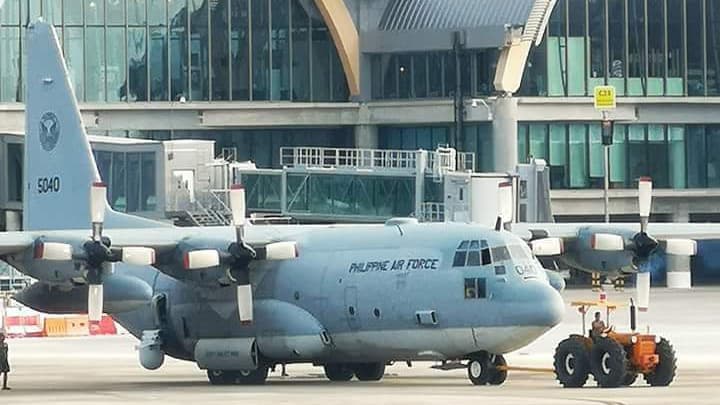
A photo from Philippine Plane Spotters Group (PPSG) revealed the modifications made on one of the PAF's Lockheed C-130T Hercules heavy tactical transport aircraft, which was seen with a protrusion near the rear paratroop door, and an oversized door glass in it.


The PAF's C-130T with tail number 5040 was seen in Mactan-Cebu International Airport with what appears to be a SABIR system and a sensor pod on the starboard side.
Cropped from original photo by Darvs Bautista, posted at Philippine Plane Spotters Group (PPSG) Facebook page.


In its Facebook community page, MaxDefense made an initial assessment that the photo is an evidence of the delivery and installation of the Airdyne Aerospace Special Airborne Mission Installation and Response (SABIR) system, with possibly an Electro-Optical Infra-Red (EO/IR) module in it. It appears that we are partially righr in this.

MaxDefense was also able to obtain another photo of the same C-130T aircraft with the SABIR upgrade and a mission sensor pod attached to it.

The same C-130T with tail no. 5040 can be seen here again with the same SABIR upgrade and a sensor pod attached to the retractable arm near the paratroop door.
Photo provided by a MaxDefense contributor who wish to remain anonymous for PERSEC reasons.


The Source - US Maritime Security Initiative:

The delivery of these upgrades for the PAF's C-130 was born out of a commitment made by the former US Pres. Barrack Obama to the Philippines in 2015 as part of the US Maritime Security Initiative. Among the programs allocated for the Philippines was the delivery of a palletized Intelligence, Surveillance and Reconnaissance (ISR) kit for use on then recently-acquired C-130T Hercules transport aircraft, under a package which was estimated to be worth US$8.7 million.

While other parts of its commitment were partially or fully completed, the ISR kit appears to be the last to be realized, with this specific kit seen on PAF C-130T Hercules with tail number 5040 said to have arrived in the Philippines for installation only several weeks ago.


The Airdyne Aerospace SABIR System:

The US military made use of the Canadian-built SABIR system, that allows the mounting of modular pods externally without the need for modifications on the airframe except for the rear paratrooper doors.

It involves the replacement of the standard rear paratroop door into a SABIR AS-6 door panel system with an oversized bubble window which allows a wider view of the outside by an observer. It was also designed for a seating observer which can swivel the seat between the door panel and the T-4 computer control workstation positioned nearby.

There is an option also from Airdyne to allow the dropping of sonobuoys for submarine detection although the PAF may not have included this in its system. But it can always be an option in the future.


Some of the mission pod options that can be used by the SABIR system.
Photo from Think Defence UK blog page.


The module also includes a retractable arm (AS-7) with a standard ejector rack ready to accept different kinds of modular pods including ISR equipment like EO/IR systems, radars, intelligence equipment (COMINT, SIGINT and ELINT), among others.

Mission pods can easily be installed or removed while the arm can be retracted to a minimized position during mission changes or when not needed for use once the aircraft is being used for usual transport duties. All this can be made within less than 2 hours as confirmed by a source with the PAF.


The typical components of the SABIR system which is the same as what the PAF uses.
Photo taken from Think Defence UK blog page.


The Philippines' C-130 ISR Modification:

In the case of the Philippine Air Force C-130T, several systems were installed to convert the aircraft into a dual use surveillance/maritime patrol - heavy tactical transport platform.

Both port and starboard side rear paratroop doors were replaced with the SABIR AS-6 door, including the installation of the SABIR AS-7 retractable arm.

Each arm carries an ISR equipment, one with an L3 Wescam MX-15HD EO/IR turret for day and night visual surveillance, detecting heat signatures, for target tracking, for video and photo recording, among other capabilities.


The PAF system uses am L3 Wescam MX-15HDi EO/IR system. Above photo shows a typical configuration of an MX-15 system which provides high definition day and night imaging
Credits to owner of the photo.


This configuration is similar to what the PAF uses for the EO/IR pod, except for the actual model of EO/IR which in the PAF's case is the smaller L3 Wescam MX-15HDi system.
Photo taken from Think Defence UK blog page.


The other arm carries a large circular pod with an Israeli-made Elta ELM-2022 synthetic aperture surveillance radar which allows the aircraft to detect surface or ground targets with a range of 200 nautical miles forl ships. This is the pod visible from the photo shared in PPSG's page.


The PAF uses the Elta ELM-2022A maritime surveillance radar for the SABIR-equipped C-130T. The panel antenna is small enough to fit in a encased dome pod as seen on the photo from PPSG.
Photo taken from Elta's website.


Both sensors are connected to modular control computer consoles operated by men of the 300th Air Intelligence and Security Wing, while the aircraft is flown by pilots from the 220th Airlift Wing.

A Satellite Communication (SATCOM) / Line of Sight system, as well as military radio communication systems are also installed on the aircraft to allow the crew to communicate with other ground, naval or air units or stations.

Two T-4 workstations are available for the operation of the surveillance radar and EO/IR system.


A typical layout of the SABIR system. The one used on the PAF's C-130T is essentially the same except for the sensor pods used.
Photo taken from Think Defence UK blog page.


Other Details:

So far, sources confirmed that there is only one of the PAF's C-130 that has this upgrade, although we believe another set could be provided by the US to be installed with the other C-130T of the PAF. This upgrade is said to be the easiest, least costly alternative in the market at the moment, and the US might even be willing to provide more sets for the PAF in the future, this despite the PAF acquiring real Maritime Patrol Aircraft under its stalled Long Range Patrol Aircraft (LRPA) acquisition program.

Apparently it took several weeks for the upgrade works to be made, including maintenance works done of the C-130T. To cover its absence, the PAF's C-295 fleet was put to good use in providing logistics support to the AFP. All works were only done locally at Benito Ebuen Air Base in Mactan, with minimal foreign assistance.

Training of operators and maintenance crews are said to be ongoing, although the PAF has an experience advantage with the L3 Wescam MX-15D EO/IR system due to it being used in their Cessna 208 Grand Caravan ISR aircraft also provided by the US government through military assistance program.

The PAF is also said to be interested in making use of the platform for Electronic Intelligence (ELINT) and Signal Intelligence (SIGINT), as well as Communication Intelligence (COMINT) missions by using specific mission sensors that can be acquired by the PAF in a latter time. This is actually related to the overall C4ISTAR build up of the Armed Forces of the Philippines, considering SIGINT and ELINT capabilities are being sought after as well by the Philippine Navy and its Naval Air Group, which wanted to utilize its existing fleet of Beechcraft C-90 King Air for such missions.

MaxDefense believes that the PAF should have considered using the larger MX-20 EO/IR system which was designed for larger aircraft like the C-130. The MX-15, in MaxDefense's opinion, is small and is better equipped on smaller aircraft like the Cessna 208 Grand Caravan or the upcoming OV-10G+ Combat Dragon II Broncos.


With the modifications expected to be visible always, MaxDefense expects more photos of the aircraft to be posted online as taken by various amateur and professional photographers or plane spotters. Expect MaxDefense to also make more updates on this project, or if there will be any follow-on deliveries or related news on this.


Summary:

1. Upgrade of PAF C-130T Hercules to ISR Platform


End User: Philippine Air Force (220th Airlift Wing and 300th Air Intelligence & Security Wing)
Modernization Phase: US Military Assistance (not under any Horizon phase)
ABC: unknown
SARO Release: N/A
Proponent: US Government, most probably through HISS Canada and Airdyne Aerospace Canada
Bid Price: N/A
First post by MaxDefense:
Concept: 18 April 2016
Delivery: 26 July 2018


U P D A T E S:

11 August 2018:

MaxDefense received confirmation that the Philippine Air Force will be formally accepting the SABIR system installed on one of the PAF's C-130T Hercules this 14 August 2018. No exact time has been provided yet although the event will be held at the 250th Presidential Airlift Wing's hangar @ VIllamor Air Base in Pasay City.


The guest of honor is Defense Sec. Delfin Lorenzana. As expected, Pres. Duterte won't be there to grace the event as the SABIR system came from US Military Assistance. It is well known that Pres. Duterte has hatred of the Americans and attending here would be against his policies.

Also, it was revealed to MaxDefense that the C-130T ISR would indeed be used as Maritime Domain Awareness platform, with focus on patrolling the West Philippine Sea, Scarborough (Panatag) Shoal area, Batanes and the borders with Taiwan, and the Philippine Rise. 

Meanwhile, the PAF is using the smaller Cesna 208 Grand Caravan ISR aircraft in the southern corridors of the Philippines, near the borders with Malaysia and Indonesia.

Another SABIR system is also expect to be provided by the Americans that could be installed on the 2nd C-130T in the PAF's fleet. This would allow the PAF to conduct more ISR missions while still being available when needed as a transport asset. As explained before, the sensor pods and the control consoles can easily be removed by PAF technicians within 2 hours, while the the SABIR retractable external arm can remain while the C-130T is used as for cargo missions.

Friday, June 8, 2018

PTDI Finally Delivers 2 NC-212i Aircraft to the Philippine Air Force

Indonesia's PT Dirgantara Indonesia (PTDI) has finally started the delivery of two (2) NC-212i for the the Philippine Air Force.

MaxDefense contributors confirmed the departure of the said aircraft, which was later corroborated by sources close to people working with PTDI.

PT Dirgantara Indonesia won a public tender to supply the Philippine Air Force with a light tactical aircraft under the PAF's Light Lift Fixed Wing Aircraft which was tendered as early as 2013. Several tenders were attempted as bidding failures plagued the project until PT Dirgantara Indonesia won the last attempt, and was awarded the contract to deliver two (2) NC-212i aircraft the 1st quarter of 2014.

The project was part of the original AFP Modernization Program mandated by Republic Act 7898 made in 1995. Although it was part of the old modernization program, it was only implemented and funded during the term of Pres. Benigno Aquino III when the Revised AFP Modernization Program was already approved.


One of the NC-212i aircraft, as it departs for Clark Airbase today 08 June 2018.
Photo sourced from PTDI.


The aircraft were supposed to be delivered by late 2015 as per the contract schedule. But PTDI was forced to replace the aircraft's Autopilot System to Genesys Aerosystems due to some issues with the previous autopilot supplier. While PTDI was able to incorporate the new autopilot system from Genesys to the NC-212i aircraft, they were unable to immediately secure the certification needed and required for customers to accept the aircraft. Among those affected were NC-212i orders for the Vietnam People's Air Force, and the Philippine Air Force.

Another issues was that the certification is not PTDI's sole responsibility, but was in coordination with Airbus Military, which is the original design owner of the NC-212i's predecessor, the C-212i Aviocar made by CASA (now part of Airbus Military). It appears that Airbus Military was only able to get the certification for the autopilot system for use on the C-212/ NC-212i a few months ago.

The delays were too long, resulting to PTDI getting slapped with a 1-year blacklisting from joining biddings with Philippine government projects. And yet, after the 1-year blacklisting, the aircraft were still unavailable for delivery for the same autopilot certification issue.


The two NC-212i aircraft for the Philippine Air Force, seen here in PTDI's facility in Indonesia, as it awaits for the certification for the autopilot system to be released. The wait took more than 1 year.
Photo taken from detik.com.


But that is now all in the past.

The two aircraft were delivered to the Philippine Air Force today, 08 June 2018, after being flown from Indonesia to Clark Airbase in Pampanga. It is expected that the PAF will conduct some checks and is expected to formally receive the aircraft and commission them into service with the 220th Airlift Wing within the next few days.

MaxDefense will provide updates on this once the commissioning is made. We thank our sources for the photos on its arrival, and the information of its arrival.


One of the NC-212i flies off to Clark Airbase in Pampanga.
Photo sourced from PTDI.


One of the NC-212i still with temporary Indonesian markings, and was photographed at a PAF airbase on 10 June 2018.
Credits to MaxDefense community member who wish to remain anonymous, for exclusively sharing to us this photo.


Summary:

Light Lift, Fixed Wing Aircraft Acquisition

End User: Philippine Air Force (220th Airlift Wing)
Modernization Phase: RA7898 AFP Modernization Program 3rd Part
ABC: Php270,000,000.00
SARO Release: 2013
Winning Proponent: PT Dirgantara Indonesia (Indonesia)
Contract Price: Php813,000,000.00 through Negotiated Procurement
First post by MaxDefense: 25 September 2013


Wednesday, January 14, 2015

More on the Philippine Air Force C-130T Acquisition: Is the PAF Acquiring Aerial Refueling Tanker?

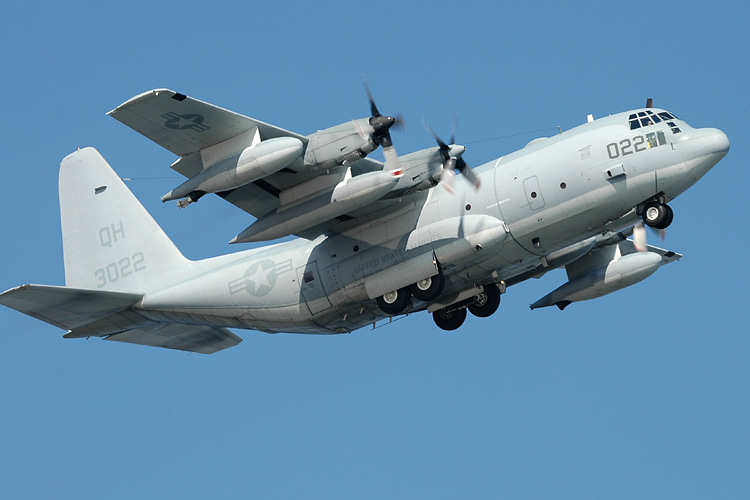
The US Embassy released information last January 9, 2015 that the Philippine Air Force has completed a second inspection of two C-130T that are being offered for transfer to the aforementioned armed service. Photos from the US Embassy press release shows the Philippine officials with one of the aircraft with number 022, and was said to be in Joint Reserve Naval Air Station Fort Worth in Texas. The press release also indicated that the Philippine government, through Maj. Gen. Victor Bayani, has already signed the Letter of Offer and Acceptance signifying the approval to procure the inspected aircraft. Expected delivery was placed by 1st quarter of 2016, although no exact month was specified. 


PAF and US officials during the 2nd inspection of C-130T aircraft at Fort Worth, Texas.
Photo taken from US Embassy in the Philippines website.


Upon further checking with open sources, it appears that the said aircraft (#022) is not a US Navy aircraft C-130T as earlier expected, but is a US Marine Corps unit, with tail number 163022, and is actually a KC-130T multipurpose transport-tanker aircraft. It is also assumed that the second aircraft may also be the same type and may come from the same source. A second photo from the press release also showed the interior of one of the aircraft being inspected, and it does not have the updated glass cockpit done on the US Navy C-130T aircraft. Too bad that the photos provided by the US Embassy in the Philippines did not show the wing portion to confirm if the underwing refueling pod are still there.


More photos from the inspection of aircraft no. 022. Note the analog cockpit on the aircraft, whereas the expected US Navy aircraft were already modified to use glass cockpit types.
Photo taken from US Embassy in the Philippines website.


These KC-130T are actually former C-130H aircraft converted to be aerial refueling-capable in support of US Marines air operations. Open sources like C-130.net indicated that the 163022 was built in 1984, and was modified to be able to carry the probe-and-drogue refueling system which is currently used by the US Marines aviation assets like the F/A-18C/D Hornet and AV-8B Harrier as well as CH-53 Super Stallion large helicopter series. This is the same system used by the Saab's JAS-39 Gripen. But this system is different from those used by the F-16 Fighting Falcon and F-15 Eagle fighters, which uses the Flying Boom system. (More of these can be found in open sources for further information.)


KC-130T "022" with the wing-mounted aerial refueling system on the far end of the wings.
Photo taken from usamimi.info website.


Being KC-130T Means....
For the uninitiated readers, the "K" in the KC-130T designation means it is a tanker-capable aircraft in US military parlance. So it means the Philippine Air Force is acquiring an aerial refueling capable aircraft. BUT it doesn't necessarily mean the PAF is acquiring tanker aircraft.

What's the difference? 

The KC-130Ts (or we can currently call C-130T until further notice) might be aerial refueling-capable aircraft, but it is still unknown and unconfirmed if the deal to acquire them include having the refueling system intact and usable upon the aircraft's hand-over to the PAF. But not having the aerial refueling system does not mean the PAF cannot have them in the future. With the aircraft already made to be capable of such, any future decision by the PAF to return the aircraft to tanker-capable status is very much possible and easy, as compared to other C-130 aircraft without this current capability.


A KC-130 probe and drogue underwing refueling pod. The PAF may opt to have the aerial refueling system retained when they acquire the USMC C-130T.
Photo taken from Wikimedia.


Having them retained, which is very much possible, means that the PAF will be having an added capability of aerial refueling, a first in its history. 


How About Transport Missions?
Being a multi-purpose transport aircraft, it will retain its cargo-carrying capability for other purposes, including Humanitarian and Disaster Relief (HADR) operations. This is possible by removing the fuel tank system in the cargo hold, in which the KC-130 can easily be converted from a tanker aircraft to a standard transport aircraft, with almost the same load and space capacity as a regular C-130 Hercules. The underwing refueling pod can remain even when doing transport duties.


The KC-130's fuselage fuel tank, which can easily be carried or removed from the aircraft's cargo space to convert the C-130 from a tanker to a standard transport aircraft. This is the same unit used by the US Navy and US Marine Corps on their KC-130s.
Photo taken from ar-15.net.


Why Need for an Air Refueling Tanker Capability?
The Philippine Air Force currently has no aircraft capable of aerial refueling. But they can use the aircraft to train the organization in tanker and aerial refueling operations in anticipation of future requirements. Training early is actually good as it takes time to learn and master this system, and doing it early gives them this needed time to learn and be capable of using the system well by the time the first aerial refueling receiving aircraft arrive in PAF's inventory. This can be done by having aerial tankers participate to support US military aircraft during joint US-Philippines military exercises like Balikatan, while doing standard military and HADR transport missions. Its rapid fuel transfer system can also be used in ground operations when necessary, which can be both applicable in combat and HADR support operations.

Some of the incoming new assets for the PAF can be specified or modified to be capable of receiving fuel using probe-and-drogue aerial refueling. This includes the Airbus C-295 medium tactical transport aircraft, and probably the KAI FA-50 Fighting Eagle lead-in fighter trainers. Particularly for the FA-50 with its limitations in terms of range, endurance, and load capacity, having the capability of aerial fueling can extend its reach and enable it to carry more at long distances like in the possible conflict areas in the West Philippine Sea. Future maritime patrol aircraft (MPA), airborne early warning & control aircraft (AEWC), and multirole fighters (MRF) that the PAF aspires to acquire in the next few years can also benefit from such capabilities, especially with these assets are also expected to operate in the vast Philippine EEZ and ADZ.


With its small size, MaxDefense believes that the FA-50 Fighting Eagle must be given the capability to refuel on air, with installing a refueling probe system. It is possible that the PAF has already considered this requirement.


So, is the PAF acquiring aerial refueling tankers? Possibly, but still unconfirmed. But even if the PAF won't be getting the aircraft with the aerial refueling system intact, this is the closest they can get from having one, as making them have one is due to the inherent capability the aircraft already have for as long as support and budget is provided. So why not? Here are some examples of which platforms are compatible with the KC-130's probe-and-drogue system:


So let's see, who can use the probe-and-drogue aerial refueling system of the KC-130?
The Gripen can....


...Super Hornets also can use them....
(Photo taken from chinalakealumni.com)
...legacy F/A-18C Hornets also are compatible...
(Photo taken from Wikimedia)
...even the C-295 is OK with it!


Friday, August 1, 2014

Initial Details on the Upcoming ex-US Marine Corps C-130T Hercules for the Philippine Air Force

The US Defense Security Cooperation Agency (DSCA) has recently issued a news release pertaining to the possible Foreign Military Sale (FMS) of 2 Lockheed C-130T Hercules to the Philippine government, with an estimated worth of $61 million. This deal may include 10 Rolls Royce Allison T56-16 aircraft engines (8 installed and 2 spares), logistical sustainment support for 3 years, modification equipment and labor costs, spare and repair parts, support equipment, publications and technical documentations, aircraft ferry support, personnel training and training equipment, US government and contractor logistics and technical support services, and other related of logistics and program support.

MaxDefense sources from the DND confirms that the airframe was granted by the US government, and the estimated $61 million costs under FMS may cover the refurbishing and ancillary works included together in the deal, similar to what was done on the 2 Hamilton-class cutters received by the Philippines a few years ago. Being an estimated value, MaxDefense believes that the costs may still increase due to unseen circumstances, or additional expenses incurred during actual refurbishing works. Previous deals with other countries on the sale of EDA legacy C-130 Hercules aircraft shows such increase in actual costs.


A US Navy C-130T doing touch-and-go runs.
Photo taken from Goleta Air & Space Museum website.


The Lockheed C-130T Hercules are actually limited in numbers, with only around 20 units produced and are used by either US Navy and US Marine Corps for logistics support requirements and aerial refueling operations. They were built between 1991 and 1996, and are the last legacy C-130s delivered to the US military before Lockheed Martin proceeded to build the new C-130J Super Hercules. 19 units are operated by various US Navy logistics support squadrons, while 1 was used with the Blue Angels precision aerobatic team as the current "Fat Albert". 19 units were upgraded by BAE Systems with a glass cockpit system, and are equipped with a Garmin GNS 480 GPS system, an electronic flight bag, electronic horizontal situation indicator and engine instrument display system. One unit was reportedly not included in the said upgrades, and MaxDefense believes that unit is the Blue Angels' "Fat Albert".


The Blue Angels' "Fat Albert" exhibition aircraft, although with USMC markings, the aircraft is actually with the US Navy.
Photo taken from Airliners.net c/o Kevin Scott - Jetwash Images.


Upgrades made by Lockheed Martin to the C-130T is said to extend the mission capabilities of the aircraft for another 20 years - and that's according to US standards. This means the PAF has a modern C-130 in its hands, systemtically almost comparable to early Super Hercules at a small fraction of the price.

US Navy C-130T are different from the KC-130T being operated by the US Marine Corps, although both are closely related to the Air Force's C-130H. The US Navy intends to replace the C-130T with the newer C-130J Super Hercules, and it is expected that more C-130Ts will be retired from service, which can also be offered for FMS or grants to friendly countries like the Philippines. Previous MaxDefense blog entries discussed these plans for more C-130s and this current deal might be the first of few more to come.

Being an additional transport asset, it is expected to be operated by the the 220th Airlift Wing based in Benito Ebuen Air Base in Cebu. MaxDefense sources confirms that the offer was made by the US government in the aftermath of the Typhoon Haiyan, although there was a long standing request for EDA C-130s by the Philippines to the US government. It is expected that the US government will offer more C-130s in the near future, depending on the Philippine government's capacity to acquire and maintain more. There are also reports of acquiring C-130H from Australia, but may prove false since Indonesia has reportedly paid for the acquisition of all 9 excess units formerly operated by the Royal Australian Air Force even after the spying scandal between Australia and Indonesia cooled down.


The C-130T's updated cockpit, which was changed to glass cockpit recently by Lockheed Martin. This is a huge difference from the PAF's own C-130B & H models.
Photo taken from Lockheed Martin website
.


Although there were reports that the upcoming C-130T are being optimized for dual mission duties as a heavy tactical transport and a long range maritime patrol and surveillance aircraft using palletized systems, MaxDefense has not received confirmation on this. If this was true, MaxDefense will provide updates on the blog entry. But this set-up won't be impossible as Lockheed Martin already made earlier confirmation of offering the DND and PAF of using its C-130s or any other aircraft as a platform to integrate maritime patrol surveillance systems. 


Not really an SC-130J, but a C-130T fitted with palletized MPA mission systems can be a welcome addition to the PAF's capability, although smaller aircraft like the C-295 can be a cheaper and more practical alternative.
Photo taken from Lockheed Martin website
.


MaxDefense believes though that the C-130 is not the best platform for MPA duties for the PAF, even with its proven track record, reliability, range and stability on adverse weather. This is due to the lack of enough transport assets within the PAF where additional C-130s in the transport role are sorely needed. Its massive size and higher operating costs makes it impractical, especially when compared to contemporary new MPA platforms being offered for the upcoming Long Range Patrol Aircraft. Still, it would be a welcome addition to the PAF's limited capability, and the responsibility to make decision would be PAF's call as they know their requirements better than those outside the system, including MaxDefense. 


==========
UPDATES:
==========
January 12, 2015:
The US Embassy released information last January 9, 2015 that the Philippine Air Force has completed a second inspection of two C-130T that are being offered for transfer to the aforementioned armed service. Photos from the US Embassy press release shows the Philippine officials with one of the aircraft with number 022, and was said to be in Joint Reserve Naval Air Station Fort Worth in Texas. The press release also indicated that the Philippine government, through Maj. Gen. Victor Bayani, has already signed the Letter of Offer and Acceptance signifying the approval to procure the inspected aircraft. Expected delivery was placed by 1st quarter of 2016.

Also, there appears to be changes in the C-130T the PAF will be acquiring. Originally is was reported that it would come from the US Navy, but photos show that the C-130T are actually coming from former US Marine Corps stock. The aircraft 022 is actually a 1984-built KC-130T formerly with the USMC, and may not sport the glass cockpit we discussed in the main blog article.

More of this will be discussed in a new MaxDefense blog entry.


PAF and US officials during the inspection of C-130T at Fort Worth, Texas.
Photo taken from US Embassy in the Philippines website.


There appears to be differences from expected several months ago, which will better be tackled more on a separate MaxDefense blog entry coming out soon.

==========
October 7, 2016:

Media outlets reported the departure of the second C-130T Hercules heavy tactical transport aircraft from the Davis-Monthan Air Force Base in Tucson, Arizona on the way to the Philippines.

It is expected that the aircraft will arrive in Benito Ebuen Air Base in Mactan, Cebu on Sunday, October 9, 2016.

Originally MaxDefense received information that the C-130 T was supposed to arrive in the Philippines in late September. No reason was given on the change or delivery date.

The C-130Ts are sporting a different paint scheme from the rest of the PAF's C-130 fleet and is expected to conduct dual mission as transport aircraft, and surveillance missions upon the arrival of roll-on/roll-off palletized Intelligence, Surveillance and Reconnaissance (ISR). These ISR kits were promised by the US government under its Maritime Security Initativr for Southeast Asia announced early this year. 

With the rocky PH-US relations now, this remains to be seen, although the C-130T on its own will be very useful for transport and support missions for the Armed Forces of the Philippines. The PAF is expected to acquire more C-130s in the near future.

Check out our main FB page wall for more details on the aircraft's arrival.


Philippine Navy Modernization Projects

Philippine Air Force Modernization Projects