


In this blog entry, we discuss the Philippines' option in defending itself from ballistic missiles. Note that we will NOT DISCUSS the Chemical, Biological, Radiation and Nuclear (CBRN) side of such threat, but only the threat of the physical missiles.
Asking for Help from Who?:
Reality shows that currently, the Philippines cannot really do anything on this regard but to ask for help from more militarily capable allies and partners.
But there's a problem in this situation of the Philippines. So far the only countries the Philippines can ask help it to defend against ballistic missiles are either the United States of America or Japan. But Japan currently has no missile interceptors to spare for the Philippines. It is also getting its assurances from the US as their current systems, based on the US-made Patriot PAC-2 and PAC-3 systems and AEGIS-SM3 system, are not enough to effectively defend the Japanese home islands.
So there's no other country that can help other than the US.

 |
| The US may opt to deploy land-based Patriot PAC-3 missile systems, or the sea-based AEGIS-SM3 ABM systems if the Philippine government lands an agreement with the US for such deployments. Photos taken from Military-Today.com (above), and US Department of Defense (below). |
Normally, you deploy missile interceptors to defend yourself before an actual missile attack happens, not after the attack itself. But with the Philippine government playing a hardball on the US and at the same time putting a very good face for China, how will the US help the Philippines get that anti-missile defense requirement without China putting pressure on the Philippines, and the US getting too involved with a government that is not only unfriendly, but also has reputation of passing the load of defending itself to its bigger ally? Not to mention a US legislature that is unsupportive of the Philippine president?
Two options can be made by the US to deploy defensive missile systems in the Philippines, but both involve the Philippine government agreeing with the terms and conditions of such deployment, a tricky part that has a lot of strings attached. One is by deploying a land-based system, much like what the US does in Japan and South Korea, or a sea-based system which is more politically viable for the Philippines and US alike. Placing another Terminal High Altitude Air Defense (THAAD) system in the region will potential make China restless, and may hit back politically and economically on the Philippines, in the same way it is currently doing with South Korea when it decided to allow US THAAD's deployment in its soil.
 |
| An illustration on how the Patriot PAC-3 and THAAD will defend South Korea from North Korean ballistic missiles. This applies to how such systems will defend the Philippines. Photo illustration taken from The Korea Herald. |
 |
| This is the reason why China is against the deployment of US THAAD systems in South Korea. While the THAAD's radar has limitations, it has the capability to detect air movements at very long distances. In the case of South Korea, the radar can see through inside parts of China. Putting up THAAD in the Philippines will also allow the US to see through the entire South China Sea and parts of Southern China, including its bases in Hainan Island and Paracel Islands, as well as the artificial islands in the Spratlys, giving the US a huge edge. Photo illustration taken from 38 North US-Korea Institute at the Paul H. Nitze SAIS, John Hopkinds University |
Among the strings MaxDefense sees that the US will put in will be related to the increased deployment of US equipment and personnel in the Philippines, placed within the boundaries of the Enhanced Defense Cooperation Agreement (EDCA). Something that Pres. Duterte is too allergic to begin with, considering that previously, he announced that he wanted US presence out of the country during his term.
Running to China or Russia for help doesn't work, for obvious reasons.
While the US solution could be the most realistic option the Philippines have, it won't happen as fast as everyone hopes for. Will Pres. Duterte soften its stand on US deployment in the Philippines and allow their troops to "play around" like it used to?
The AFP's Ballistic Missile Defense System Project - A Brief:
Its not normal for MaxDefense to discuss such matters if its not related to the AFP's modernization and recapitalization efforts. So here's the catch why its being discussed here in MaxDefense Philippines blogs.
There is such a thing as a Ballistic Missile Defense System (BMDS) project in the AFP's Modernization Program, which is included within the AFP's planned Integrated Missile Defense System. The project calls for a capability within the AFP to defend critical areas of high interest against ballistic missile threats.
Originally, the requirement raised by the AFP for acquisition is for at least 3 batteries, although MaxDefense is unsure if the requirement is for a tactical only, or a more advanced theatre ballistic missile defense capability. Based on MaxDefense's own analysis of data that we have, we believe that the AFP is looking at a tactical missile system rather than a theatre high altitude system.
 |
| Impossible as it may seem, yes, a Ballistic Missile Defense System is among those eyed by the AFP as part of its modernization efforts for Horizons 2 and 3 phases. Cropped from the AFP's submitted proposal for their Horizon 1-3 procurement list plan. |
Problems Ahead - The Usual Suspects:
The project was supposed to start within the Horizon 2 phase (2018-2022) of the Revised AFP Modernization Program, and runs until the Horizon 3 phase (2023-2028). "Supposed" is the key word here. Based on the latest Horizon 2 proposal submitted by the AFP and DND for approval, the BMDS, which was supposed to be a project assigned for the Philippine Army, was omitted. MaxDefense believes that the Philippine Army may have realized that it is not ready to undertake such project, considering that it has ZERO experience, and limited knowledge (mostly theoretical) on air defense missile systems and capabilities. Another consideration is the massive investment needed to undertake such project, considering that the AFP has a lot of gaps to fill that are considered as higher priority than the BMDS.
With too much to modernize, an AFP and DND not proficient enough in procurement processes, a Procurement Law that is incompatible for the AFP's procurement programs, and not much cash to spare, the AFP situation is too complex to solve with the limited time and money that it has.
Hopes on the Horizon?:
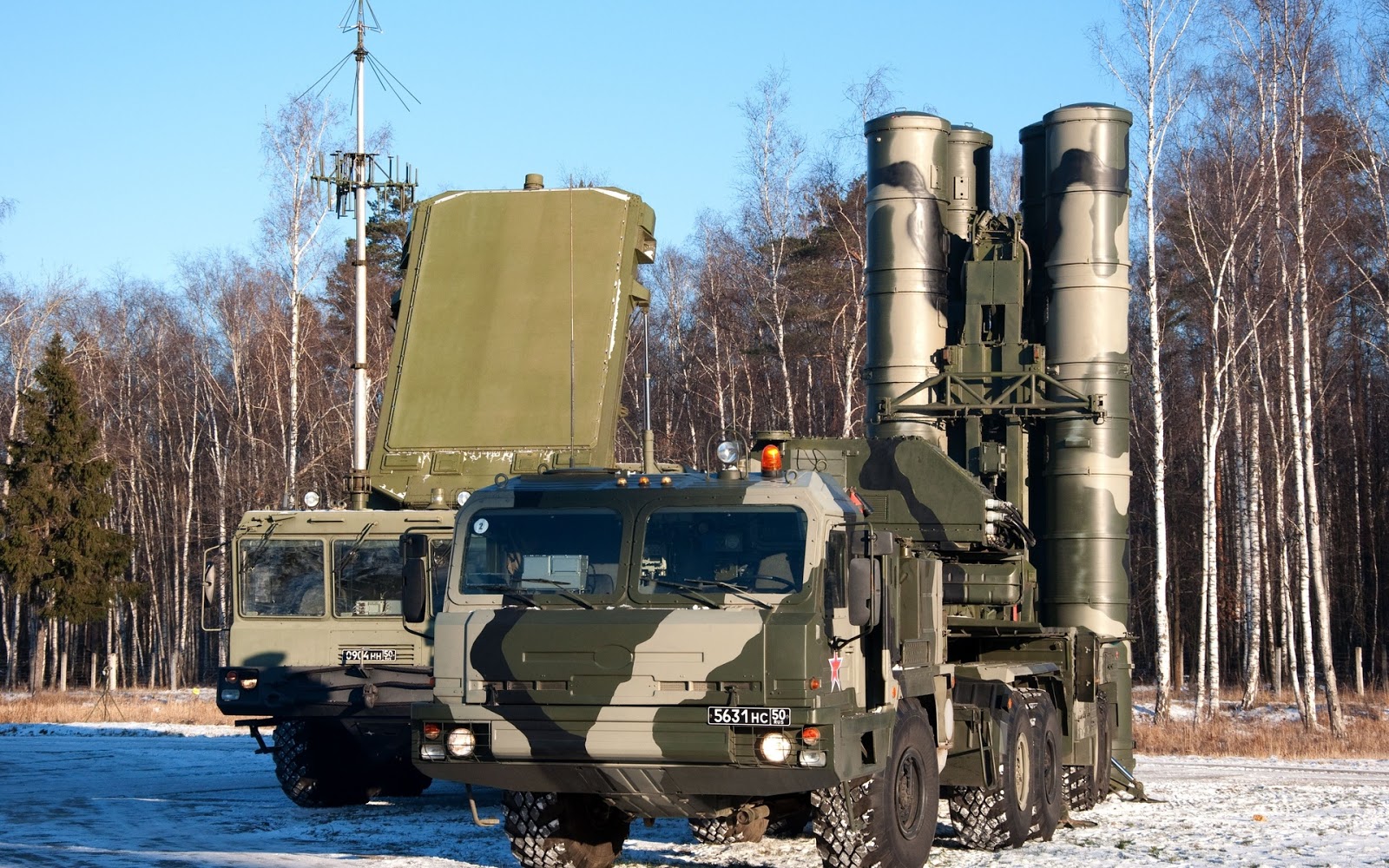
In comparison, Vietnam, which is considered less economically capable than the Philippines, already has the S-300PMU1 tactical ballistic missile defense system in its inventory for years, and has been pushing for the acquisition of Russia's more advanced S-400 Triumf theatre ballistic missile defense system to defend against Chinese threats. It is expected that they would be able to acquire the S-400 system in a few years time, considering that they are very serious on their defense procurement programs. So it only shows, it is NOT IMPOSSIBLE for the Philippines to carry out such acquisition if only it is serious as well in putting up a strong face and will to defend itself.
It is expected that Pres. Duterte will be able to close a Philippines-Russia Defense Cooperation Agreement (DCA) during his state visit to Moscow this coming May 2017. While the visit is not expected to generate an agreement or contract to immediately supply weapons for the AFP, it does open the possibility of acquiring Russian weapon systems since a DCA is among the requirements for a government-to-government (G2G) procurement of weapon systems to happen.
Somewhere along the line, it is highly possible for Russia to offer advanced air / missile defense systems like the S-300 and S-400 to the AFP, and this becomes more realistic if Moscow offers a flexible payment scheme and Manila takes advantage of it. Reportedly and based on MaxDefense sources, Moscow has confirmed that they are willing to sell almost anything under the sun, as long as the Philippines pays for them in any way agreed upon - bananas, underwear and all.
 |
| Vietnam already has the Russian S-300PMU1 in service, which has the capability to defend against ballistic missiles. |
As MaxDefense previously mentioned in its Facebook posts, the Horizon 2 shopping list is still liquid and could still be subjected to changes, depending on the financial capability of the government, and the threats faced by the country as recommended by the AFP and Department of National Defense. MaxDefense still hopes that there are positive news that we can still get regarding this project within Pres. Duterte's term.
In the meantime, the Philippine government must consider talking to the US regarding an interim solution of deploying US assets in the country to defend against a looming threat of wayward North Korean missile, or even a Chinese one.
 |
| S-400, anyone? |


